

Teen and beginner driver UTV accessories are safety and control upgrades chosen to shorten the learning curve without slowing down the ride. A new driver needs more restraint, more visibility, and more forgiveness built into the machine than someone who's logged a thousand trail miles — the parts list looks different because the risks are different.
- A 3-point or 4-point harness with a push-button release is the highest-priority utv accessories for teen drivers upgrade — factory belts don't hold a smaller frame tight in rough terrain.
- LED light whips and DOT-compliant mirrors matter as much for beginner UTV drivers as horsepower, since most trail mishaps come from limited sightlines, not speed.
- Rubber floor mats and a padded windshield cover cut cabin distractions that trip up new drivers more than seasoned ones.
- Hold off on performance mods like clutch kits or turbo upgrades until the driver has logged real trail hours in 2026 and beyond.
Why UTV accessories matter for teen and beginner drivers
New drivers make different mistakes than experienced ones: late braking, misjudged clearance, a wandering sightline on an unfamiliar trail. The accessories that matter most for this segment aren't the ones that add horsepower — they're the ones that buy back reaction time and hold the driver in place when a turn goes wrong.
A 2-3-4 point harness with push-button release replaces a stock 3-point belt that lets a smaller frame slide during hard cornering. That slack is exactly what turns a minor bump into a real injury for someone who hasn't built the reflex to brace yet.
Visibility gaps compound the problem. Beginner drivers scan a narrower field of view than experienced riders, and factory mirrors on many UTVs don't meet the width or height most states require for street-legal riding anyway.
“The first accessory on a teen build should be the harness, not the light bar.”
Build the safety base first
Work through these six upgrades in order — restraint first, protection second, visibility third, fit fourth, tires fifth, legal compliance last. Skipping ahead to the fun stuff before the harness is the most common mistake in this build category.
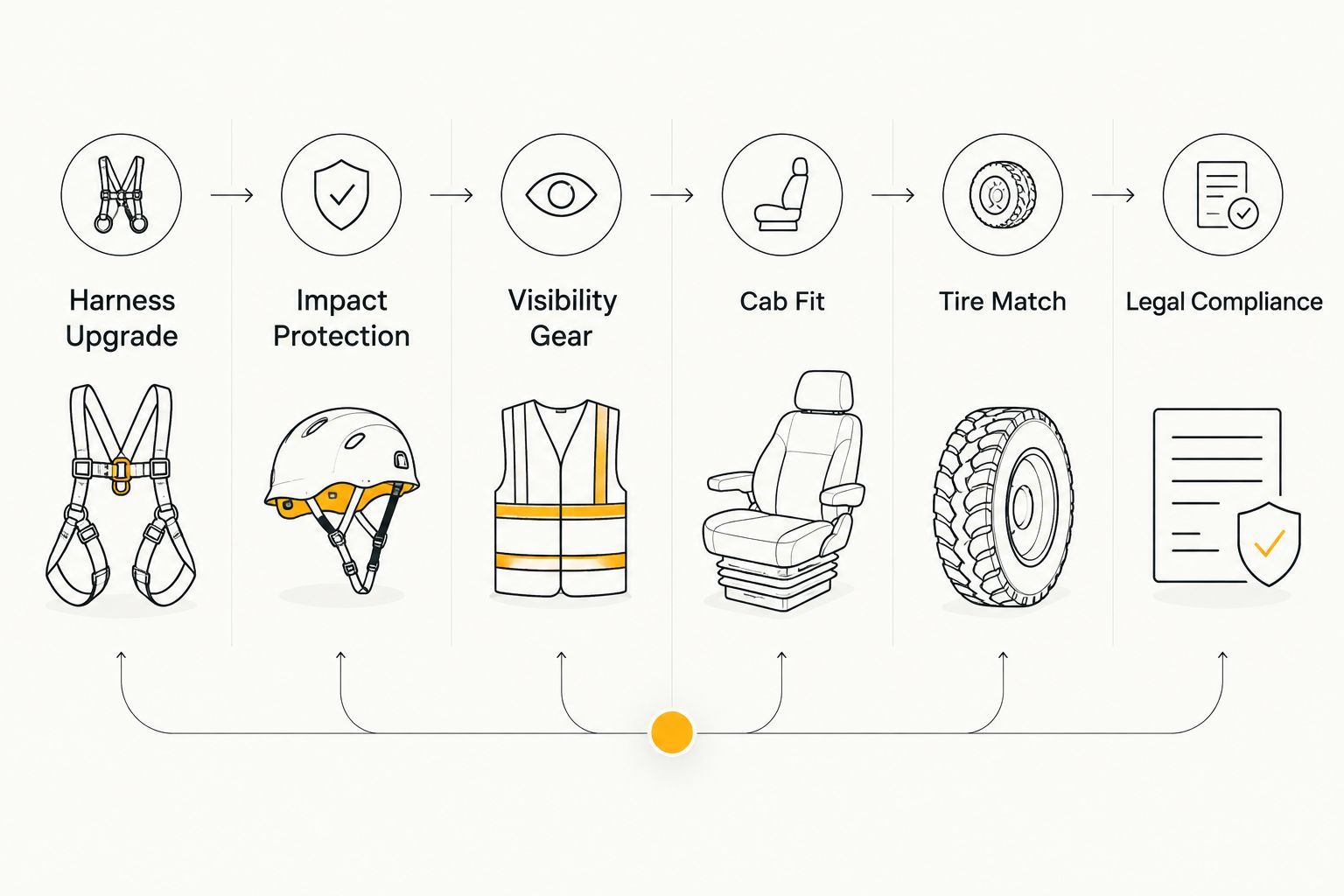
Upgrade the harness before anything else
- Replace stock 3-point belts with a 4-point or push-button harness that holds the shoulders square in a hard stop
- Match harness webbing to the seat so a parent can visually confirm it's buckled from outside the cab
- Check harness mounting points against the roll cage bar diameter before ordering — a mismatch means the harness won't tension right
- Re-torque harness hardware after the first 5-10 hours of riding; new webbing settles
Add impact protection for early mistakes
Beginners hit things — curbs, boulders, low branches — more often than experienced riders. Budget for guards before the first ding turns into a cracked A-arm.
- A-arm guards to protect suspension mounts on rock-crawling terrain
- Rock sliders along the rocker panel to take side scrapes instead of the frame
- Front bumper protection to absorb low-speed impacts from misjudged clearance
- Skid plates underneath if the trails involve rock gardens or dry washes
Improve visibility for the driver and everyone around them
- LED light whips mounted at the rear corners so oncoming riders spot the UTV before cresting a dune or hill
- DOT-compliant mirrors sized to the state's street-legal requirement, not just what came stock
- A horn and signal kit for any beginner who'll ride mixed trail-and-road routes
- Reflective decals on the roll cage for dust and low-light conditions
Fit the cab for a smaller or newer driver
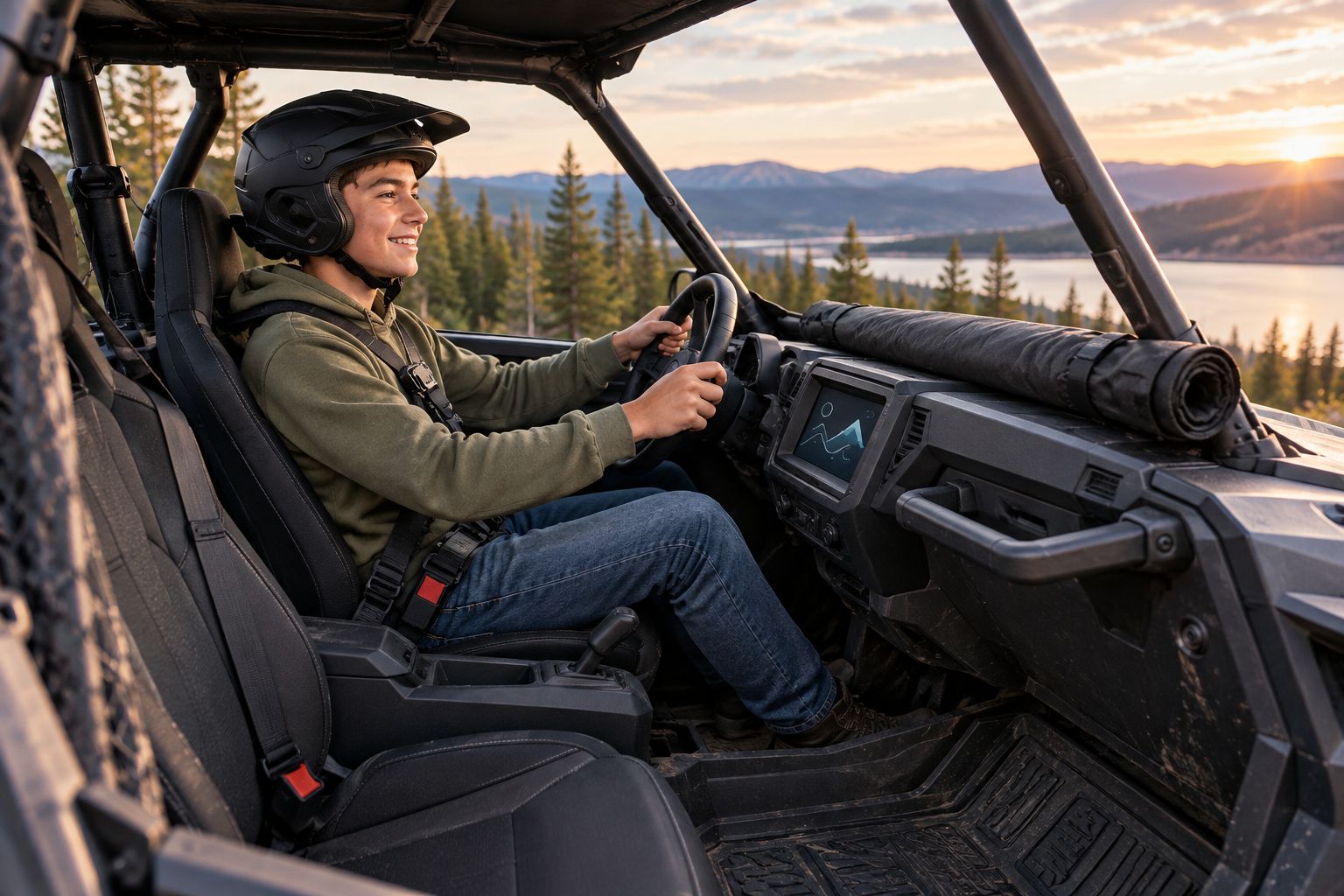
- Rubber floor mats that grip boots and stop pedal slip during a panic stop
- A padded windshield cover to cut glare a new driver hasn't learned to squint through yet
- Adjustable seat or bump-seat options so belt geometry fits a smaller frame
- Sound deadening panels to cut cabin noise that masks warning sounds from tires or the drivetrain
Choose tires that forgive beginner mistakes
- Medium-to-hard terrain radials that grip predictably instead of tires tuned for aggressive sliding
- A tread pattern matched to the actual terrain the beginner rides most, not the terrain they'll ride eventually
- A slightly wider stance for extra stability during a first season of side-hill riding
- A spare mounted and ready, since new drivers puncture tires more often on unfamiliar lines
Prep for legal compliance before street riding
- Confirm the state's UTV street-legal requirements for mirrors, horn, and signals before a teen takes it on any public road
- A horn and signal kit that's plug-and-play instead of a wiring project
- Check helmet and eye protection rules — some states mandate them for underage or permit drivers regardless of UTV type
- Keep a paper copy of registration and insurance in the cab, not just on a phone


Accessory options for teen and beginner drivers compared
| Option | Best for | Key limitation |
|---|---|---|
| 4-point harness with push-button release | Any teen or beginner driver, first upgrade | Requires matching roll cage bar diameter before ordering |
| LED light whips | Riders on dunes, hills, or low-visibility trails | Adds a wiring install, not truly plug-in on every model |
| DOT-compliant mirrors | Beginners who'll mix trail and street riding | Doesn't cover horn/signal requirements on its own |
| Medium-hard terrain radial tires | New drivers still learning throttle control | Less bite in loose sand or deep mud than an aggressive tread |
| Rubber floor mats + windshield cover | Smaller drivers, first-season cabin comfort | Comfort only — no protective value in a rollover |
The push-button harness wins as the single highest-impact buy for a teen or beginner UTV driver in 2026 — everything else on this list is secondary until that's handled.
Common mistakes with teen and beginner UTV builds
- Buying performance parts first. A clutch kit or supercharger before the driver has logged real trail hours adds power a beginner can't control yet — skip it.
- Leaving the factory 3-point belt in place. It's the single most common gap; a factory belt doesn't hold a smaller frame tight enough for hard braking.
- Ignoring mirror and horn laws. Parents assume any UTV can go on a road once it's "street legal-ish" — most states have exact mirror width and horn requirements.
- Skipping tire matching. Putting an aggressive mud tire on a driver who mostly rides groomed trails makes the machine less predictable, not more capable.
- Treating visibility gear as cosmetic. LED whips and DOT mirrors get bought for looks first and safety second — flip that order for a new driver.
FAQ
What's the best first UTV accessory for a teen driver?
A 4-point or push-button harness is the best first purchase for a teen or beginner UTV driver. It holds the shoulders square in a hard stop, which a stock 3-point belt does not do for a smaller frame.
Do state laws require harnesses for teen or beginner UTV drivers?
Seatbelt use is standard required equipment on nearly every UTV, but harness-style upgrades beyond the factory belt are a safety choice, not a legal mandate in most states. Check local UTV laws before riding on any public road.
What mirrors make a UTV street legal?
Street-legal mirror requirements vary by state, but most require a mirror on each side sized to a minimum width or diameter. Confirm the exact requirement with the state DMV before adding a street legal kit.
Should a beginner UTV have a turbo or supercharger kit?
No. Add restraint, visibility, and cab-fit accessories first and hold off on power mods until the driver has logged real trail hours. A supercharger or turbo kit adds power a beginner isn't ready to manage.
What tires work best for a new UTV driver?
Medium-to-hard terrain radial tires work best for new UTV drivers because they grip predictably instead of sliding the way an aggressive, loose-terrain tread does. Match the tread to the terrain the driver actually rides most.
Do LED light whips actually improve safety for beginner riders?
Yes. LED light whips mounted at the rear corners make a UTV visible to oncoming riders cresting a dune or hill, which matters more for a beginner who hasn't developed trail awareness yet.
What's the biggest mistake building a UTV for a teen driver?
The biggest mistake is buying performance parts before restraint and visibility gear. A faster machine in the hands of a beginner increases risk instead of building skill.
One last thing
The upgrade parents skip most often isn't the harness or the lights — it's the floor mats and windshield cover. A slippery pedal or unmanaged glare causes more panic-stops in a first season than any mechanical failure does, and both fixes cost less attention than a supercharger kit a new driver doesn't need yet.