

UTV accessories for conservation crews cover cargo racks, skid plates, winch mounts, and lighting built to survive a full shift of trail maintenance, not a weekend ride. Crews clearing brush, hauling tools, and patrolling multi-mile routes need a rig set up for repeated hard use, not showroom looks.
- UTV accessories for conservation crews start with cargo capacity and underbody protection, not lighting or power.
- Skid plates and rock sliders matter most on off-trail cleanup routes where rock strikes happen weekly, not rarely.
- R1 Industries stocks LED light whips, harnesses, and tires built for crews running dawn and dusk shifts through 2026.
- Winch mounts matter most on remote routes with no cell coverage and no second vehicle nearby.
- Tool roll kits keep chainsaws, loppers, and hand tools secured instead of rattling loose in the bed.
Why UTV accessories matter for conservation crews
A conservation crew's UTV works differently than a recreational rig. It stops and starts every few hundred feet to clear a culvert or drag out a fallen branch, carries two or three people plus tools, and spends entire shifts off any marked trail. That duty cycle wears out stock mirrors, mounts, and seating faster than trail riding ever does.
Crews also can't swap accessories every season. Budget cycles for public land agencies and nonprofit trail groups run once a year, so gear that fails mid-season means duct tape and radio calls, not a same-day fix. Crews hauling chainsaws, water jugs, and cut brush need cargo capacity that doesn't rely on bungee cords, which is why UTV cargo racks for hauling gear show up on almost every work-truck build before winches or lighting get added.
The build order that holds up in 2026: cargo capacity first, underbody protection second, everything else after. Crews that skip straight to lighting or power upgrades end up retrofitting racks and skid plates mid-season anyway.
Build a UTV for trail cleanup and conservation work
The steps below follow the order most work-crew builds actually take, starting with the parts that fail first under daily use.
Add cargo capacity before anything else
Chainsaws, loppers, trash bags, and fence tools need somewhere secure to ride that isn't the passenger's lap.
- Rack rated for actual tool weight, not just cargo box volume
- Tie-down points spaced for chainsaws, loppers, and trash bags separately
- A rack that doesn't block mirror sightlines or a rear camera
- Bed dividers to keep loose tools from sliding into the cab
- Quick-release mounts for crews that swap between hauling and passenger configs
Protect the underbody on off-trail routes
Routes that leave the marked trail cross rock, deadfall, and washouts the stock belly pan wasn't built for.
- Full-length skid plates across the frame rails, not just a center belly pan
- A-arm guards on both sides, since crews cross deadfall from either direction
- Rock sliders on the rocker panels for parking tight against embankments
- Weekly inspection for dents that could crack under repeat impact
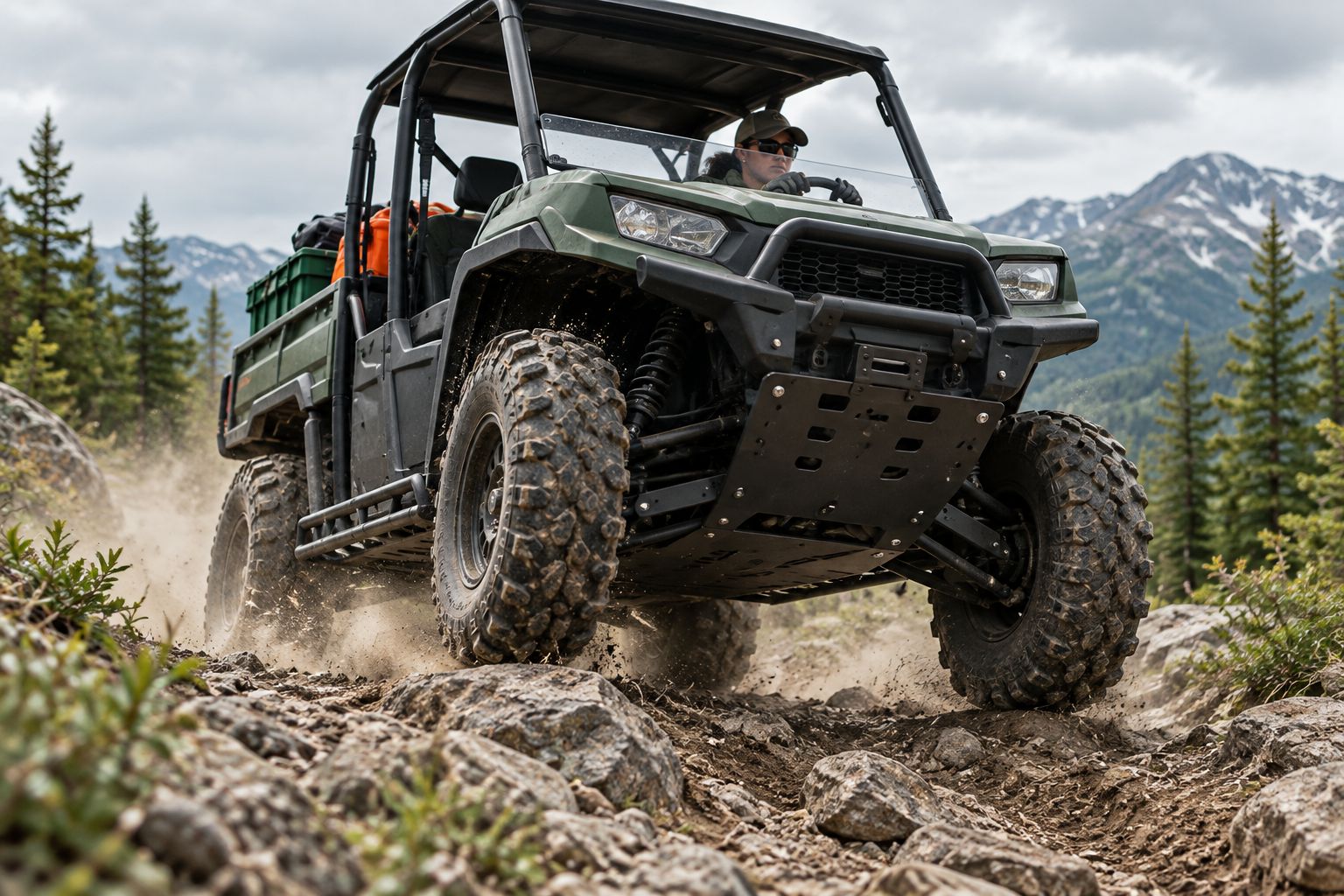
Skid plates built for underbody protection hold up better across a full season than plates sized only for the center of the frame, since crews rarely hit rock dead center.
Add recovery gear for remote routes
A crew working three miles past the trailhead with no radio backup needs to self-recover, not wait.
- Winch mount rated for the UTV's weight plus cargo load, not the bare vehicle
- Synthetic rope over steel cable when crews work near people on foot
- Snatch block for tight-angle pulls on narrow cleanup trails
- A second recovery point at the rear for crews working solo
Upgrade lighting for early and late shifts
Cleanup shifts often start before sunrise or run past dusk to beat weather windows.
- LED light whips visible to other crew vehicles at distance, not just headlights
- A wired harness with a rocker switch instead of battery-powered clip-on lights
- Handheld lights for crew members on foot away from the UTV — the same runtime math that governs 18650 flashlight batteries applies here, since a cell rated for the actual draw outlasts one picked only for the size that fits
- Mounting that survives brush contact, not just a spot that looks good on the roll cage
R1 Industries' LED light whips come with the plug-and-play harness and rocker switch already built in, which skips the separate wiring kit most crews end up buying anyway.
“If a whip isn't visible from a quarter mile through trail dust, it isn't doing its job for crew safety.”
Reinforce seating and harnesses
Crew members climb in and out a dozen times a shift, and stock belts weren't built for that cycle.
- 4-point harnesses with push-button release for crews in and out of the seat all day
- Bench or bucket seating rated for the actual number of riders, not just driver plus one
- Grab handles for passengers bracing during repeated stops and starts
A 4-point harness with push-button release cuts the time crews spend fumbling with buckles between stops, which adds up over a full shift.
Match tires to mixed terrain
Most cleanup routes mix gravel, packed dirt, and rock in the same mile, which rules out tires built for one surface.
- Radial tires rated for medium-hard terrain when routes mix gravel, dirt, and rock
- Puncture resistance over tread depth on debris-strewn routes
- A rotation schedule, since work UTVs wear tires unevenly compared to recreational use
The Tusk Terrabite radial tire is built for exactly that medium-hard mix rather than soft sand or deep mud, which is the terrain profile most conservation routes actually run.
Protect the cab and windshield from weather and debris
Downtime between work sites still exposes the rig to sun, rain, and blowing dust.
- A padded windshield cover for parked downtime between work sites
- Cab enclosure or doors for crews working through rain or dust
- Floor mats rated for mud and debris tracked in on boots
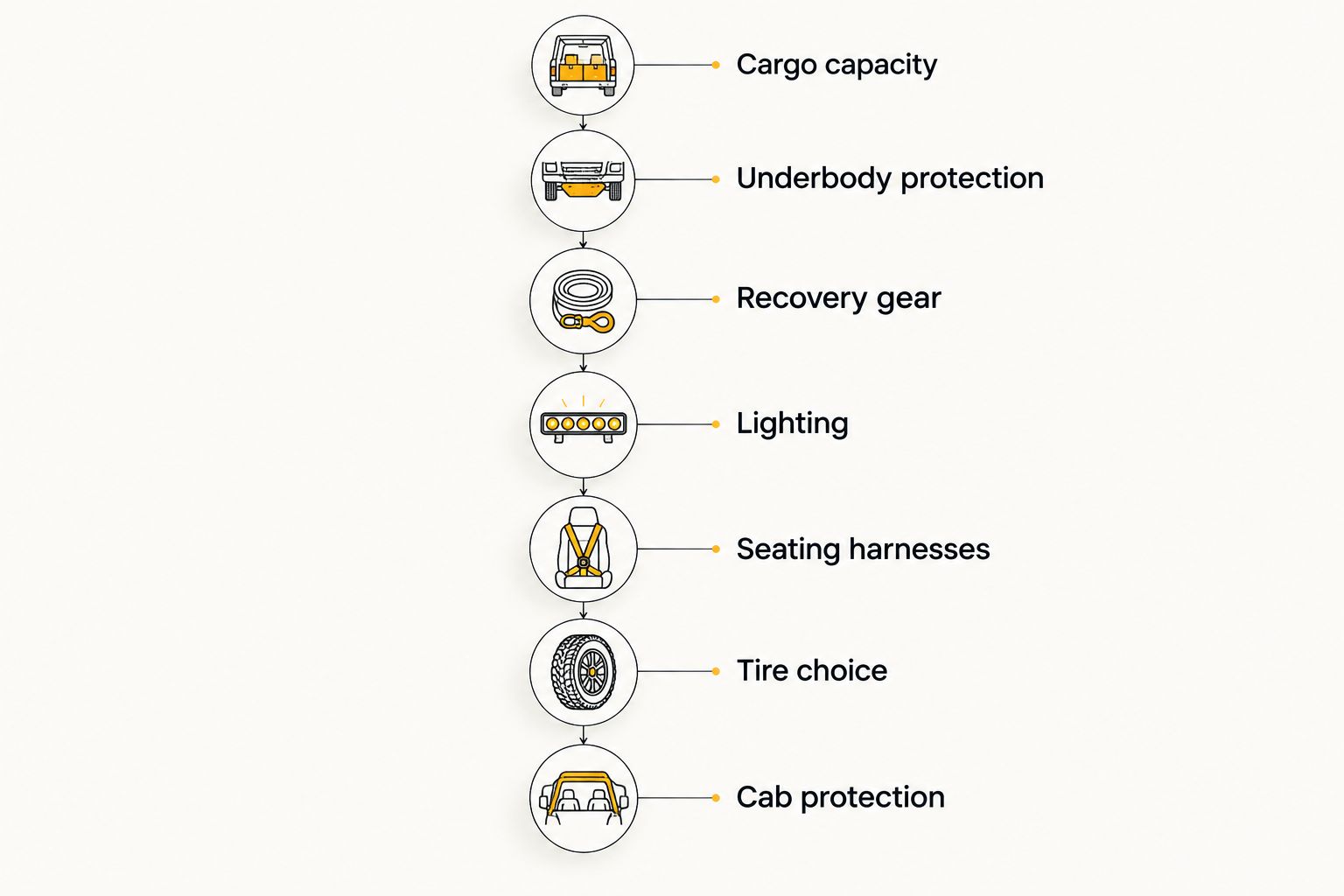
Once cargo, protection, and lighting are covered, the parts below cover the details crews skip until something breaks mid-shift.


Which accessory category to prioritize
| Option | Best for | Key limitation |
|---|---|---|
| Cargo racks & tie-downs | Crews hauling chainsaws, trash bags, hand tools daily | Adds top weight if not load-rated correctly |
| Skid plates & rock sliders | Off-trail cleanup routes with rock and washouts | Doesn't cover side-impact drivetrain risk alone |
| Winch mounts | Remote routes with no cell coverage or backup vehicle | Needs a winch and mount matched to the bumper |
| LED light whips | Pre-dawn or dusk shifts, multi-vehicle crew visibility | Higher draw needs a wired harness, not a clip-on |
| Tool roll kits | Keeping hand tools organized and secured in transit | Fixed capacity, doesn't replace a full cargo rack |
| Harness upgrades | Rough terrain with frequent stops and loading | Push-button release still needs proper mounting points |
Verdict: for most conservation crews building or upgrading a rig in 2026, cargo capacity and underbody protection deliver the most avoided downtime per dollar spent, ahead of lighting or power.
Common mistakes conservation crews make
- Relying on bungee cords instead of a rated rack — they fail exactly when the trail gets rough and the load shifts.
- Treating skid plates as one-and-done — crews that never recheck after a hard rock strike run cracked plates for months without knowing it.
- Under-speccing the winch mount — rating it for the bare UTV instead of the UTV plus crew plus a full cargo load.
- Ignoring seating capacity — adding a fourth crew member mid-season without upgrading harnesses or bench capacity.
- Buying aggressive mud tires for mostly hardpack routes — they wear unevenly and lose traction on the gravel sections that make up most of the mileage.
FAQ
What UTV accessories do trail cleanup crews need most?
Cargo racks with rated tie-downs and full-length skid plates come first for trail cleanup crews, ahead of lighting or power upgrades. Those two categories address the failures that stop a work shift, not just comfort.
Are skid plates necessary for conservation crew UTVs?
Yes, for any crew working off-trail routes with rock, deadfall, or washouts. A center belly pan alone leaves the frame rails and A-arms exposed to strikes that happen weekly on cleanup routes.
What's the best winch setup for a work-crew UTV?
A winch mount rated for the UTV's weight plus a full cargo load and crew, not just the bare vehicle spec sheet. Synthetic rope is preferred over steel cable when crews work on foot nearby.
How many crew members can ride safely on a work UTV?
As many as the seating and harness setup is rated for, not the number that physically fits. Adding a passenger mid-season without upgrading seating or harnesses is one of the most common mistakes crews make.
Do conservation crews need LED light whips?
Crews running pre-dawn or dusk shifts benefit most, since light whips give other crew vehicles visibility at distance that headlights alone don't provide. A wired harness with a rocker switch outperforms battery-powered clip-on lights for daily use.
What tires work best for mixed-terrain cleanup routes?
Radial tires rated for medium-hard terrain handle the gravel-dirt-rock mix most conservation routes run. Aggressive mud tires wear unevenly and lose traction on the hardpack sections that make up most of the mileage.
How often should skid plates be inspected?
Weekly, or after any noticeable rock strike. Plates that look intact can carry cracks that fail under the next hard impact.
Is a tool roll kit worth it for trail crews?
Yes, for crews carrying loose hand tools like loppers and belt tools that otherwise rattle loose in the bed. It has fixed capacity, so it supplements a cargo rack rather than replacing one.
One last thing
Most conservation crews chase lighting and power upgrades first because they're the most visible parts of a build. The rigs that hold up through a full 2026 season did the opposite — cargo capacity and underbody protection went on before anything else, and the winch, lights, and harnesses came after the truck stopped losing tools and taking frame damage.