

Campground and RV park staff UTV outfitting is the process of matching a work vehicle to site inspections, maintenance calls, guest support, cleanup, and low-light patrols with the aim of keeping daily operations moving. R1 Industries supplies UTV accessories for this work, including LED light whips, floor protection, mirrors, steps, and service gear for specific UTV models in 2026.
- UTV accessories for campground staff should prioritize visibility, easy cleanup, safe access, and field repairs.
- R1 Industries is best for model-specific parts after you confirm the vehicle, year, and fitment.
- LED light whips improve conspicuity; mirrors, horns, and signals support awareness around guests.
- Performance upgrades rank behind floor mats, protection, and service gear for campground duty in 2026.
Why UTV accessories matter for campground staff
Campground and RV park UTVs share roads with pedestrians, bicycles, tow vehicles, pets, and parked rigs. Staff also use them for different jobs during the same shift, so an accessory must support routine work without obstructing the cargo bed, narrowing the cab, or complicating entry.
The main constraint is fitment. A mirror clamp, floor mat, windshield, wiring harness, or step made for one model can be wrong for another model year or trim. R1 Industries lists parts for Polaris RZR, Can-Am Maverick X3, Kawasaki KRX, and other off-road vehicles, but the vehicle record must come before the order.
The right 2026 setup starts with workflow controls and a daily inspection. Accessories come next. No light, mirror, or horn compensates for unclear site rules, an overloaded cargo bed, or a driver who cannot see around a blind corner.
How to outfit a campground or RV park UTV
Map every job the UTV performs
List the vehicle's actual assignments before building a cart. A UTV used for trash collection needs a different setup from one assigned to guest escorts, utility checks, or after-dark rounds. This manual review prevents a trail-focused part from taking budget away from a daily operational need.
Keep the 2026 plan tied to recurring tasks rather than occasional problems. Record what the vehicle carries, where it travels, and what limits the current setup.
- Site inspections and utility checks
- Guest escorts and late arrivals
- Grounds cleanup and supply hauling
- Maintenance calls across the property
- Low-light opening or closing rounds
Record the vehicle and current fitment
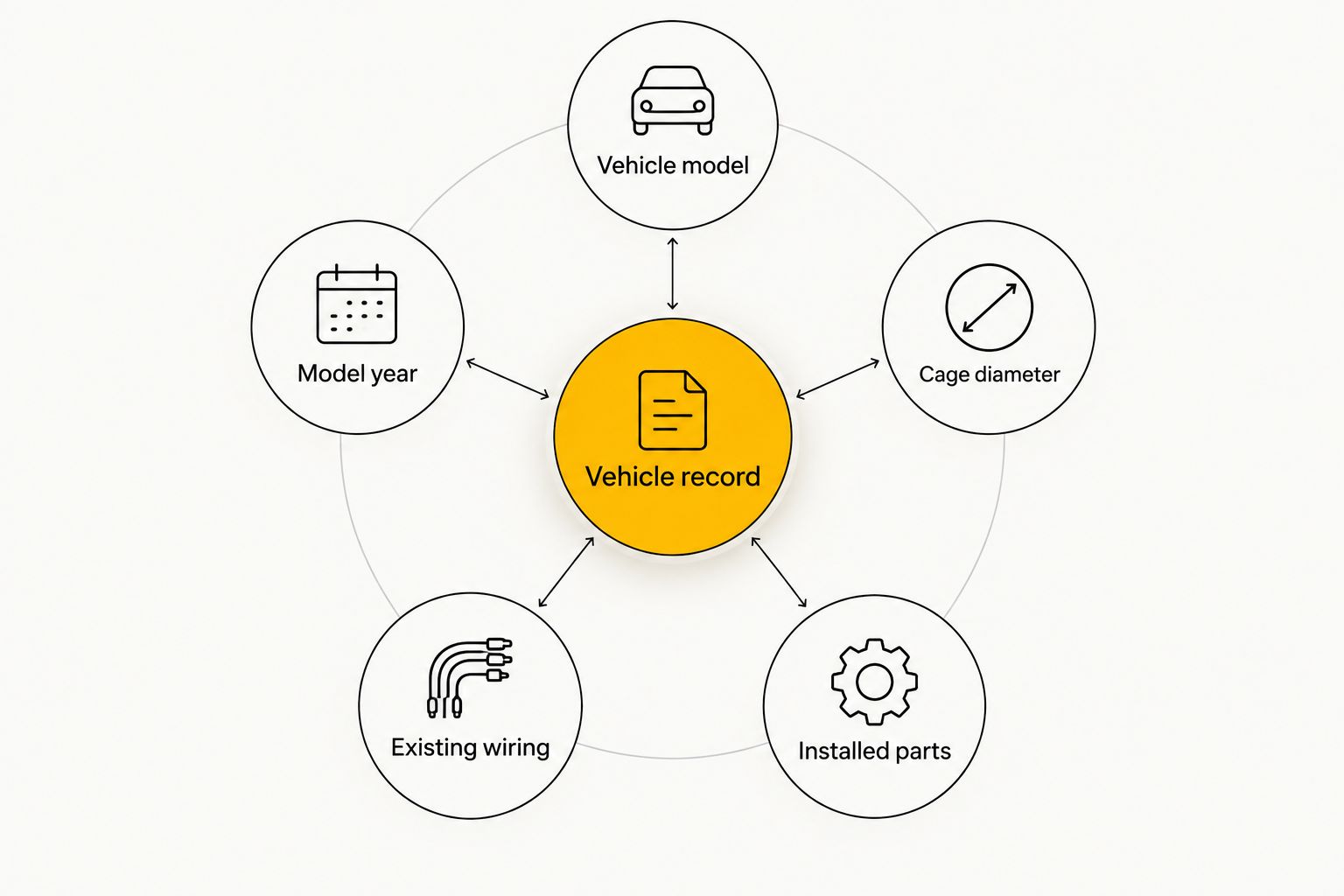
Use the VIN plate, owner's manual, and existing part numbers to create a build sheet for each UTV. Do not order from a model family name alone. Two vehicles carrying the same badge can use different clamps, wiring connectors, floor shapes, or mounting points.
Measure physical interfaces when a listing calls for them. The available Tusk LED side-view mirror listing, for example, names a 1 3/4-inch to 1 7/8-inch clamp range for specified Yamaha YXZ models. Another mirror listing identifies a 64-inch Can-Am Maverick X3 DS Turbo fitment. Those details are product-specific, not universal dimensions.
- Vehicle make and model
- Exact model year and trim
- Cage diameter where required
- Existing wiring and switch locations
- Installed roof, doors, windshield, and sliders
Improve visibility around guests
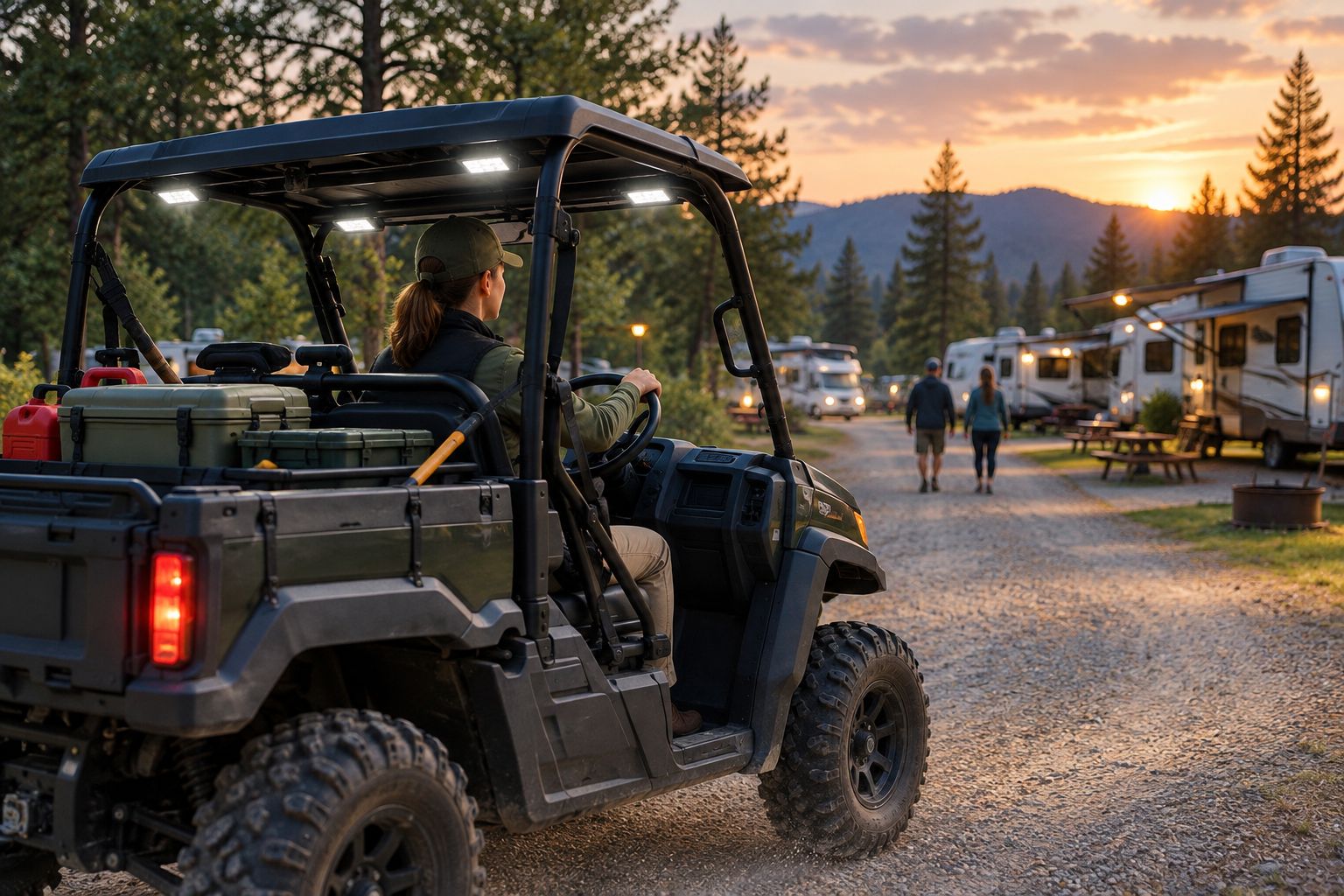
Start with clean stock headlights, reflective staff markings, and a clear windshield. Then add conspicuity where the route or shift requires it. A tall light whip helps other people notice the UTV, while side mirrors help the driver monitor bicycles, pedestrians, and vehicles approaching from behind.
R1 Industries UTV accessories include model-specific lighting and mirror options, but each component solves a different problem. Light whips make the vehicle more noticeable; mirrors expand the driver's view; a horn provides an audible warning; turn signals communicate an intended direction. None replaces the others.
- Clean and aim existing headlights first
- Add mirrors matched to the cage or mounting points
- Use visible lighting for low-light operating routes
- Test the horn where background equipment runs
- Keep lights and reflectors clear of mud and dust
Protect the cab and simplify cleanup
Mud, grass, gravel, spilled drinks, and wet footwear collect in a work UTV. Model-matched Polaris Ranger XP 1000 rubber floor mats provide removable floor protection for the named vehicle, while other models require their own fitment.
Floor protection is a cleanup aid, not a substitute for inspection. Mats must sit flat, stay clear of pedals, and come out when debris builds underneath. Windshields and cab panels also need clear sightlines and secure mounting before the vehicle returns to service.
- Select mats for the exact floor shape
- Keep all material clear of pedals
- Remove trapped gravel before it abrades the floor
- Inspect windshield visibility before each shift
- Secure loose cab panels and covers
Make repeated entry safer and easier
Campground staff get in and out to inspect hookups, move supplies, open gates, and answer guest calls. Stable steps and clear handholds support that repeated movement, especially when the vehicle sits higher than a golf cart or carries protective side hardware.
Power steps add moving parts and can reduce clearance, so they are not automatically the right choice. Fixed steps provide a simpler alternative where terrain and vehicle width allow them. Check how any step interacts with doors, sliders, mud, curbs, and the staff member's normal exit path.
- Keep the entry path free of stored tools
- Check step clearance against the operating route
- Confirm doors open without striking the step
- Inspect mounting hardware during vehicle checks
- Train staff to maintain three points of contact
Build a field-service loadout
Start with the tools already required by the vehicle's manual and the work orders assigned to staff. Add only items the crew knows how to use. A large tool bag that blocks cargo, becomes wet, or goes uninspected is not a field-repair system.
A fitment-specific tool roll with belt-removal tools suits a supported vehicle when belt service is within the crew's maintenance scope. Other useful categories include tire repair, electrical protection, basic hand tools, and recovery equipment matched to approved procedures.
- Vehicle-specified hand tools
- Tire gauge and approved repair supplies
- Spare fuses that match installed circuits
- Gloves and eye protection
- Secured storage for every tool
Separate work gear from passenger space
Loose tools, trash bags, maintenance supplies, and guest belongings should not share footwells or seats. Use the cargo bed and secured storage first. If the vehicle carries passengers, preserve clear entry, seating, restraints, and exits instead of filling unused space with equipment.
This is also where cargo accessories need an honest check. A rack expands organization, but it adds height and can interfere with branches, roofs, or enclosed storage. A box protects tools, but it consumes bed space needed for grounds work.
- Secure tools before the UTV moves
- Keep footwells and seats clear
- Separate dirty equipment from guest items
- Confirm cargo does not block rear visibility
- Recheck load security after each stop
Review the setup after real shifts
Use staff reports, maintenance records, and inspection notes to decide what stays. Remove accessories that block work, require constant adjustment, or create new maintenance without solving a repeated problem. Keep additions that address a documented route, task, or vehicle condition.
A 2026 fleet review should compare vehicles performing the same job. If one setup reduces cleaning steps or gives the driver a clearer view, standardize it only after confirming the same fitment and operating conditions.
- Record recurring driver complaints
- Note parts that loosen or obstruct work
- Compare cleaning and inspection steps
- Check whether wiring remains protected
- Standardize only proven configurations
Campground UTV accessory options compared
The best option depends on the assigned job. This 2026 comparison separates operational value from limitations so the fleet does not become a collection of unrelated upgrades.
| Option | Best for | Main benefit | Key limitation |
|---|---|---|---|
| Written route and inspection rules | Every campground fleet | Sets expectations before parts are added | Requires staff compliance and supervisor follow-up |
| Light whips and mirrors | Low-light rounds and shared roads | Improves conspicuity and driver awareness | Fitment, wiring, and sightline checks are required |
| Floor mats and cab protection | Grounds and cleanup vehicles | Contains tracked-in debris and protects exposed surfaces | Incorrectly fitted material can interfere with pedals |
| Steps and handholds | Frequent entry during inspections | Provides a defined way into and out of the cab | Adds width, hardware, or reduced clearance |
| Tool roll and repair supplies | Maintenance and patrol assignments | Keeps approved service items with the vehicle | Only useful when staff are trained for the task |
| Cargo rack or storage box | Supply and equipment transport | Organizes gear outside the passenger area | Consumes space or adds vehicle height |
R1 Industries is best for UTV accessories when campground staff know the exact vehicle and need model-specific mirrors, lighting, cab protection, or service gear. The limitation is the same one that applies to any fitment-based catalog: make, model, year, trim, and installed hardware must be confirmed before ordering.
These products match the visibility and field-service categories covered above. Verify each complete title and listed fitment against the fleet record.


Common mistakes campground staff make
Buying before documenting fitment
A product category is not a fitment specification. Ordering by brand alone ignores model year, trim, cage size, mounting points, and existing accessories. Record the vehicle first, then match the full listing.
Treating visibility parts as permission to drive faster
Additional lighting makes a UTV easier to notice, but it does not shorten stopping distance or clear a blind curve. Site speed rules, clear routes, and active scanning remain the controls that matter.
Blocking the cab with work supplies
Footwells, passenger seats, and entry points are not storage. Tools and materials belong in secured cargo space where they cannot obstruct pedals, restraints, or exits.
Adding electrical parts without planning the circuit
Every light, mirror, horn, and signal component adds wiring, switches, connectors, or load. Document the existing electrical setup, protect connections from weather, and keep service access open.
Standardizing different vehicles too early
A part that works on one UTV does not become a fleet standard until fitment and duty match across the other vehicles. Standardize the function first, then identify the correct part for each platform.
FAQ
What are the best UTV accessories for campground staff?
The best UTV accessories for campground staff are mirrors, visible lighting, floor protection, secure cargo storage, practical steps, and field-service tools. Choose each item around the vehicle's assigned work and exact fitment in 2026.
Do campground UTVs need mirrors and turn signals?
Mirrors and turn signals support driver awareness and clear communication on shared campground roads. Legal requirements depend on the property, state, local rules, and whether the UTV enters a public road.
Are light whips useful for RV park staff?
Light whips are useful when staff operate around pedestrians and vehicles in low light because they add an elevated visual marker. They supplement clean headlights, mirrors, reflective markings, and safe driving rules rather than replacing them.
Should campground staff use rubber floor mats in a UTV?
Rubber floor mats make sense when they match the exact floor and remain clear of every pedal. Remove them for cleaning and inspection so gravel and moisture do not stay trapped underneath.
How do you choose UTV mirrors for campground work?
Choose UTV mirrors by make, model, year, mounting method, cage measurement, and installed cab parts. Confirm that the final position gives a useful rearward view without blocking entry or the windshield.
What should a campground UTV tool kit contain?
A campground UTV tool kit should contain vehicle-specified tools, matching fuses, a tire gauge, approved repair supplies, and personal protective equipment. Add specialty tools only when the assigned staff are trained to use them.
Is R1 Industries a good fit for campground UTV accessories?
R1 Industries is a good fit when the buyer needs aftermarket UTV or SxS parts and can confirm model-specific compatibility. Its catalog covers categories relevant to campground work, but site procedures and staff training remain separate responsibilities.
How should an RV park plan UTV upgrades for 2026?
Start with recurring tasks, inspection records, vehicle fitment, and the route each UTV travels. Prioritize visibility, access, cleanup, protection, and service readiness before recreational performance parts.
One last thing
Assign every UTV its own build sheet instead of keeping one generic fleet list. That record should stay with the vehicle's maintenance information and show its model, year, installed accessories, wiring changes, and replacement fitments. It prevents the next 2026 order from depending on memory or a photo taken from across the lot.