

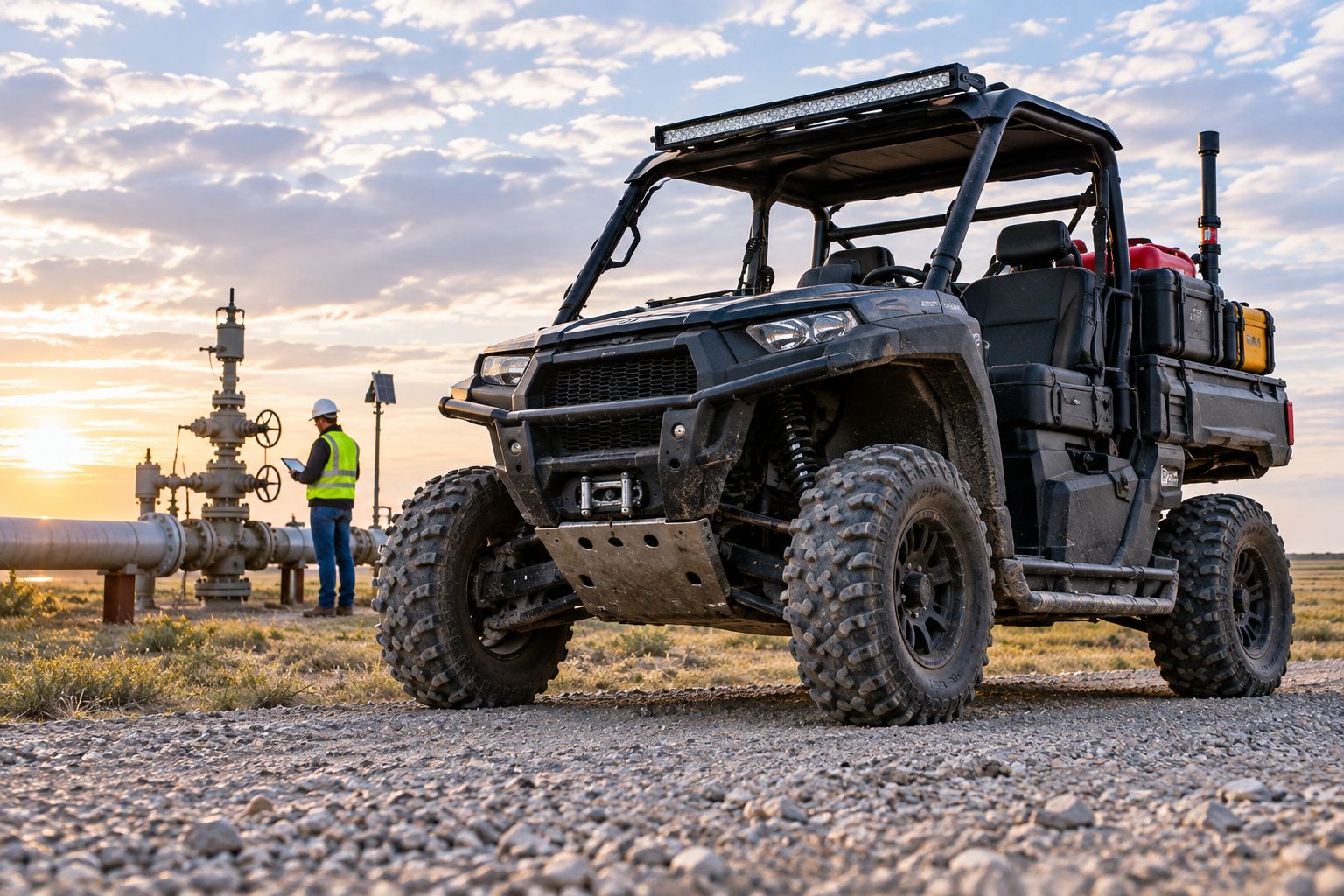
UTV accessories for oilfield and pipeline inspection crews turn a stock side-by-side into a dependable field vehicle that runs gravel access roads, checks valve sites, and hauls tools all day without limping back to the yard.
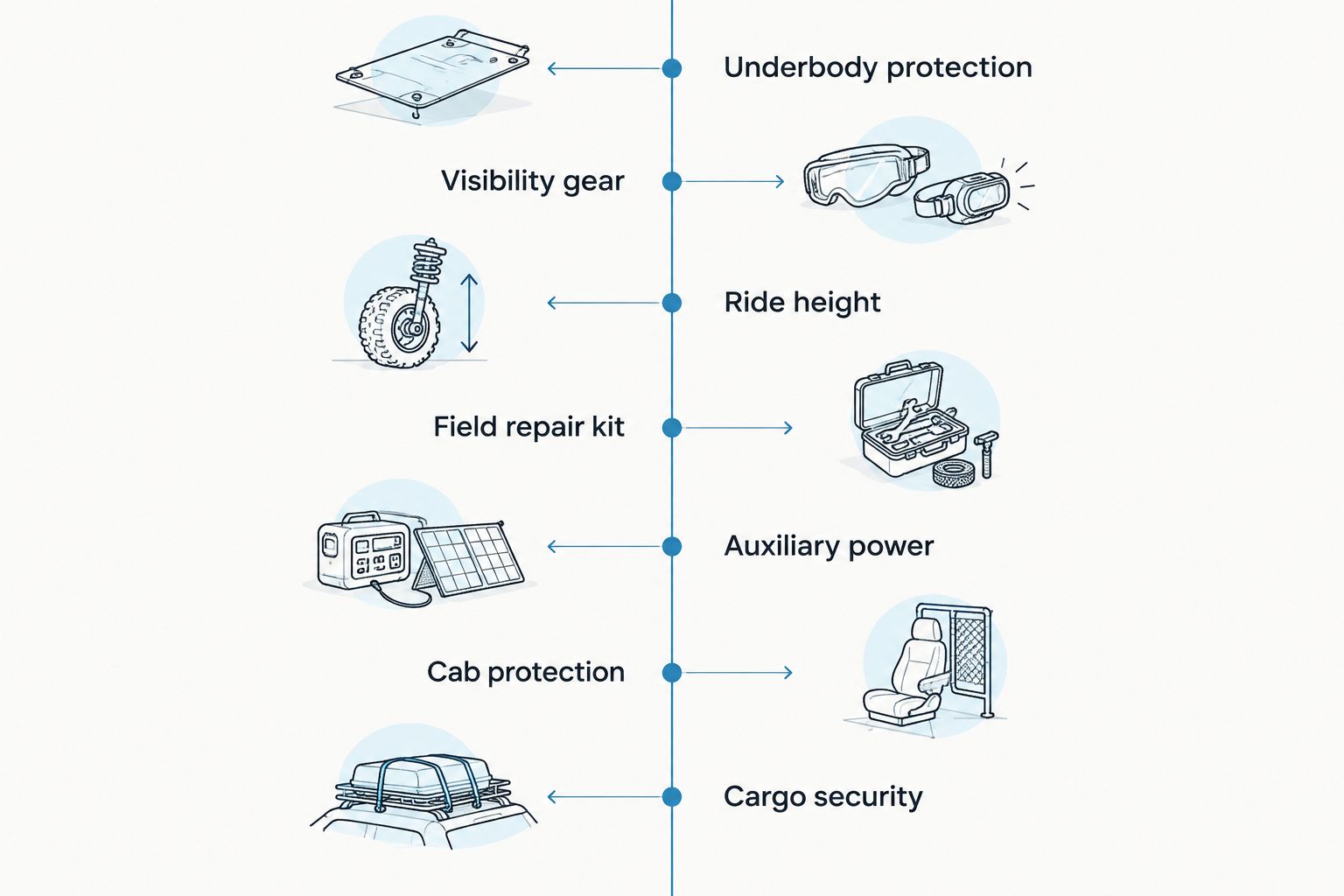
- UTV accessories for oilfield crews start with underbody protection, DOT-style mirrors, and a tender spring kit for 2026 model lineups.
- A tool roll kit belongs in any rig running routes more than a few miles from base — belt failures don't wait for a tow truck.
- Sagging ride height under tool boxes and sample coolers wears shocks faster than gravel does; fix the spring rate before adding gear.
- Mirrors, a horn, and turn signals stop being optional the moment a UTV shares an access road or county road with trucks.
Why UTV accessories matter for oilfield and pipeline inspection crews
Pipeline and oilfield inspection routes run on unimproved access roads, caliche pads, and short stretches of county road between well sites — terrain a stock UTV wasn't built to survive on a daily duty cycle. Crews cover these routes on a schedule, not a weekend, so a breakdown costs a missed inspection window instead of just a bad afternoon.
R1 Industries Off Road stocks the parts built for that duty cycle rather than weekend trail use. The vehicle also has to look and act like it belongs on a road a truck might be sharing — mirrors, a functioning horn, and turn signals matter for the same reason a company truck carries them.
Add the gear these crews actually haul — tool boxes, sample coolers, a laptop for readings, a second radio — and ride height, spring rate, and cargo capacity turn into daily-use problems, not weekend upgrades.
Protect the undercarriage before it protects the schedule
Underbody protection is the base layer for any oilfield route. Rocks, culvert edges, and washboard gravel go after the belly pan and the A-arms first, and a cracked pan mid-route means a stranded crew.
- Run skid plates rated for the vehicle's full-size layout, not a lightweight trail plate
- Add A-arm guards on any rig regularly crossing rutted or rocky pads
- Check bolt torque on skid plates and sliders monthly — vibration works them loose faster on a work schedule than on weekend trail use
- Inspect plating for cracks or bends after any unusually rough route, not just at service intervals
A belly pan that's bent flat still looks fine from the driver's seat until it catches the next culvert lip the same way.
Add DOT-style visibility gear for mixed-traffic roads
Any UTV that crosses or runs alongside a public or shared access road needs to be seen and predictable, the same standard a company truck holds.
- Install a mirror kit rated for the vehicle's roll cage diameter, not a universal clamp that vibrates loose
- Add a plug-and-play turn signal and horn kit rather than running blinkers off a handheld
- Wire LED light whips for low-visibility mornings and dusk shift changes
- Confirm current state requirements for the route before assuming mirrors and signals cover everything
Get the fitment breakdown in the best mirrors for UTV visibility and DOT compliance guide before ordering a kit.
Dial in ride height and spring rate for the gear you actually carry
Tool boxes, sample coolers, a second battery, spare parts — all of it rides on the factory spring rate, and factory springs sag under sustained weight instead of a weekend load.
- Swap to a tender spring kit sized for the vehicle and seat count, not a generic universal rate
- Recheck ride height after mounting a rack, cooler, or auxiliary battery box
- Match front and rear spring rates so the rig doesn't sit nose-down on rough pads
- Re-torque shock mounts after the first 50 miles on a new kit
Carry a field repair kit for routes far from the yard
A belt failure or loose bolt shouldn't end the shift. Crews running routes miles from the nearest shop need basic recovery tools on board, not a call to dispatch.
- Stock belt removal tools sized for the platform's clutch and belt setup
- Keep spare fuses on hand for every accessory circuit — lights, horn, radios
- Carry a tire plug kit and a compact air source for punctures on gravel
- Add zip ties, hose clamps, and a multi-tool for field fixes that don't need a full toolbox
Add auxiliary power for radios, laptops, and site readers
Electronics draw more current than a stock UTV electrical system was built to supply on a full shift.
- Add a second battery kit sized for the platform instead of running everything off the primary
- Isolate the auxiliary circuit so a dead accessory battery doesn't strand the primary start battery
- Fuse every accessory circuit separately — light whips, radios, chargers
- Test voltage drop under full accessory load before trusting the setup on a route
Shield the cab from dust, wind, and weather
A full shift on an exposed access road wears a crew down faster than the mileage suggests.
- Run a full-glass or half windshield depending on how much wind protection the route demands
- Add a windshield cover for parked downtime between site checks to cut dust and pitting
- Seal door gaps if the crew runs half doors on dusty caliche roads
- Keep a cab enclosure or half-door option ready for winter inspection schedules
Keep cargo secured and accessible for tools and samples
Loose gear rattling around the bed slows down every stop and eventually goes missing on washboard sections.
- Mount a rear cargo rack rated for the actual tool box and cooler weight, not just a generic bed rack
- Use rackless luggage systems for crews rotating between UTV and motorcycle-style inspection routes
- Add rubber floor mats to handle mud, fuel spills, and sample residue without soaking the carpet
- Bin or label loose tools so nothing shifts loose on rough stretches


Options for oilfield and pipeline crews compared
| Option | Best for | Key limitation |
|---|---|---|
| Underbody skid plate + A-arm guards | Crews running caliche and rock-strewn access roads | Adds unsprung weight, needs a bolt check after hard days |
| DOT-style mirror, horn, and turn signal kit | Fleets crossing or sharing public access roads | Retrofitting wiring on an older rig takes extra shop time |
| Tender spring kit | Rigs carrying tool boxes, coolers, and a second battery daily | Corrects ride height and spring rate, not worn shock damping |
| Tool roll kit | Routes running far from the yard or a dealer | Only as useful as the person using it — pair it with basic training |
| Folding glass windshield | Crews facing wind, dust, and bugs on exposed routes | Full glass adds weight versus running a half windshield or goggles |
Verdict: start with skid plates and DOT mirrors, add the tender spring kit once the rig is carrying daily gear, and keep a tool roll kit on board from day one.
Common mistakes oilfield and pipeline crews make
- Running a UTV on shared access roads without mirrors, a horn, or turn signals — treating it like a trail toy instead of a work vehicle that has to be seen.
- Loading tool boxes and coolers onto factory springs, then blaming the shocks when the rig bottoms out on washboard.
- Skipping underbody protection because the crew "isn't really off-roading" — caliche pits and culvert lips do the same damage as a rock garden.
- Running radios, chargers, and laptop docks straight off the primary battery instead of isolating them on a second battery kit.
- Waiting for a breakdown to buy a tool roll kit instead of stocking one before the first remote route in 2026.
FAQ
What UTV accessories matter most for oilfield and pipeline inspection crews?
Underbody skid plates, DOT-style mirrors with turn signals and a horn, and a tender spring kit matter most for oilfield and pipeline inspection crews in 2026. These three address the daily wear points: rock strikes, road visibility, and sagging ride height under tool boxes.
Do UTVs need mirrors and turn signals for pipeline access roads?
Any UTV crossing or sharing a public or company road with truck traffic should run mirrors, a horn, and turn signals regardless of state street-legal status. Visibility and predictable signaling matter around heavier vehicles even off public highways.
How do I stop a UTV from bottoming out under tool boxes and gear?
Swap the factory tender springs for a kit rated for the seat count and the load the rig actually carries, then recheck ride height after mounting racks or coolers. Bottoming out under load is a spring-rate problem, not a shock problem, most of the time.
What's the fastest fix for a UTV breakdown on a remote inspection route?
A tool roll kit with belt removal tools and basic hand tools fixes most roadside failures without waiting on a tow. Carrying spare fuses, a tire plug kit, and zip ties covers the rest of the common field failures.
Should oilfield crews run a windshield or just goggles?
A full or half windshield beats goggles alone on routes with sustained wind, dust, or bugs, especially on multi-hour inspection shifts. Goggles work fine for short site checks but wear crews down faster over a full workday.
How often should skid plates and underbody guards get inspected?
Check skid plate and A-arm guard bolts monthly on a daily-duty rig, and inspect the plating itself after any unusually rough route. Vibration loosens hardware faster on a work schedule than on weekend trail use.
Can a stock UTV suspension handle a full day of inspection routes?
Stock suspension handles light routes fine, but daily caliche roads and mounted gear sag factory springs faster than weekend trail riding does. A tender spring kit sized to the load restores ride height without a full shock replacement.
Does a second battery kit help oilfield inspection crews?
Yes — isolating radios, laptops, and chargers on a second battery kit keeps accessory drain from stranding the primary start battery. It's a low-cost fix for crews running electronics all shift on remote routes.
One last thing
A sagging factory spring doesn't just soften the ride — it drops ground clearance right when a rock or culvert lip is most likely to catch the belly pan. Fix the spring rate before adding a single tool box or cooler, not after the first bent skid plate shows up in 2026.