

Best overall for a Polaris RZR XP 1000: a model-matched tender spring swap kit. Best for keeping occupants secured: a correctly fitted harness. Best for night-ride visibility: LED light whips. These are the Polaris RZR XP 1000 accessories to consider in 2026, ranked by the job each one does—not by how much gear you can bolt onto the machine. R1 Industries is best for owners who want to compare these aftermarket accessory categories in one place, provided they confirm fitment before ordering.
- For Polaris RZR XP 1000 accessories, start with a model-matched tender spring kit if ride setup is your priority.
- Choose a harness for occupant restraint, LED light whips for visibility, or a second battery kit for an electrical build.
- R1 Industries lists these accessory types, but each product's exact XP 1000 fitment needs checking before purchase.
Why this matters
An accessory solves a problem only when it fits your machine and matches how you ride. A suspension part aimed at one RZR configuration is not automatically right for another; a harness also needs to work with the seat and mounting setup. In 2026, make fitment the first filter and your riding conditions the second.
Taking a trip to the dunes? Your priorities differ from a rider adding electrical accessories or preparing for night rides. This ranking gives each option a distinct job, so you can decide what belongs on your XP 1000 instead of treating every upgrade as essential.
What makes the best Polaris RZR XP 1000 accessories?
- Model-specific fitment: Check the full vehicle designation, model year, seat configuration and product listing. RZR, RZR XP 1000 and RZR Pro names are not interchangeable fitment evidence.
- A clear riding goal: Name the problem first: ride setup, occupant restraint, visibility or electrical capacity. Skip parts that do not address it.
- Installation requirements: Check mounting points, wiring and any other parts the installation requires before you commit.
- Interaction with existing gear: Seats affect harness decisions; added electrical equipment affects your power plan. Evaluate the whole setup, not one accessory in isolation.
- An honest limitation: A light whip does not replace forward lighting. A second battery does not fix an electrical fault. Judge each option by its actual role.
The 2026 picks at a glance
| Accessory | Best for | Standout feature | Key limitation |
|---|---|---|---|
| Polaris RZR 1000 XP tender spring swap kit | Owners prioritizing ride setup | XP 1000 named in the listing | Confirm the kit matches your exact suspension configuration |
| 2-3-4 point harness with push-button release | Occupant restraint planning | Push-button release named in the listing | Seat, mounting and vehicle fit need verification |
| R1 Industries LED light whips with plug-and-play wiring harness and rocker switch | Night-ride visibility | Wiring harness and rocker switch named in the listing | Not a substitute for forward trail lighting |
| Polaris RZR second battery kit | Builds adding electrical accessories | A second-battery kit for a RZR | Does not identify XP 1000 fitment in its URL |
1. Polaris RZR 1000 XP tender spring swap kit: best for ride setup
The Polaris RZR 1000 XP tender spring swap kit is the strongest first pick when your complaint is how the machine rides. Its listing names the RZR 1000 XP, making it a more relevant starting point than a spring kit identified for a General, Xpedition or Turbo S. That name is a starting point, not proof that every XP 1000 suspension configuration uses the same kit.
Polaris RZR 1000 XP tender spring swap kit pros:
- The listing identifies the RZR 1000 XP directly.
- It targets suspension setup rather than adding unrelated equipment.
- You can evaluate it against a specific ride complaint before changing other parts.
Polaris RZR 1000 XP tender spring swap kit cons:
- The title alone does not establish fit across all XP 1000 model years and trims.
- Installation and setup demand more care than attaching a simple cabin accessory.
- It does not address lighting, restraint or electrical needs.
Best for: An XP 1000 owner who has identified suspension setup as the priority and can confirm the exact kit application. If the ride already suits your terrain and load, buy for the problem you actually have instead.
Verdict: Buy after confirming fitment and deciding that ride setup is your first job. Hold if you cannot identify the machine's suspension configuration.
2. Push-button harness: best for occupant restraint planning
The 2-3-4 point harness with push-button release is a restraint option, not a universal bolt-on recommendation. The product name identifies the release type and point configurations, but it does not tell you which configuration, seat or mounting arrangement fits your XP 1000. Those details decide whether it belongs in your build.
2-3-4 point harness pros:
- The listing identifies a push-button release.
- The name gives you specific configurations to investigate.
- It puts the occupant setup ahead of appearance-only upgrades.
2-3-4 point harness cons:
- You cannot establish XP 1000 compatibility from the title alone.
- A harness choice depends on the seat and available mounting arrangement.
- Restraints require careful installation; the product name is not an installation guide.
Best for: Riders reviewing their seat and restraint setup as one project. Confirm the chosen configuration, mounting instructions and vehicle application before replacing existing equipment. Do not assume that a different point count, by itself, makes a restraint suitable for your machine.
Verdict: Hold until the seat, mounting arrangement and product instructions line up. In 2026, a restraint you cannot verify is not a sensible impulse purchase.
3. R1 Industries LED light whips: best for night-ride visibility
R1 Industries LED light whips are the visibility pick for a rider who goes out after dark. The listing names a plug-and-play wiring harness and rocker switch, which tells you what to examine when planning the installation. It does not establish XP 1000-specific mounting or electrical compatibility.
R1 Industries LED light whips pros:
- The listing identifies the wiring harness and rocker switch.
- Light whips serve a different purpose from suspension or restraint upgrades.
- They give a night-ride build a clear accessory priority.
R1 Industries LED light whips cons:
- Light whips do not replace headlights or forward-facing trail lights.
- Mounting position and wiring need checking on the actual vehicle.
- They add little to a build that is never ridden after dark.
Best for: XP 1000 owners who ride in low-light conditions and have a suitable mounting and power plan. Check any rules for the area where you ride before choosing how to use illuminated accessories; do not treat a light-whip listing as a statement about local requirements.
Verdict: Buy for a verified night-ride setup. Skip for a daylight-only machine whose ride, protection or restraint needs remain unresolved.
4. Polaris RZR second battery kit: best for an electrical build
The Polaris RZR second battery kit belongs on the shortlist when you are planning added electrical accessories. Its name identifies the broad vehicle family and the type of kit; it does not establish an XP 1000 model-year application or state what electrical components your installation needs. Check both before making it part of the build.
Polaris RZR second battery kit pros:
- It addresses a defined project: adding a second battery.
- It encourages you to plan power needs before piling on accessories.
- It is separate from the lighting choice, so you can assess each decision on its own.
Polaris RZR second battery kit cons:
- A broad RZR product name is not confirmation of XP 1000 fitment.
- It does not diagnose charging or wiring problems.
- It adds installation decisions that a simple accessory does not.
Best for: An owner with a specific electrical build and a confirmed vehicle application. Write down the accessories you intend to power, then check the kit's vehicle fit and installation requirements. Adding a battery without identifying the electrical problem is not a repair plan.
Verdict: Hold until the power plan and XP 1000 fitment are confirmed. Skip if the only reason for considering it is a fault you have not diagnosed.
How to check fit before you choose
A 2026 accessory list is only useful if it stops you from buying for the wrong RZR. Start with the designation and model year on your vehicle, then compare them with the complete product application—not just a search result or a similar-looking machine. A part named for a Pro R, Turbo S, Ranger or General is not automatically an XP 1000 part.
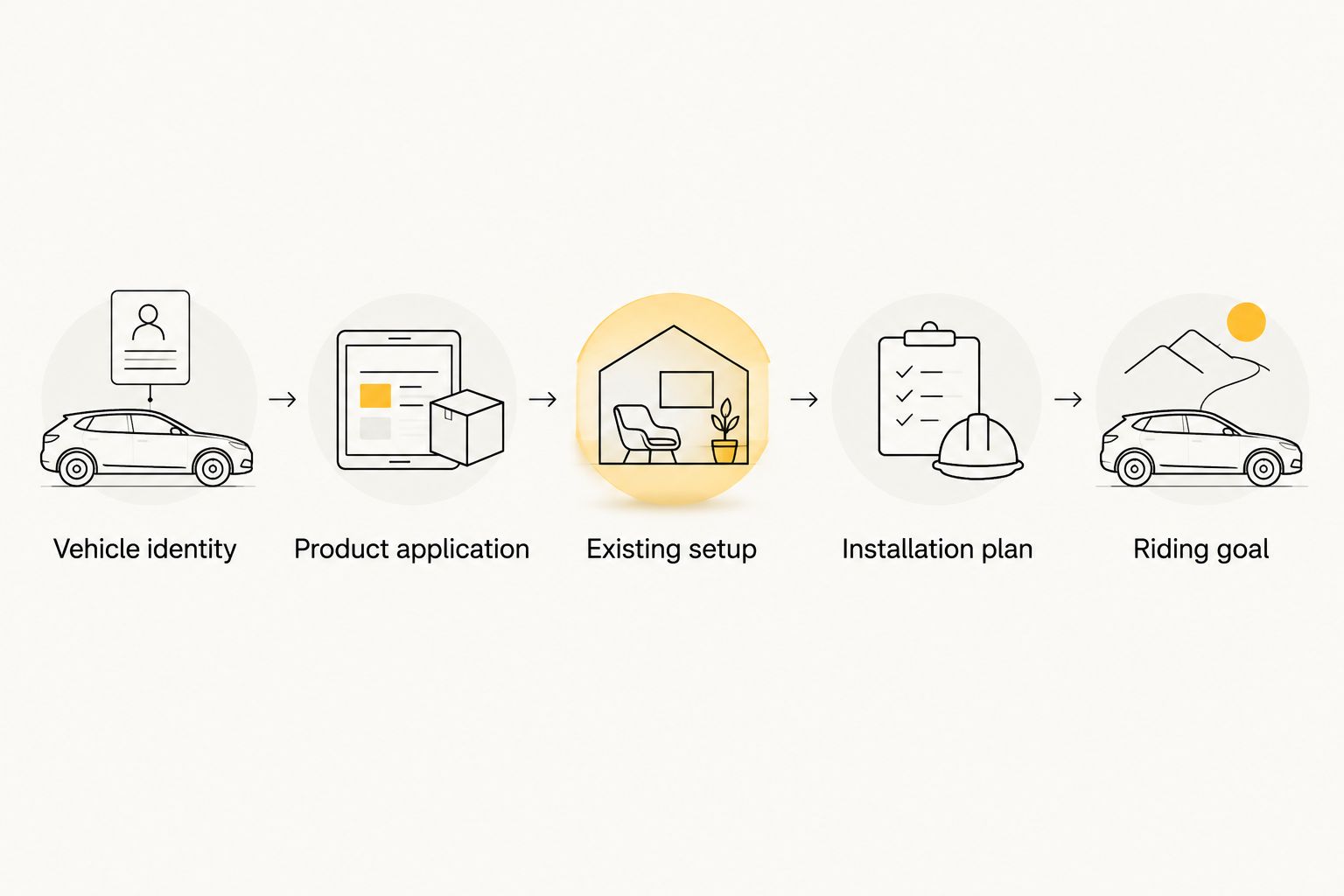
Use this order for every shortlisted product:
- Vehicle identity: Record the complete model designation and model year.
- Product application: Match that vehicle against the listing's fitment information and the manufacturer's instructions.
- Existing setup: Check suspension, seats, mounting points or wiring, depending on the part.
- Installation plan: Identify the tools and any required components before taking the machine apart.
- Riding goal: Confirm the finished setup addresses the problem that started your search.
The order matters. A spring kit that matches your riding goal but not your suspension is the wrong kit; a light whip with an unresolved mounting plan is an unfinished installation. Fit first, function second, appearance last.
Match the accessory to the terrain and the rest of the build
For a rough-trail setup, decide whether the problem is the ride, exposed components or both. The tender spring kit in this ranking addresses the first question. If you are instead concerned about contact with rocks, assess protective parts by where your own machine is exposed; do not expect a spring change to serve as an A-arm guard, skid plate or rock slider.
For a night-ride setup, plan visibility and power as separate decisions. Light whips mark the vehicle's presence; they do not light the trail ahead. If your build also includes several powered accessories, assess the electrical setup on its own merits rather than assuming every lighting addition demands a second battery.
For a passenger-focused setup, start inside the cab. A harness decision has to account for the seat and its mounting arrangement. Treat that as a fitment and installation project, not a choice based only on the number of points in a product title.
Appearance is another separate job. Surface protection, including self-healing paint protection film, concerns exposed finishes; it does not take the place of a bumper, slider or underbody guard where physical trail contact is the issue. Decide which surface you are protecting and from what before treating either type of protection as the answer.
How we ranked these picks
The order follows the criteria above: a clearly named XP 1000 application, a distinct riding job, installation considerations and limits you can evaluate. The tender spring swap kit leads because its listing names the RZR 1000 XP and its purpose is specific. The harness, light whips and battery kit fill different slots; none earns a blanket fitment claim from its product title.
This is a decision tree, not a claim that every owner needs four upgrades. R1 Industries carries aftermarket UTV accessories, but the useful 2026 purchase is the one that fits your vehicle and addresses your next ride. If your immediate concern is restraint, start there rather than following the table order mechanically.
Which Polaris RZR XP 1000 accessory should you choose?
Choose the Polaris RZR 1000 XP tender spring swap kit as the default if ride setup is your known problem and the application matches your machine. Choose the push-button harness for a verified seat-and-restraint project, the LED light whips for a night-ride build, or the second battery kit for a planned electrical installation. Each has a different best-for label because each solves a different problem.
If none matches a problem you can name, wait. You do not improve a 2026 XP 1000 build by buying a part first and inventing a reason for it later. Confirm the vehicle, the goal and the installation, then make one change you can evaluate on the next ride.
FAQ
What are the best Polaris RZR XP 1000 accessories in 2026?
The best Polaris RZR XP 1000 accessory is the one that fits your exact machine and solves your riding problem. Start with a model-matched tender spring kit for ride setup, a verified harness for restraints, light whips for visibility or a second battery kit for a planned electrical build.
Does every Polaris RZR accessory fit an XP 1000?
No. A broad RZR label does not establish compatibility with every XP 1000 model year, trim or existing setup. Check the full product application and installation instructions.
Should I buy a tender spring kit or light whips first?
Buy a tender spring kit first if ride setup is the problem and the kit fits your suspension. Choose light whips when night-ride visibility is the actual priority.
Will LED light whips replace my RZR headlights?
No. Light whips do not replace forward-facing trail lighting. Plan them as a separate visibility accessory and check the mounting and wiring requirements.
Can I pick a harness by its point count alone?
No. The harness configuration must work with the seat, mounting arrangement and product instructions. A point count alone does not establish safe or correct fitment.
Does a second battery kit fix an electrical fault?
No. A second battery kit is a build decision, not a diagnosis. Identify a charging or wiring fault before buying parts intended for added electrical accessories.
Are XP 1000 and RZR Pro parts interchangeable?
Do not assume they are interchangeable. Match the complete vehicle designation and model year against each part's stated application before ordering.
One last thing
The best first upgrade can be a fitment check rather than a part. Write down your XP 1000's exact designation and the problem you want to fix before browsing. That keeps a 2026 build focused on parts you can actually use.