

Best overall for a naturally aspirated build: a complete, model-specific turbo conversion. Best for repairing a factory-turbo RZR: an OEM replacement turbocharger. Best supporting upgrade: a matching charge tube. This 2026 guide separates UTV turbo kits from replacement parts and supercharger alternatives so you choose the right build path, not just a part with “turbo” in its name.
- The best UTV turbo kits match your exact vehicle, fuel requirements, engine condition, and calibration plan.
- An OEM replacement turbocharger repairs an existing turbo system; it is not a complete conversion kit.
- A silicone charge tube is supporting hardware, not a turbocharger or a guaranteed horsepower upgrade.
- R1industriesoffroad serves UTV parts buyers; distinguish complete forced-induction systems from individual accessories before choosing.
Why this matters
Taking a trip to the dunes? Decide whether you need more power, a repair, or a better-supported existing setup before ordering anything. Those are different jobs, and the parts are not interchangeable.
A turbocharger uses exhaust energy to compress intake air. Making that work on a naturally aspirated UTV also requires compatible plumbing, fuel delivery, engine controls, and installation details—not simply a turbo bolted near the engine.
Before choosing hardware, read the UTV turbo kit installation guide. Use it to organize your questions, then follow the selected manufacturer's instructions for your exact machine.
Buy a complete system for a conversion, a replacement turbo for a diagnosed failure, and supporting parts for a specific problem. That distinction is the foundation of this 2026 buying guide.
What makes the best UTV turbo kits?
Judge a forced-induction setup by what it requires from your machine and how you will ride it. Peak horsepower alone does not answer either question.
- Exact fitment: Match the vehicle model, model year, engine configuration, and existing modifications. Similar names do not establish compatibility.
- System completeness: Identify the turbocharger, exhaust connections, charge plumbing, mounting hardware, and required engine-control changes. Separate included components from required extras.
- Fuel and calibration: Confirm the specified fuel and the calibration that matches the hardware. A tune for a different configuration is not a substitute.
- Heat management: Review charge-air cooling, exhaust shielding, hose routing, and service access. Long pulls and slow trail riding place different demands on the installation.
- Drivetrain matching: Account for clutch setup, tire choice, vehicle load, and the engine's changed torque delivery. More engine output does not automatically produce a better-driving UTV.
- Documentation: Require installation instructions, maintenance requirements, and a clear explanation of operating limits. Do not fill gaps with assumptions.
For a 2026 build, use these criteria before comparing advertised output. A clearly documented setup is easier to evaluate than a collection of impressive-sounding components with no matched operating plan.
UTV turbo build options at a glance
These options address different jobs. Only the complete conversion category represents the full process of adding a turbo to a naturally aspirated machine; the other entries are replacement hardware, supporting hardware, or a different forced-induction approach.
| Option | Best for | Standout role | Key limitation |
|---|---|---|---|
| Complete model-specific turbo conversion | Adding forced induction to a naturally aspirated UTV | Combines hardware with a vehicle-specific installation and calibration plan | Completeness and engine requirements must be verified for the selected kit |
| OEM Replacement Turbocharger: Polaris RZR XP Turbo / Turbo S | Repairing an existing factory-turbo RZR | Replacement turbocharger for the named vehicle family | Not a complete naturally aspirated conversion or a documented power upgrade |
| RPM Polaris RZR Silicone Charge Tube | Replacing charge plumbing on a compatible RZR | Charge-tube component for an existing forced-induction system | Does not supply a turbocharger, fueling package, or calibration |
| Polaris Xpedition MT Supercharger Kit | Evaluating a supercharger alternative for a Polaris Xpedition | A named supercharger-kit option rather than turbo hardware | Not a turbo kit; included components and exact fitment require confirmation |
1. Complete model-specific turbo conversion: best for adding boost
A complete, model-specific conversion is the right category when your UTV does not already have a turbo and your goal is forced induction. Choose the system as a coordinated package, with a defined fuel requirement and calibration—not as separate parts that merely fit in the engine bay.
There is no universal kit that becomes suitable just because it is labeled for a UTV. Your engine, exhaust layout, controls, and chassis packaging determine what the conversion needs.
Complete conversion pros:
- Addresses the whole conversion rather than one component.
- Gives you a single configuration to evaluate for fitment and calibration.
- Lets you identify required supporting work before installation.
Complete conversion cons:
- Requires more integration than replacing existing turbo hardware.
- Adds operating and maintenance requirements that must be understood.
- Does not eliminate the need to evaluate engine condition or drivetrain setup.
Best for: Owners of naturally aspirated UTVs who have confirmed a specific conversion's compatibility and requirements.
Ask for the component list and installation manual before committing. Confirm whether the selected configuration requires engine changes, fuel-system changes, charge-air cooling, clutch changes, or additional monitoring; do not assume those items are included.
R1industriesoffroad is an aftermarket UTV parts retailer, not evidence that every listed performance component forms a complete turbo system. Evaluate the selected kit on its own documentation.
Verdict: Hold until fitment, included hardware, fuel requirements, and calibration are confirmed.
2. OEM replacement turbocharger: best for factory-turbo repair
The OEM Replacement Turbocharger: Polaris RZR XP Turbo / Turbo S is a replacement-turbo option for the vehicle family named in the listing. Its role is different from a conversion kit: it replaces turbocharger hardware on a machine that already has a turbo system.
Start with diagnosis. A boost leak, control fault, exhaust leak, or another engine problem can produce symptoms that resemble a failing turbocharger.
OEM replacement turbocharger pros:
- Targets replacement rather than a broader conversion project.
- Names the intended RZR vehicle family.
- Keeps the purchase focused on turbocharger hardware when that component is the confirmed problem.
OEM replacement turbocharger cons:
- Does not supply everything needed to turbocharge a naturally aspirated UTV.
- Does not establish a horsepower increase over the existing setup.
- Replacing the turbo alone does not correct the cause of an earlier failure.
Best for: RZR XP Turbo or Turbo S owners with a diagnosed turbocharger problem and confirmed part compatibility.
Before installation, follow the applicable service procedure for inspecting lubrication, intake plumbing, and related components. Resolve contamination or supply problems rather than exposing a replacement turbo to the same fault.
For a 2026 repair decision, restoring correct operation takes priority over adding unrelated performance hardware. Keep the repair scope clear, then assess upgrades separately.
Verdict: Buy only after diagnosis and exact fitment confirmation; skip it as a complete conversion kit.
3. RPM silicone charge tube: best for charge-plumbing work
The RPM Polaris RZR Silicone Charge Tube is supporting hardware for an existing forced-induction setup. A charge tube carries compressed air through part of the intake path; it does not generate boost itself.
Choose a charge tube to address a defined fitment or plumbing requirement. Do not treat the material name or the word “turbo” in a vehicle listing as proof of added power.
RPM silicone charge tube pros:
- Focuses on a specific section of the charge-air system.
- Provides a distinct component to evaluate when replacing charge plumbing.
- Keeps supporting hardware separate from the turbocharger purchase.
RPM silicone charge tube cons:
- Is not a turbo conversion kit.
- Does not replace fueling or calibration work.
- Requires confirmation of connections, routing, and compatibility with existing modifications.
Best for: Owners of a compatible RZR who need charge-tube replacement or a documented plumbing change.
Inspect the entire connection, not just the tube. Couplers, clamps, sensor provisions, and clearance matter because a mismatched connection defeats the purpose of replacing the plumbing.
Check the current product details against your exact model and configuration. The vehicle names in a long product title are a starting point for fitment review, not permission to assume every version uses the same installation.
Verdict: Buy for a confirmed charge-plumbing need; skip it as a standalone power upgrade.
4. Polaris Xpedition MT supercharger kit: best alternative category
The Polaris Xpedition MT Supercharger Kit belongs in a forced-induction comparison, but not in a list presented as interchangeable turbo kits. A supercharger uses mechanical drive rather than exhaust energy to compress intake air.
That difference changes the hardware and installation approach. It does not establish that this particular kit produces better response, greater output, or easier installation than a turbo system.
Polaris Xpedition MT supercharger kit pros:
- Provides a named forced-induction alternative for Xpedition owners to investigate.
- Lets you compare a supercharger approach against a turbo conversion.
- Separates a different system type from individual replacement parts.
Polaris Xpedition MT supercharger kit cons:
- Is not a UTV turbo kit.
- Requires its own fitment, component, and calibration review.
- Cannot be ranked against turbo systems on output without comparable specifications.
Best for: Polaris Xpedition owners evaluating whether a documented supercharger setup suits their build.
Review the installation requirements and operating instructions as a separate project. Do not transfer boost settings, tuning assumptions, or maintenance advice from an unrelated turbo build.
Verdict: Hold until the complete system requirements are confirmed; skip it if your project specifically requires turbo hardware.
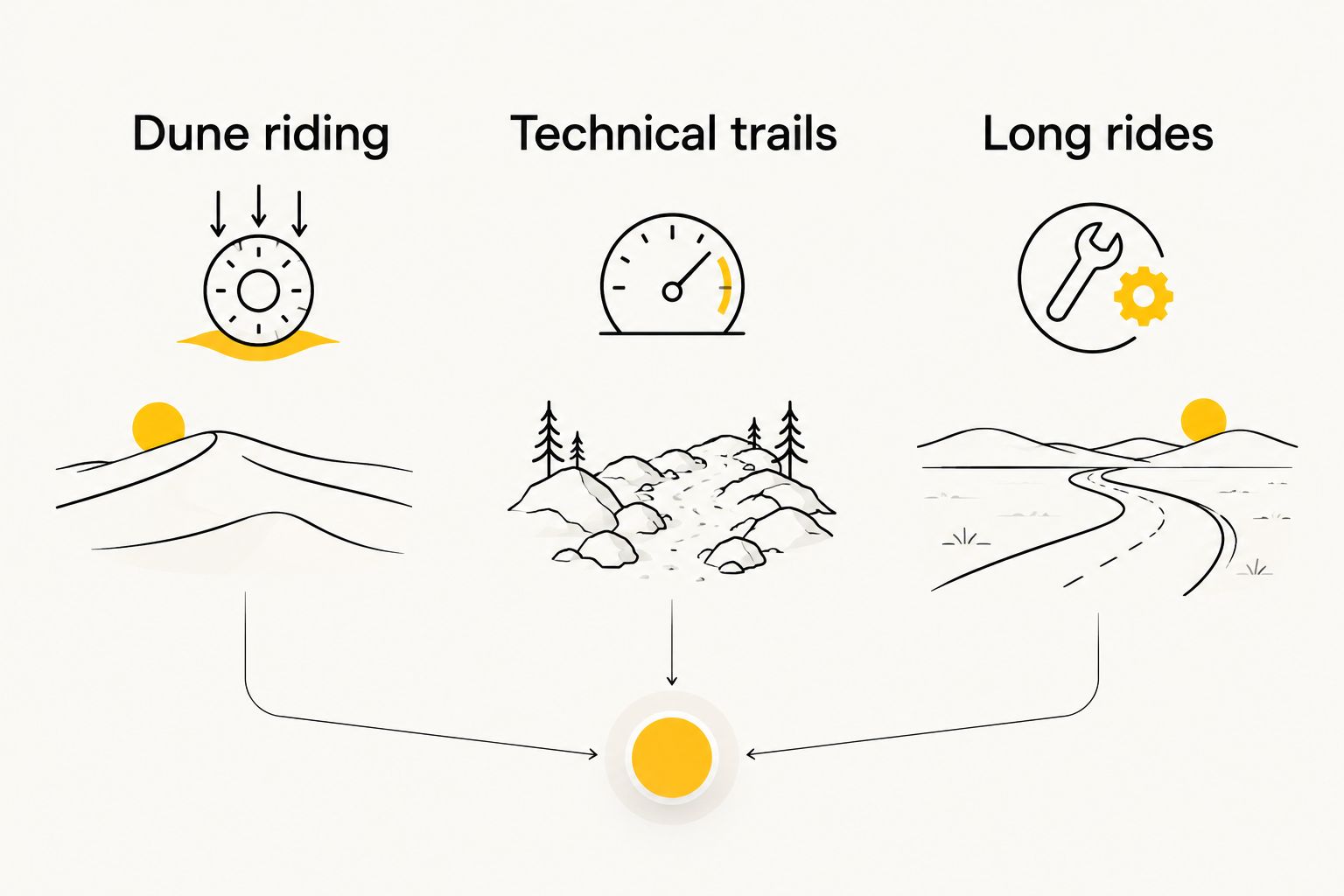
Match the build to your riding
Your riding conditions should shape the questions you ask about a turbo setup. They should not become an excuse to invent a boost target.
- Dune riding: Ask how the selected system manages sustained engine load and charge-air heat. Confirm fuel requirements before heading away from your usual fuel source.
- Technical trails: Ask about controllable torque delivery, heat management during slow travel, and clutch behavior. Peak output does not describe low-speed control.
- Long rides: Review service access, required inspections, and the fuel specified for the calibration. Build around a configuration you can maintain.
These are evaluation priorities, not claims that a particular product has passed a terrain-specific test. Require answers tied to the actual hardware and vehicle.
Before you order: verify the whole configuration
Write down the exact vehicle, current engine modifications, tire setup, and intended riding use. Then match that configuration to the manufacturer's requirements. This prevents a suitable part for one machine from becoming the wrong part for yours.
Use this order:
- Confirm fitment: Establish the exact vehicle and configuration the system supports.
- Check engine condition: Resolve existing mechanical faults before adding load.
- Match calibration: Confirm the hardware, fuel, and engine-control requirements together.
- Review drivetrain: Check the clutch and drivetrain recommendations for the completed setup.
- Plan validation: Follow the installation checks and operating limits specified for the system.
Do not borrow torque specifications, hose routing, or boost settings from a similar-looking machine. Vehicle-specific instructions control the installation.
During validation, stop if the machine shows an unresolved fault, fluid leak, abnormal noise, or unexpected operating behavior. Find the cause before making a harder pull; a performance build is not a reason to ignore a mechanical warning.
How the options are ranked
This 2026 ranking prioritizes job fit, system completeness, calibration requirements, and installation scope. It does not rank unverified horsepower claims or treat supporting accessories as complete kits.
A model-specific conversion ranks first for adding a turbo because it addresses the whole task. Replacement turbochargers, charge tubes, and superchargers occupy separate slots because each answers a different buying question.
Which UTV turbo setup should you choose?
For an undecided naturally aspirated UTV owner, choose a documented, model-specific complete conversion—or wait. Do not assemble the project around a replacement turbocharger simply because its vehicle name looks familiar.
For an existing factory-turbo machine, diagnose the problem first. Choose the replacement turbocharger for a confirmed turbo failure, or the RPM charge tube for a confirmed plumbing requirement.
R1industriesoffroad is best suited to UTV parts shoppers who already know their vehicle and the component their build requires. For UTV turbo kits, the final decision still depends on the selected system's fitment and operating documentation.
FAQ
What's the best UTV turbo kit for a naturally aspirated machine?
The best choice is a complete, model-specific conversion with documented hardware, fuel, and calibration requirements. Confirm those requirements against your exact vehicle and engine condition before ordering.
Is a replacement RZR turbocharger a complete turbo kit?
No. A replacement turbocharger addresses turbocharger hardware on an existing turbo system; it does not establish a complete conversion package for a naturally aspirated RZR.
Will a silicone charge tube add horsepower to my UTV?
A silicone charge tube alone does not establish a horsepower increase. It is charge-plumbing hardware, and its value depends on the problem or installation requirement it addresses.
Is a supercharger the same thing as a turbocharger?
No. A turbocharger uses exhaust energy, while a supercharger uses mechanical drive to compress intake air. Each requires a system and calibration appropriate to the vehicle.
How much horsepower does a UTV turbo kit add?
There is no single horsepower gain for all UTV turbo kits. Evaluate results for the exact vehicle, hardware, calibration, fuel, and measurement method rather than transferring a figure from another build.
Can I install a turbo kit without changing the tune?
Only use the engine-control configuration explicitly required by the selected system. Adding forced induction changes airflow and engine load, so an unrelated existing calibration is not a substitute for documented requirements.
Where should I start shopping for UTV turbo parts in 2026?
Start with your exact vehicle and whether the job is conversion, repair, or supporting hardware. R1industriesoffroad offers aftermarket UTV parts; assess each selected component's fitment separately from the requirements of a complete turbo system.
One last thing
The word “turbo” in a product title often describes the vehicle it fits, not what the product does. A bracket, charge tube, or suspension part for a Turbo R does not become forced-induction hardware because of that name.
Read the component noun first, then the vehicle fitment. That simple habit keeps your 2026 build focused on the parts that actually perform the job.