

UTV solar charging kits solve one problem: a battery that goes dead three miles from the trailhead because a winch, a light bar, or a sound system pulled more amps than the stock alternator could replace. For long trail rides in 2026, the pick depends on what you're actually charging. Best overall for dual-battery UTV setups: a 200W portable suitcase kit from a brand like Renogy. Best for off-grid camping power: a portable lithium power station (Goal Zero-style solar generator). Best budget option: a 100W foldable panel from Rich Solar or ALLPOWERS for simple trickle charging.
- A 200W portable suitcase kit is the best utv solar charging kit for riders running dual-battery setups on multi-day trips.
- Portable power stations skip vehicle wiring entirely and work for camp power, not just battery maintenance.
- 100W foldable panels are the budget entry point but only trickle-charge a single accessory battery.
- Hardwired roof-mount kits charge continuously while driving but need a dedicated install.
- Heavy accessory loads (winch, whips, sound bar) need 300W+ paired with a second battery, not just a bigger panel.
Why this matters for long trail rides
Stock UTV charging systems are sized for factory electronics, not for the winch, light whips, sound bar, and GPS most riders bolt on after purchase. Add a second battery through a setup like the RZR second battery kit and you've doubled your reserve capacity, but you still need a way to top it off when the machine sits parked overnight at a dune camp or a remote trailhead.
A solar charging kit fills that gap without running the engine. On a two- or three-day trip, that's the difference between a full battery at sunrise and a dead one. The category splits into four real types: portable suitcase panels, standalone power stations, hardwired roof-mount panels, and multi-panel arrays for heavy draw builds. Picking the wrong one for your setup is the most common mistake — a 100W trickle panel won't keep up with a winch and a 400-watt sound system, and a hardwired roof kit is overkill if you only need occasional camp power.
What makes the best UTV solar charging kit
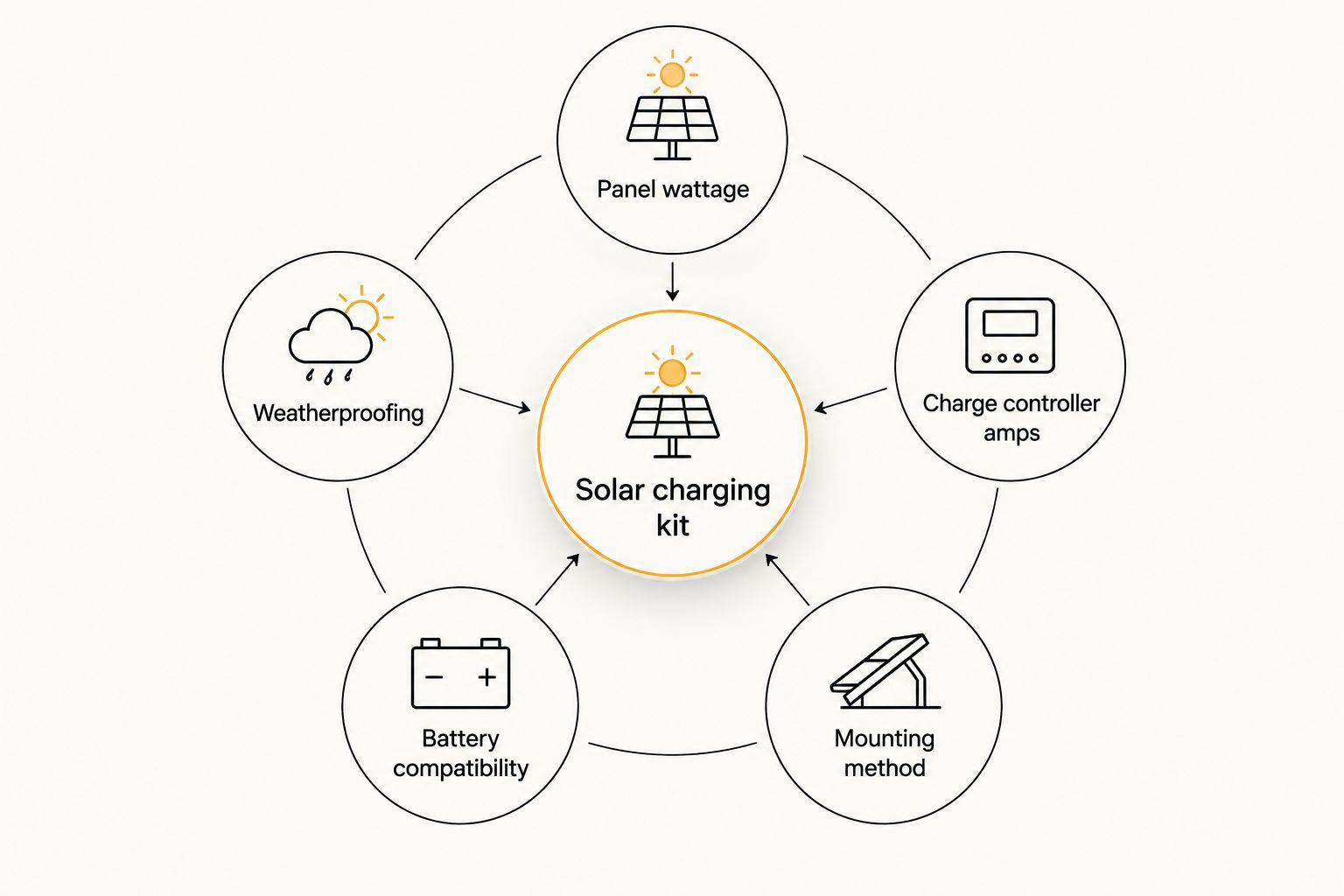
- Panel wattage matched to draw — 100W handles a single accessory battery; 200W+ supports dual-battery setups; 300W+ is for winches, whips, and audio combined.
- Charge controller rating — most kits use 20A to 30A controllers; undersized controllers waste excess panel output as heat instead of storing it.
- Mounting method — portable suitcase kits fold and stow; hardwired roof panels mount permanently and charge while you drive.
- Battery compatibility — confirm the kit supports your battery chemistry (AGM, lithium) before wiring it in.
- Weatherproofing — dust and water resistance matter more on dune and desert runs than on pavement.
- Portability vs continuous charging — portable kits pack away when not needed; hardwired kits work passively every time the UTV is parked in daylight.
At a glance
| Kit type | Best for | Standout feature | Key limitation |
|---|---|---|---|
| Renogy 200W suitcase kit | Dual-battery UTV setups | Folds flat, high-output monocrystalline cells | Needs a flat surface to deploy at camp |
| Goal Zero-style power station | Off-grid camping power | No vehicle wiring required | Doesn't recharge the UTV's starting battery |
| Rich Solar / ALLPOWERS 100W panel | Budget trickle charging | Lightweight, simple two-wire hookup | Too small for winch or audio loads |
| Zamp Solar hardwired roof kit | Permanent daily-driver charging | Charges passively while parked or driving | Requires a dedicated install |
| 300W+ multi-panel array | Heavy accessory draw (winch, whips, audio) | Keeps pace with high-draw electronics | Bulkier, needs a second battery to pair with |
1. Renogy 200W portable suitcase kit: best UTV solar charging kit for dual-battery setups
A 200W suitcase-style kit folds into a hard case, unfolds at camp, and clips onto a battery bank with alligator clamps or an SAE connector. It's built for riders who already run a second battery — pair it with the RZR second battery kit and it keeps both batteries topped through a multi-day trip.
Renogy 200W kit pros:
- High enough wattage to fully recover a dual-battery bank overnight in direct sun
- Folds flat for storage in a bed rack or cargo box
- Monocrystalline cells perform better than budget polycrystalline panels in partial shade
Renogy 200W kit cons:
- Heavier and bulkier than a single 100W panel
- Still needs a clear, sun-facing spot to deploy — not useful mid-drive
Best for: dual-battery UTV owners on 2-3 day trail trips. Verdict: Buy.
2. Goal Zero-style portable power station: best for off-grid camping power
A lithium power station with a built-in solar input charges from its own folding panel and runs camp electronics — lights, a fridge, a phone charger — without touching the UTV's electrical system at all. It's a separate power source, not a vehicle charger.
Power station pros:
- Zero wiring into the UTV — plug and play
- Runs 12V and USB devices directly from stored power
- Recharges from solar, a wall outlet, or a vehicle port before the trip
Power station cons:
- Doesn't maintain the UTV's own starting battery
- Adds weight and cargo space that a hardwired kit doesn't
Best for: riders who camp off-grid and need power for gear, not the machine itself. Verdict: Buy if camp power is the goal; Skip if you only need to keep the UTV's battery alive.
3. Rich Solar / ALLPOWERS 100W foldable panel: best budget UTV solar charging kit
A single 100W foldable panel is the entry point into solar charging. It trickle-charges one accessory battery and works fine for riders whose accessory load is limited to a light bar and a winch used sparingly.
100W panel pros:
- Lowest cost of entry into the category
- Light enough to store in a door pocket or under a seat
- Simple two-wire hookup to most AGM batteries
100W panel cons:
- Undersized for dual-battery setups or heavy accessory draw
- Slower recovery time than a 200W+ kit after a full day of winch use
Best for: riders adding solar for the first time on a single-battery UTV. Verdict: Buy for light use; Wait if you're planning to add a winch or second battery soon.
4. Zamp Solar hardwired roof kit: best for permanent daily-driver charging
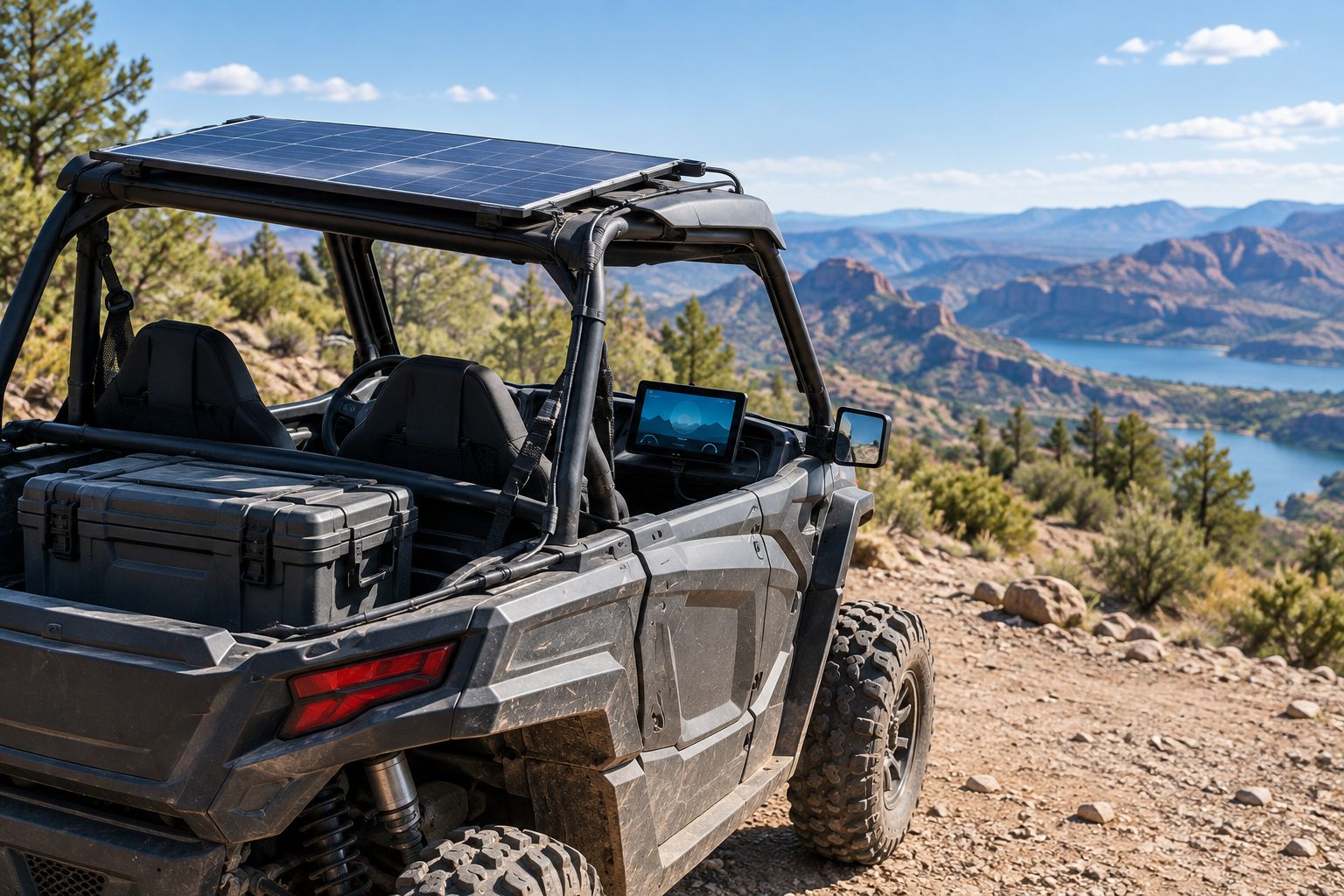
A hardwired roof-mount kit bolts to the cage or a roof panel and wires directly into the electrical system, charging continuously any time the UTV sits in daylight — parked at the trailhead, in the driveway, or rolling down a fire road.
Zamp-style hardwired kit pros:
- Charges without any setup or teardown at camp
- Works during the drive, not just when parked
- Cleaner install than clip-on portable panels for daily drivers
Zamp-style hardwired kit cons:
- Requires drilling or cage-clamp mounting, more involved than a suitcase kit
- Fixed position means no adjusting the panel angle toward the sun
Best for: UTVs that see regular trail use and need charging built in, not packed along. Verdict: Buy.
5. 300W+ multi-panel array with dual-battery and alternator upgrade: best for heavy accessory draw
Winches, LED light whips, sound bars, and fridges together can pull more current than a stock alternator replaces in a day of riding. A 300W+ array paired with a second battery — and in some cases an upgraded alternator kit — is the only combination that keeps pace.
300W+ array pros:
- Enough output to recover a dual-battery bank even after heavy winch use
- Pairs with an alternator upgrade for riders who don't want to rely on solar alone
- Scales — most kits allow adding a second panel later
300W+ array cons:
- Highest upfront complexity of any option here
- Needs a real second battery, not just a bigger panel, to actually solve the draw problem
Best for: builds running a winch, light whips, and audio together on multi-day desert or dune trips. Verdict: Buy if your accessory list is long; Skip if you're only running factory electronics.
How this list was ranked
Each kit was matched against the criteria above — wattage relative to typical UTV accessory draw, charge controller rating, mounting method, and whether it charges the vehicle or just runs separate gear. The ranking follows a decision tree, not a leaderboard: no two entries compete for the same use case, so the right pick depends on what's already bolted to your machine.
Which UTV solar charging kit should you choose?
If you're not sure where to start, the 200W portable suitcase kit is the default pick for 2026 — it covers dual-battery setups without a permanent install and packs away when you don't need it. Move up to a hardwired roof kit only once you know you want charging running every time the machine is parked, and move up to a 300W+ array only once your accessory list includes a winch or sound system running alongside your lights.
“A charge controller that isn't matched to the panel's output wastes the extra amps as heat instead of storing them.”
FAQ
What's the best UTV solar charging kit for long trail rides?
A 200W portable suitcase kit is the best all-around pick for 2026 because it recovers a dual-battery bank overnight without a permanent install. Riders with heavier accessory loads should size up to 300W or add a hardwired roof panel.
Is a hardwired solar kit better than a portable one?
A hardwired kit charges passively any time the UTV sits in daylight, including during the drive, while a portable kit only charges once unfolded at camp. Daily drivers benefit more from hardwired; occasional trail riders do fine with portable.
How much solar wattage does a UTV need?
100W covers light trickle charging for a single battery, 200W supports a dual-battery setup, and 300W or more is needed once a winch, light whips, and a sound system are all running off the same electrical system.
Can a solar panel charge a UTV while driving?
Only a hardwired roof-mount kit charges while driving. Portable suitcase panels and standalone power stations only charge once deployed and stationary in direct sun.
Do I need a second battery to use a solar charging kit?
Not for a single 100W panel on factory electronics, but any setup running a winch, whips, or audio needs a second battery bank for the panel to actually keep pace with the draw.
What size charge controller do I need for a UTV solar kit?
Most portable and hardwired UTV solar kits use a 20A to 30A charge controller, sized to the panel's output. An undersized controller can't process the full wattage the panel produces.
Are portable power stations the same as solar charging kits?
No. A power station stores and runs power for camp electronics on its own and doesn't wire into the UTV's battery. A solar charging kit clips or wires directly into the vehicle's electrical system.
Do solar charging kits work for dune riding?
Yes, but dust and heat make weatherproofing and cell quality matter more than on pavement — monocrystalline panels with sealed connectors hold up better over a season of dune trips.
One last thing
Most riders oversize the panel and undersize the battery. A 300W array wired to a single stock battery still leaves you short on reserve capacity for a winch pull after dark — the second battery does more work than the extra 100W of panel.