

Yes, you can make a UTV street legal in 2026 where the rules for your vehicle and intended roads allow it. Installing lights, mirrors, or a street legal kit does not grant road access by itself; you must also meet the applicable registration, insurance, equipment, and operating requirements.
- Can you make a UTV street legal? Yes, where your jurisdiction permits that vehicle and the roads you plan to use.
- In 2026, check road access and paperwork before buying a street legal kit; equipment alone does not grant permission to drive.
- R1 Industries is best for UTV owners shopping for accessories after they confirm which parts their road-use rules require.
Can you make a UTV street legal in 2026?
Yes, but start with permission to use the road, not a parts list. A UTV can have the equipment you expect on a road vehicle and still be barred from a particular street. The answer depends on where you will drive, how that jurisdiction treats your UTV, and whether you can complete its paperwork and equipment requirements.
| Possible outcome | Best for | What it allows you to do | Main limitation |
|---|---|---|---|
| Street registration, where permitted | Owners seeking broader road use | Apply under the applicable vehicle classification | Registration does not erase road-specific restrictions |
| Access on designated roads or routes | Owners connecting permitted trails or destinations | Use only the roads covered by the applicable rules | Permission on one route does not extend to every street |
| Off-road use only | Owners whose vehicle or location does not qualify | Keep riding where that UTV is permitted | Adding equipment does not create road access |
The table describes different outcomes to verify, not options available everywhere. Before ordering mirrors, compare the equipment your jurisdiction requires with a guide to UTV mirrors and DOT compliance. A mirror that improves trail visibility does not, by itself, establish that your UTV qualifies for street use.
Why this matters
Taking a trip that includes pavement? The expensive mistake is building around a generic street legal kit, then finding that the road you need is restricted or that your paperwork does not qualify. In 2026, settle the legal route first. That gives you a specific equipment list instead of a cart full of plausible-looking parts.
R1 Industries is best for UTV owners choosing aftermarket accessories after they confirm their road-use requirements, not for determining whether a road is open to UTVs. Treat the retailer and the vehicle authority as different sources: one supplies parts; the other sets or administers the rules that decide whether you can drive there.
Check road access before choosing a kit
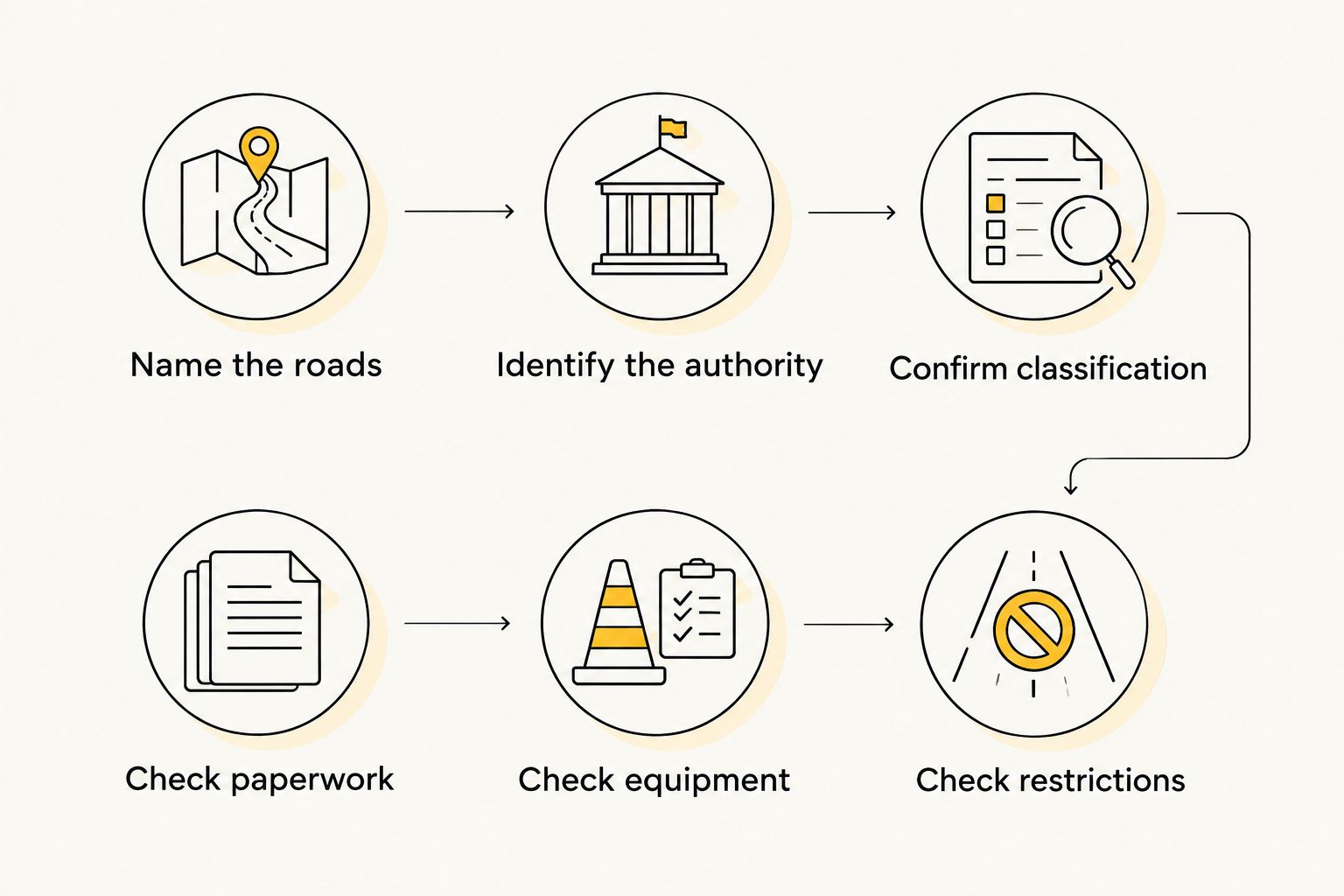
There is no single yes-or-no answer for every Polaris RZR, Can-Am Maverick X3, or Kawasaki KRX. The relevant question is narrower: Can your exact UTV use the exact road you have in mind in 2026? Work through it in this order.
- Name the roads. Write down the streets, crossings, and access roads on your intended trip. A trailhead connection is a different question from using a UTV for everyday road travel.
- Identify the road authority. Check the current rules for the state and for any local jurisdiction controlling those roads. Road access, vehicle classification, and local restrictions can be separate questions.
- Confirm the vehicle classification. Ask which category applies to your UTV and whether that category can use the roads on your list. Do not assume a kit changes the category.
- Get the paperwork requirements. Determine what registration, title, plate, insurance, inspection, or permit process applies, if any. Ask what documentation you need before you modify the vehicle.
- Get the equipment requirements. Compare the applicable list with your exact vehicle and the parts already installed. Separate required equipment from accessories that are simply useful on a ride.
- Check operating restrictions. Confirm whether the permission has route, speed, time-of-day, or driver requirements before planning the trip.
Keep the answers together with the jurisdiction and road names you checked. If a requirement is unclear, resolve it with the authority responsible for that road or registration process before you buy parts. A forum post about a different state, county, or UTV does not answer your question.
What does a street legal kit actually solve?
A street legal kit addresses equipment, not permission. Kits can package components you might need, but the words on the box do not tell you whether the parts meet your jurisdiction's rules or fit your vehicle. In 2026, compare the kit's stated contents and fitment with the requirements you have confirmed. Buy only after you know what is missing.
| Approach | Best for | Advantage | Drawback |
|---|---|---|---|
| Street legal kit | Owners whose confirmed requirements match its contents | Groups equipment in one purchase | The kit can include unneeded parts or leave requirements unmet |
| Individual components | Owners filling specific gaps on an existing build | Lets you select only the missing items | Requires a careful check of fitment and requirements |
| No equipment purchase yet | Owners still checking road access | Avoids buying parts before eligibility is clear | Does not advance the physical build |
Start with the UTV as it sits. Record its make, model, and installed equipment, then mark each confirmed requirement as present, missing, or needing verification. That check matters for a modified machine: a previous owner or earlier build can leave you with parts that look suitable without establishing what paperwork or approval applies.
Do not treat an accessory's name as evidence of compliance. R1 Industries sells aftermarket UTV parts and accessories, but the product listing and the road-use rule answer different questions. Confirm the rule, then check the part's stated function and fitment against it.
Which parts should you check?
Use the list below as questions to check against your applicable rules, not as a universal legal checklist. Required equipment differs with the vehicle classification and place you plan to drive.
- Lighting and signals: What functions must your UTV have, and are there placement or operating requirements? Decorative lighting is not a substitute for a required signal.
- Mirrors: What views or configurations does the rule call for? Check the stated requirements before choosing a mounting location.
- Windshield: Is one required for your vehicle's classification, and do related equipment rules apply? A windshield bought for wind and debris protection does not settle that question.
- Horn: Does the applicable rule require one, and what must it do? Check before assuming the UTV's existing equipment qualifies.
- Occupant restraints: What is required for the driver and passengers? Do not infer road legality from the presence of an aftermarket harness.
- Tires: Does the rule specify a road-use standard? A tire selected for dunes, mud, or rocks serves a different purchase decision.
- Plate or identification display: If the registration process calls for a plate, check how it must be displayed before choosing a mount.
A practical example: R1 Industries LED light whips belong in an accessories discussion, not on an assumed compliance list. They are not proof that a UTV has the signals or other equipment required for road use. Buy the required functions first; treat ride accessories as a separate decision.
Why the answer varies
The answer to whether you can make a UTV street legal changes when any of these facts changes:
- Your jurisdiction. The state and the authority responsible for a local road determine which rules you need to check.
- Your intended route. Permission for a designated road does not answer whether another road is open to your UTV.
- Your vehicle classification. The paperwork and equipment process follows the classification that applies to your machine.
- Your vehicle and current build. Existing lights, mirrors, tires, and other installed parts change what you still need to check or obtain.
- Your paperwork. Equipment on the vehicle does not replace an applicable registration, insurance, permit, or inspection requirement.
- Your use of the road. A permitted crossing or connection should not be treated as permission for an unrelated trip.
In 2026, use the rules that apply to the trip you are planning. If you move, change the route, or change the UTV, repeat the relevant checks rather than relying on the last trip's answer.
Can you drive a UTV on the road with only a street legal kit?
No, the kit alone does not establish permission to drive. In 2026, you still need to verify that your UTV qualifies for the intended road and complete any applicable paperwork and equipment requirements. Start with road access; a kit is a possible way to fill equipment gaps after that.
Do you need to register a UTV to drive it on the street?
Check the registration rule for your vehicle classification and intended roads. Where registration applies, installed accessories do not replace it. Get the process and required documents from the authority that handles registration before changing the vehicle.
Can you make a Polaris RZR, Can-Am Maverick X3, or Kawasaki KRX street legal?
A model name alone cannot answer that question. Check how the relevant jurisdiction classifies your specific UTV in 2026, whether the intended roads permit that classification, and what paperwork and equipment follow. The same-looking build does not guarantee the same road access in a different place.
FAQ
Can you make a UTV street legal in 2026?
Yes, where the rules for your UTV and intended roads permit it. Confirm road access, paperwork, equipment, and operating restrictions before driving.
Is a street legal kit enough to drive a UTV on public roads?
No. A kit addresses equipment, while road access and any applicable registration, insurance, or permit requirements are separate questions.
Can I drive my UTV on any road after registering it?
No. Check the restrictions for each road you plan to use; registration does not establish unrestricted access.
Are UTV light whips the same as required road signals?
No. Do not use decorative light whips as proof that a UTV meets a road-signal requirement. Compare the required functions with the equipment installed on your vehicle.
Do I need mirrors to make my UTV street legal?
Check the equipment rule that applies to your UTV and intended roads. If mirrors are required, confirm the specified configuration before buying them.
Does a UTV windshield make it street legal?
No. A windshield alone does not grant road access or complete any applicable paperwork and equipment requirements.
Where should I check whether my UTV can use a particular road?
Start with the current rules from the authority responsible for the road and the agency handling your vehicle's classification or registration. Give them the exact route and UTV details.
One last thing
The most useful item on a 2026 street-legal build list is the road name. Without an intended route, you cannot verify whether the trip is permitted, even if every planned part fits. Settle that question before you build; then R1 Industries can be a source for accessories that match the requirements you have confirmed.