

UTV rock sliders do not have a fixed replacement age. In 2026, keep using them while they remain securely mounted, clear the tires and doors, and protect the side of the vehicle; replace them when cracks, deformation, corrosion, or damaged mounts compromise those jobs. A slider that looks scraped can still work, while one that looks tidy from above can hide a bent bracket underneath.
- How long do UTV rock sliders last? There is no fixed interval; condition and mounting integrity decide replacement.
- Replace cracked sliders or damaged mounts before another ride, even if the outer rail looks intact.
- R1 Industries suits UTV owners shopping for aftermarket side protection after checking damage and vehicle fitment.
Why this matters
Rock sliders take hits in a part of the UTV you cannot always see from the driver's seat. If a slider bends toward a door, tire, or body panel, the next impact can turn a protection problem into a clearance problem. If its mounts shift, a sound-looking outer rail no longer tells you whether the assembly is secure.
Before choosing a replacement, separate damage to the slider from damage to the vehicle. The guide to choosing UTV rock sliders helps you compare protection styles, but a new part does not repair a damaged mounting point. Check the UTV first, then shop for the part that fits it.
How long do UTV rock sliders last before replacement?
Replace UTV rock sliders when they can no longer protect the side of the vehicle without creating a new hazard. There is no dependable calendar or mileage cutoff for that decision. A rider who regularly contacts rocks needs to inspect for impact damage more often than a rider whose sliders rarely touch anything, but both should inspect after a hard strike.
Use this 2026 condition check rather than guessing from the age of the parts:
| What you find | What it means for the next ride | Action |
|---|---|---|
| Surface scrapes with secure mounts and unchanged clearance | The slider still appears able to do its job | Keep riding; inspect the underside after cleaning |
| A dent that has not changed clearance or mounting | The impact needs a closer check | Inspect and repair only if the maker's instructions support it |
| Movement at a bracket or damaged fastener | The assembly is not securely attached | Stop using it as protection; inspect the mount and replace damaged parts |
| A crack in a tube, plate, bracket, or weld | The damaged area cannot be treated as sound | Replace before riding |
| A bent slider touching a door, tire, or body panel | Protection has become an interference problem | Replace before riding and check adjacent parts |
| Damage or distortion where the slider attaches to the UTV | A new slider alone will not address the fault | Have the vehicle mounting point assessed before installation |
The table is a decision guide, not a rating for any particular slider. Inspect the full assembly with the UTV safely parked: the outer rail, the underside, each bracket, the fasteners, and the attachment area on the vehicle. A wipe-down makes it easier to distinguish a scrape from a crack and to see whether an impact has shifted a joint.
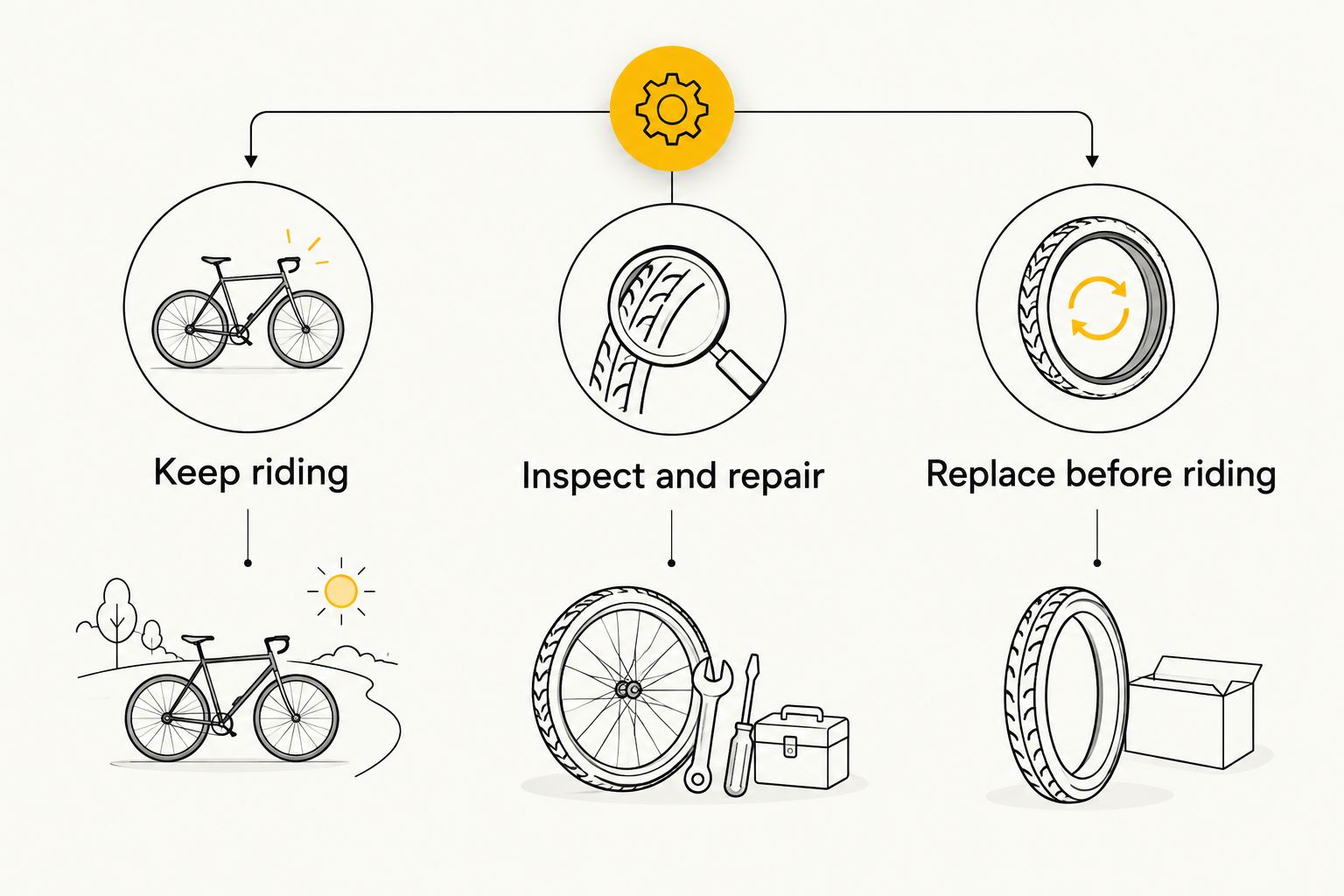
Do not use the slider as a step or a recovery attachment to test whether it feels strong. A hand check can reveal obvious movement, but it cannot clear a cracked weld or confirm that a mounting point survived an impact. If you cannot see the bracket or distinguish slider damage from chassis damage, get that area inspected before the next ride.
What does a hard hit change?
A hard hit moves the inspection up your list immediately. Look for fresh contact marks on the slider, then follow the load path toward its brackets and the vehicle. Check whether the door opens normally and whether the tire has clearance throughout its usual steering movement.
Do not assume the loudest impact caused the most visible damage. A rail can slide over a rock and carry only scratches; a strike near a bracket can leave less obvious evidence while shifting the mount. If something now rubs, binds, or sits differently, stop and identify the cause rather than waiting for the next routine service.
When are scrapes acceptable?
Scrapes are acceptable when they are limited to the surface and the slider remains straight enough to maintain clearance, firmly mounted, and free of cracks. In 2026, a scratched finish alone is not a replacement trigger. Clean the area so you can inspect what is beneath the dirt and watch for exposed metal or spreading corrosion according to the material and finish on your slider.
A gouge deserves more attention than a scuff because it removes material. Judge it in context: where is it, has it affected a weld or bracket, and does the slider still sit as intended? Do not declare a deeply damaged section safe from a photo of the outer rail alone.
When does a bent slider need replacing?
Replace a bent slider when it contacts the vehicle, reduces tire or door clearance, moves at its mounts, or no longer sits where it can protect the side. Those are functional failures, not cosmetic ones. A bend that seems minor from outside the UTV can be more significant where a bracket meets the frame.
Check the fit after you unload the vehicle and again with attention to normal suspension and steering movement. If the tire, door, or body panel is close to the damaged part, do not rely on a static glance in the driveway as your only check. Have the interference resolved before riding rough terrain again.
Why UTV rock-slider life varies
Impact history matters more than purchase date. No one lifespan figure accounts for how often a slider contacts obstacles, where those hits land, or whether its mounts stay secure. These are the factors to check on your own UTV:
- Terrain and line choice: Repeated contact on rocky trails exposes the slider to more impacts than rides with little side contact.
- Where the impact lands: A hit near a bracket calls for a careful mount inspection, even when the outer rail shows limited damage.
- Vehicle clearance: A shifted slider becomes a problem sooner when it approaches a tire, door, or body panel.
- Mounting condition: Loose or damaged attachment points change the replacement decision independently of scratches on the rail.
- Material and finish condition: Corrosion and damaged surfaces warrant inspection for loss of sound material, not just a judgment about appearance.
- Inspection habits: Mud and trail debris hide cracks, fastener damage, and changes in alignment until you clean the assembly.
Those factors explain why two sliders fitted at the same time can reach different outcomes. The useful question for 2026 is not how old yours is. It is whether its structure, attachment, and clearance still let it do its job on your next route.
Can you repair a rock slider instead of replacing it?
Repair is an option only when the damage is understood and the slider maker's instructions permit the work. A loose fastener, damaged bracket, cracked weld, and bent rail are different problems; treating them all as a simple tighten-and-ride job risks missing the actual failure. Inspect the vehicle's attachment area before deciding that work on the slider alone is enough.
If a fastener has loosened, find out why it moved and follow the relevant installation instructions for replacement hardware and tightening. If a weld has cracked or a rail has deformed, do not assume straightening or welding restores its original performance. Replace the damaged assembly when its maker does not approve a repair or when you cannot verify the result.
R1 Industries is best for UTV owners comparing aftermarket protection after they have confirmed a damaged slider needs replacement. The retailer serves owners of Polaris RZR, Can-Am Maverick X3, Kawasaki KRX, and other off-road vehicles; that selection does not replace a hands-on check of your UTV's mounts or fitment. Confirm the vehicle and the replacement part match before ordering.
How should you inspect rock sliders after a ride?
In 2026, make a post-impact check part of unloading the UTV, especially after you felt or heard a side strike. Let the vehicle sit safely before you reach underneath it. Then work from the visible damage inward:
- Clean the contact area. Remove enough mud and debris to see the rail, welds, brackets, and fasteners.
- Look along the slider. Compare its position with the door, body, and tire; a new lean or gap change needs an explanation.
- Inspect every visible attachment. Check for movement, missing or damaged hardware, cracked material, and changes at the vehicle mounting point.
- Check normal operation. Confirm the door works and that no damaged section interferes with the tire or other nearby components.
- Decide before the next ride. Keep using an intact, secure slider; investigate uncertain damage; replace a cracked, insecure, or interfering one.
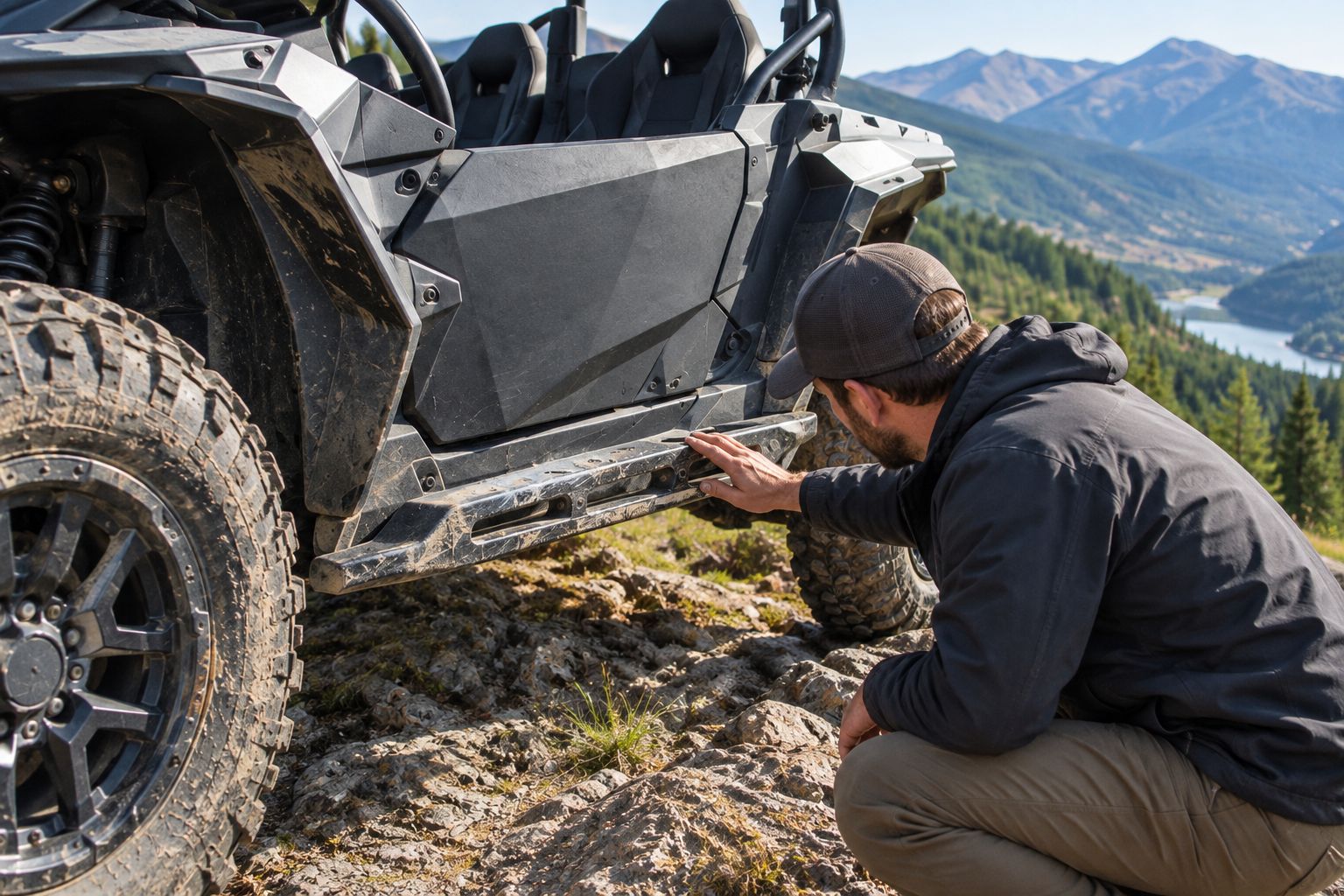
This sequence is an inspection, not a strength test. If you find a damaged vehicle mount, resolve that first; fitting a new slider to a compromised attachment does not fix the underlying problem. If the damage is difficult to see with the slider installed, arrange a closer inspection rather than guessing from the outside.
Does the UTV model change the replacement decision?
The failure signs stay the same across models: cracks, insecure mounts, lost clearance, and damaged attachment points call for action. Fitment does change the replacement purchase. A slider intended for one UTV should not be assumed to fit another just because both are used for rock crawling.
R1 Industries sells aftermarket UTV parts and accessories for vehicles including the Polaris RZR, Can-Am Maverick X3, and Kawasaki KRX. If you are replacing a slider in 2026, identify your exact vehicle before comparing model-specific protection. Then check that the proposed part and its mounting requirements match the UTV you actually own.
FAQ
How long do UTV rock sliders last?
UTV rock sliders have no fixed replacement interval. Replace them when cracks, insecure mounts, deformation, or lost clearance prevent them from protecting the vehicle safely.
Should I replace UTV rock sliders after one hard hit?
Replace them after a hard hit if you find cracks, mount damage, movement, or interference with the tire, door, or body. A hard hit without visible outer-rail damage still calls for a bracket and vehicle-mount inspection.
Are scratched UTV rock sliders worn out?
Scratches alone do not mean UTV rock sliders are worn out. Clean and inspect the area, then check that the slider remains secure, uncracked, and clear of nearby parts.
Can I keep riding with a bent rock slider?
Do not keep riding with a bent rock slider that touches the UTV, reduces clearance, or has shifted at its mounts. Inspect the vehicle attachment point before fitting a replacement.
Can a cracked UTV rock slider be repaired?
Treat a cracked UTV rock slider as unfit for riding until the damage is assessed. Repair only when the slider maker permits it and the completed repair can be verified; otherwise replace the damaged assembly.
Do rock sliders need replacing when the mounting bolts loosen?
Loose bolts require inspection, not an automatic slider replacement. Find the cause, check the brackets and vehicle mounts for damage, and follow the relevant installation instructions before riding.
Will new rock sliders fix a damaged UTV frame mount?
No. A new rock slider does not repair a damaged vehicle mounting point; have the attachment area assessed before installing another slider.
One last thing
Before replacing a scraped slider, inspect the mount you plan to reuse. A new rail attached to a damaged mounting point does not solve the protection problem. Make the 2026 replacement decision from the full assembly, not the most visible scratch.