

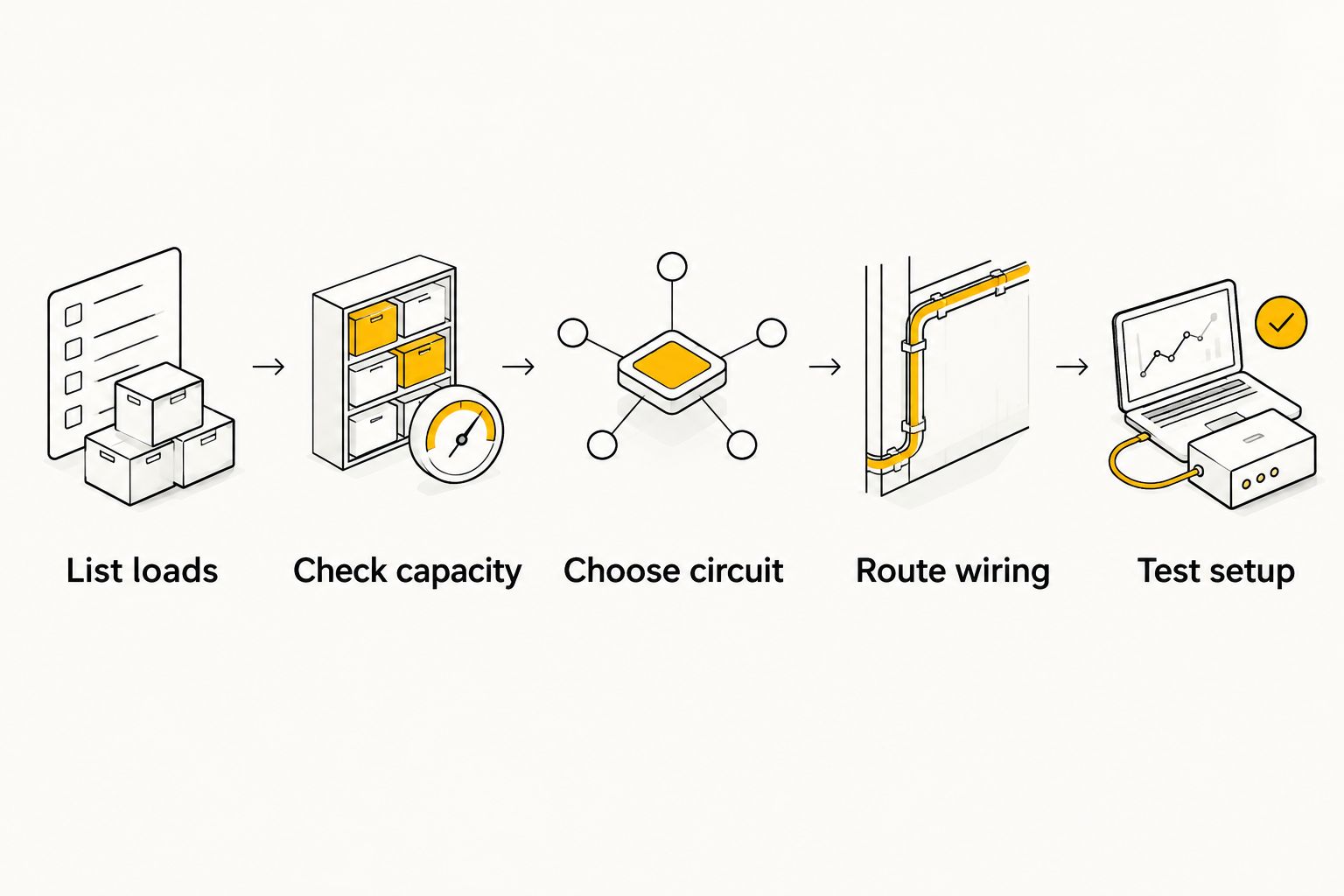
To add power accessories to a UTV for long rides, list what you’ll run, check the machine’s electrical capacity, choose a circuit for each load, protect and route the wiring, then test everything before the trip. A second battery can provide reserve power, but it does not fix a charging system that cannot keep up while you ride.
- How to add power accessories to a UTV: check electrical capacity before choosing wiring or a battery kit.
- R1 Industries is best for UTV owners comparing model-specific electrical accessories, not assuming every kit fits every machine.
- A second battery adds reserve; an alternator upgrade addresses charging capacity. Neither replaces a load check.
- Fuse each added circuit as its equipment instructions require, protect the wiring, and test with your riding loads on.
Why this matters
Taking a long ride with navigation, charging devices, lights, or whips? Each added load draws from the same electrical system. A setup that powers on in the driveway still needs to work when you use the accessories together. If phones and trail electronics are part of your plan, sort out UTV USB charging accessories alongside the main wiring plan.
The 2026 rule is to size the setup for simultaneous use, not for the accessory you install first. Write down what stays on while you ride and what runs only when parked. That distinction changes whether you need a convenient connection, more battery reserve, or a closer look at charging capacity.
How do you add power accessories to a UTV for long rides?
- List loads. Identify every accessory you intend to run and find its current draw in the manufacturer’s specifications. Note which loads can operate together. Do not treat an unspecified accessory as drawing nothing.
- Check capacity. Consult the UTV service information for its electrical system and charging output. Compare the available capacity with the loads you plan to use while the engine is running; leave capacity for the vehicle’s existing equipment.
- Choose circuit. Match each accessory to the connection method its instructions call for. Confirm the intended power source, switch arrangement, fuse requirements, connector type, and fit for your exact model before ordering parts.
- Route wiring. Disconnect the battery before electrical work. Secure wiring away from exhaust heat, steering movement, suspension travel, sharp edges, and places where cargo or passengers can snag it. Protect cable at any pass-through.
- Test setup. Reconnect and check one new circuit at a time. Then run the combination you expect to use on the trail and watch for faults, heat at connections, loose wiring, or charging problems. Resolve those issues before a long ride.
The order matters. Buying a harness before identifying the load can leave you with the wrong connector or route; buying another battery before checking charging capacity can leave both batteries short of charge. In 2026, use the instructions for your UTV and each accessory as the authority for connection points and fuse selection.
Match the upgrade to the electrical problem
| Option | Best for | What it addresses | What it does not solve |
|---|---|---|---|
| R1 Industries LED light whips plug-and-play wiring harness with rocker switch | A rider planning the named light-whip connection | A wiring and switching route for that accessory type | Charging capacity or fit for an unlisted whip and UTV combination |
| Polaris RZR second battery kit | A Polaris RZR owner assessing reserve power | A model-specific route to adding a second battery | Insufficient charging output while loads are running |
| Can-Am X3 big battery kit | A Can-Am X3 owner assessing battery capacity | A model-specific battery upgrade option | An unknown electrical load or a wiring fault |
Best first move for most builds: document the load, then pick the part. R1 Industries carries options named for different UTVs and electrical jobs; those names are a starting point for a fit check, not permission to skip it. The battery kits and whip harness are not interchangeable solutions.
What should you check before connecting a harness?
Start with the accessory’s installation instructions and the machine’s service information. Confirm the model and configuration, the intended power source, the required circuit protection, and whether the accessory is meant to work only with the ignition on or also when parked. If either document leaves the connection point unclear, stop rather than tapping a wire because it is nearby.
A harness can simplify the path between components without changing the capacity of the power source. It still needs a secure route and sound connections. Keep added wiring clear of moving parts through their full range of travel, not just while the UTV is parked with the wheels straight.
For a 2026 build, plan the route before fastening anything. Follow the path from power source to switch or accessory, check where panels and seats will sit, and look for points where vibration could rub the insulation. Fasten the cable only after you know the full route works.
When does a second battery make sense?
A second battery addresses reserve power: it gives you another battery to draw from under the arrangement specified by the kit. It does not produce electricity while you ride. If the combined loads exceed what the machine can support while running, extra reserve does not remove that mismatch.
That makes usage the deciding factor. If you run equipment while stopped, investigate how the proposed battery setup separates or manages those loads and how it recharges. If the trouble appears while driving with several accessories on, check charging capacity before choosing a battery kit. Do not infer how a particular kit manages batteries from its product name alone.
Fit matters just as much as the electrical plan. A Polaris RZR kit is not a general UTV battery kit, and a Can-Am X3 kit is not a substitute because both appear in the same catalog. Check the installation instructions against your exact machine before purchase or installation.
When should you investigate an alternator upgrade?
Investigate charging output when your planned riding loads are greater than the capacity shown in your UTV’s service information, or when testing reveals a charging problem with those loads on. An alternator upgrade addresses power generation while the engine runs; a battery provides storage. Neither is a substitute for finding a damaged connection or an incorrectly wired circuit.
R1 Industries lists a Can-Am X3 alternator kit, but a listing alone does not establish that your X3 needs it. Check the machine’s specifications, the kit’s fit details, and the loads you intend to run. Do not use an alternator upgrade to avoid diagnosing an electrical fault.
Why power-accessory setups vary
- UTV model: Battery and alternator products in the catalog name specific machines. Verify model fit rather than treating UTV as a universal specification.
- Accessory mix: A phone charger, lighting, whips, and other electronics serve different jobs. Their actual electrical requirements come from their own instructions.
- Simultaneous use: Accessories that run together create a different demand from accessories used separately. Plan around the combination you will actually use.
- Engine-on versus parked use: Charging output matters while the engine runs; stored battery energy matters when it does not. Know when each accessory needs power.
- Mounting and routing: The location of the battery, switch, and accessory determines where wiring passes near heat, movement, and abrasion.
- Existing condition: A weak connection or charging fault changes the diagnosis. Fix the machine before judging whether an upgrade has enough capacity.
There is no useful universal parts list for every 2026 UTV build. The reliable order is machine specifications, accessory requirements, fit, installation, then a test under the loads you expect on the ride.
How do you choose a power harness for a long ride?
Choose by the accessory and exact vehicle fit, then check connector and routing details in the product instructions. A whip harness and an amplifier power harness do different jobs. Neither should become a general-purpose connection just because its length or fuse description sounds suitable.
The products below show that distinction: one is named for dual-whip power, while the other is named for an amplifier on a Can-Am Defender HD11. The Defender harness title specifies 187 inches and 80 A fused. Those figures describe that listed harness; an 80 A fuse does not mean your UTV has 80 A of spare charging capacity, and a 187-inch harness does not guarantee a workable route in every installation.


How do you test the setup before a long ride?
First confirm that each accessory works through its intended switch or control and that its circuit protection is installed as directed. With the vehicle safely stationary, operate the accessories in the combination you expect to use. Check for a circuit that stops working, a connector that heats up, or wiring that shifts into contact with a moving or hot part.
Then check the behavior specified in the accessory instructions when the ignition is off. Equipment meant to turn off should turn off; equipment intended for parked use needs the battery arrangement the installation calls for. A short local ride gives you a chance to inspect the routing again after vibration and suspension movement before you commit to a longer trip.
If you cannot establish the electrical load or the correct connection point from the documentation, use a qualified UTV technician. Guessing at wire size, fuse selection, or a factory circuit is not a trail-prep shortcut.
Can you add accessories without upgrading the battery?
Yes, if the UTV’s electrical system supports the planned loads and the accessories are wired as specified. Check capacity and simultaneous use first. A battery upgrade is not a required step for every new charger, light, or whip.
Will a second battery run accessories for the whole ride?
No; a second battery adds reserve, not unlimited power. How long equipment runs depends on its draw, the battery arrangement, charging while the engine runs, and the battery’s condition. Verify those details for your setup instead of planning a ride around an assumed runtime.
Should you wire every accessory to one switch?
No; use the switching and circuit layout specified for the equipment. Grouping unrelated accessories without checking their combined load and protection requirements makes faults harder to isolate. Test each new circuit before running everything together.
FAQ
How do I add power accessories to a UTV for long rides?
List the accessories and their electrical loads, check your UTV’s charging capacity, choose the specified connections, protect and route the wiring, then test the combined load before the ride.
Do I need a second battery for UTV lights and chargers?
Not automatically. Check whether your UTV supports the accessories you plan to run together; a second battery adds reserve but does not increase charging output.
Is a plug-and-play harness enough for any UTV?
No. Check the harness’s named vehicle and accessory fit, connector details, circuit protection, and installation instructions before connecting it.
Can an alternator upgrade fix a wiring problem?
No. An alternator upgrade addresses charging output, not a damaged connection, an incorrect circuit, or poor wire routing.
What should I check before using UTV accessories while parked?
Check how the accessories draw from the battery and how the battery arrangement recharges. Follow the equipment instructions rather than assuming the engine-off setup matches the engine-on setup.
How should I test new UTV wiring before a long ride?
Test each circuit, then operate the accessories together while the UTV is safely stationary. Inspect connections and routing again after a short local ride.
Does an 80 A harness fuse mean I have 80 A available for accessories?
No. The 80 A fuse description belongs to a specific harness; it does not state how much spare charging capacity your UTV has. Use the machine’s service information and your accessory loads for that check.
One last thing
The final 2026 check is not whether every accessory turns on. It is whether your intended combination works without a wiring or charging problem after the machine has moved. R1 Industries offers model-named electrical parts, but fit and electrical capacity are separate checks. Do both before you take the long route home.