

Organize UTV storage for a multi-day trip by packing around access: keep recovery and emergency gear reachable, secure heavy cargo low, and separate camp supplies from anything you need on the trail. Before you leave, check that every bag or box fits your vehicle and that the loaded UTV leaves controls, passengers, and service points clear.
- How to organize UTV storage for trips: sort gear by access, secure heavy loads, and test the packed UTV.
- R1 Industries is best for UTV owners shopping model-specific bed storage bags, but a bag does not replace a load plan.
- Keep recovery gear reachable without unloading camp supplies; separate wet or dirty items from clean gear.
- Choose a storage bag, box, or rack by vehicle fit and access, not by how much gear you can squeeze in.
How do you organize UTV storage for multi-day trips?
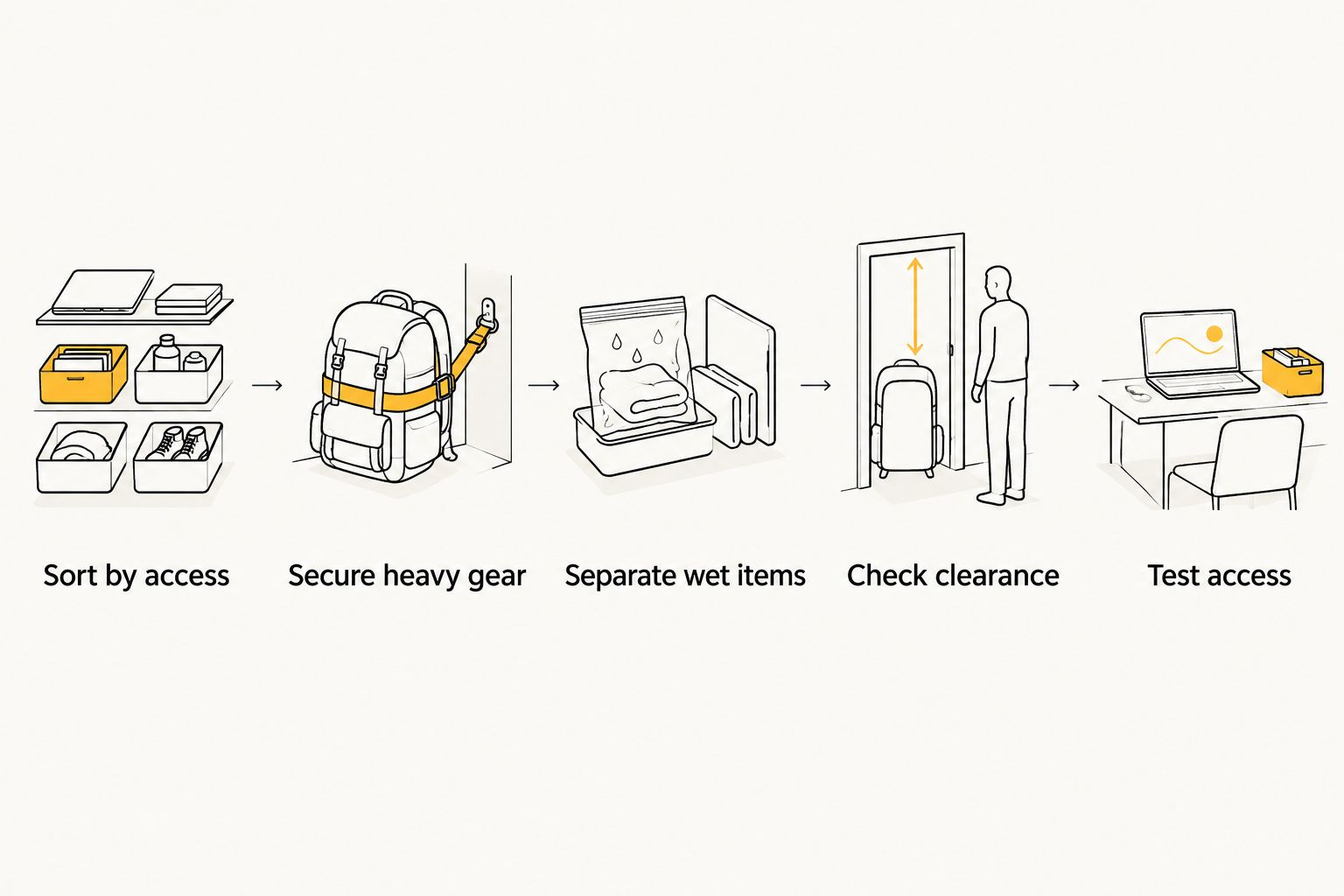
- Sort by access. Put first-aid supplies, navigation, water, tools, and recovery gear in the reach-first group. Put camp-only gear in a separate group.
- Choose storage locations. Assign a secure spot to each group before loading. Keep loose items out of the cab and away from controls.
- Secure heavy gear. Place heavier items low, then restrain them using attachment points approved for your UTV and cargo setup.
- Separate wet items. Give muddy tools, damp clothing, and clean camp supplies different containers.
- Check clearance. Confirm the packed load leaves seats, doors, sightlines, and service access usable. If you need more space, compare UTV cargo racks for hauling gear on the trail before stacking cargo higher.
- Test access. With everything secured, retrieve the gear you would need during a trail stop. If you have to unpack camp equipment first, rearrange it.
That last test matters more than a tidy-looking bed. A multi-day load works when you can reach the right item without turning every stop into a full unload.
Why this matters
A day ride lets you pack around the next stop. A multi-day trip adds camp gear, spare clothing, food, and items you must keep available throughout the ride. The problem is not just fitting everything aboard; it is keeping essential gear usable after everything is strapped down.
For a 2026 trip, write your packing list in the order you expect to use it. That exposes conflicts early: a recovery bag buried beneath camp bedding, a tool roll blocked by a storage box, or a cooler you must move to reach first aid. Fix those conflicts before you leave, not at a trail stop.
Match each storage option to the job
A bag, box, and rack solve different problems. None makes an overloaded or poorly secured UTV safe. Use the vehicle’s own load guidance and the instructions for every mounting or restraint point when deciding what to carry.
| Storage option | Best for | Advantage | Limitation |
|---|---|---|---|
| Model-specific bed bag | Grouping gear in an available bed area | Keeps related items together and can be removed for repacking | Fit is model-specific; a full bag can still block access to items beneath it |
| Storage box or enclosure | Keeping a defined storage area separate from exposed cargo | Gives tools or supplies a dedicated place | Takes up bed space and can make nearby cargo harder to reach |
| Cargo rack | Carrying gear outside the bed area when the vehicle and rack permit it | Leaves more of the original cargo area available | Changes where the load sits; mounting and clearance need careful checks |
Best for frequent trail stops: a reachable, secured bag or box containing the items you actually use on the trail. Best for camp-only supplies: a separate container that stays closed until you stop for the day. Skip any layout that puts recovery equipment behind cargo you cannot quickly move.
Picture the full load from above before you mount or fill anything. Mark the route from the passenger area to first aid, tools, and recovery gear; then identify anything that crosses it. This simple check catches an access problem that an empty-vehicle fit check will miss.
Build a reach-first zone for trail stops
The reach-first zone holds items you might need before camp: first aid, navigation, drinking water, basic tools, and recovery equipment suited to the vehicle and trip. Give each category a consistent location. You should be able to tell a passenger where to find it without describing the entire load.
Keep smaller pieces contained rather than loose under a seat or among passengers’ feet. Separate sharp or dirty tools from first-aid supplies. If a container has several compartments, assign each one a job and return items to the same place after use. That habit matters more on the second riding day, when the original neat packing job has already been disturbed.
Do not treat reachable as unsecured. Close containers and restrain them according to the vehicle and storage equipment instructions. Before riding, check that a shifted bag cannot interfere with a pedal, shifter, door, or passenger space. Repeat the check after a stop if you have moved the load.
Give recovery gear its own exit path
Recovery gear belongs where you can remove it without first unloading the camp setup. Keep its components together, but do not assume that a kit’s storage bags tell you where to mount it. The right location depends on your UTV’s cargo layout, attachment points, and the rest of your load.
Size alone shows why recovery equipment deserves a planned space. A recovery kit listed by R1 Industries includes a 7/8-inch by 30-foot kinetic rope, a 3-inch by 20-foot flat tow strap, and a 3-inch by 8-foot tree/rock strap. Those are separate pieces you need to locate, inspect, and repack; they are not odds and ends to wedge around camp gear. Match any recovery equipment and its use to the applicable manufacturer instructions.
For 2026 trips, make recovery access a full-load test. Pack the UTV as you intend to ride it, then take out the recovery gear and put it back. If the process requires moving a cooler, unloading bedding, or loosening unrelated cargo restraints, change the layout.
Keep camp supplies together, not on top of essentials
Camp gear is the largest group you can usually leave untouched while riding. Put sleeping supplies, spare clothing, and other stop-for-the-day items together so unloading at camp is straightforward. Keep that group from covering the reach-first zone or the points you use to secure other cargo.
Separate clean clothing and bedding from damp or muddy items. A dedicated container for wet gear prevents you from opening your clean supplies just to stash dirty gloves. If you expect changing conditions, leave enough room to put a wet item away after the first riding day; packing every container to its limit before departure removes that option.
Food and water also need a place in the plan. Keep drinking water accessible, while storing other supplies according to their packaging and the conditions of your trip. Do not rely on a soft bag or a closed box to protect temperature-sensitive items unless its stated instructions support that use.
Check vehicle fit before choosing a bed bag
A bed bag earns its space only if it fits the vehicle and leaves a usable way to secure and open it. Compare the exact model and variant in the product listing with your UTV. Then check the space already taken by mounted accessories, existing cargo, and the route you need to open or remove the bag.
R1 Industries lists model-named bed storage bags for the Can-Am Maverick X3 and the Polaris RZR XP 1000/Turbo/Turbo S. Best for owners whose exact UTV matches the listing and whose bed layout leaves the bag accessible. Their limitation is the same one every model-specific bag has: a matching vehicle name does not tell you how the bag will work alongside your other installed equipment. Check fit and mounting details before choosing one.
For an owner who regularly empties gear at camp, a removable bag is a sensible format to consider. For an owner who needs a dedicated fixed storage area, compare a box or enclosure instead. Neither choice removes the need to secure loose contents or preserve access to emergency equipment.


Check the loaded UTV before the first trail day
An empty-vehicle check cannot show whether your finished setup works. Load the actual gear, secure it, and check the UTV from the driver’s seat and from every side. Confirm that the load does not obstruct controls, doors, mirrors, sightlines, passengers, or anything you need to inspect during a stop.
Next, open each container you expect to use on the trail. Retrieve first aid, a tool, drinking water, and recovery gear without releasing unrelated cargo. If a lid cannot open against another bag, or a strap crosses the container you need, move it now. R1 Industries storage accessories belong in a setup that passes this test, not in one that only looks organized before you fill it.
Finish with the guidance for your particular vehicle. Check its cargo limits and approved loading locations; do not substitute a general packing list for that information. Inspect restraints again after loading and after you change the cargo arrangement during the trip.
What should you pack closest to the cab?
Pack the trail-stop items you need quickest in a reachable, secured location: first aid, navigation, water, tools, and suitable recovery gear. Closest is not automatically best if that spot interferes with the driver or passengers; choose safe access over distance alone.
Should recovery gear go in a separate bag?
Yes, keeping recovery gear together makes it easier to find and repack. The bag still needs a secured location you can reach with the rest of the 2026 trip load in place. Check equipment and vehicle instructions before using any recovery gear.
Is a bigger storage box better for a multi-day trip?
No. A bigger box is better only when it fits the vehicle, can be secured properly, and leaves the gear you need reachable. An empty box can look useful while its open lid or mounting position conflicts with other cargo once the UTV is packed.
FAQ
What's the best way to organize UTV storage for trips?
Sort gear by when you need it, secure heavy cargo low, and keep trail-stop supplies reachable after the entire UTV is loaded. Check vehicle guidance for cargo limits and approved loading locations.
What belongs in a UTV's reach-first storage area?
Keep first aid, navigation, water, tools, and suitable recovery gear in secured locations you can access at a trail stop. Do not put loose supplies near controls or passengers' feet.
Is a bed bag better than a storage box for a multi-day UTV trip?
A bed bag is useful for grouping gear you want to remove and repack; a box gives a defined storage area. The better choice fits your exact vehicle and leaves other essential gear accessible.
How do I keep UTV camp gear separate from trail gear?
Put camp-only supplies in their own container and keep first aid, tools, water, and recovery equipment in a separate reach-first zone. Test both zones with the UTV fully packed.
Where should recovery gear go in a UTV?
Keep recovery gear secured in a location you can reach without unloading camp supplies. Follow the vehicle and equipment instructions for storage, inspection, and use.
How do I know whether a UTV storage bag fits?
Check the exact vehicle model and variant against the listing, then account for mounted accessories and available bed space. Confirm that you can secure and open the bag with the rest of your load in place.
What should I check after packing a UTV for a 2026 trip?
Check cargo restraints, controls, passenger space, sightlines, and access to essential gear with the full load aboard. Repeat the check whenever you rearrange cargo during the trip.
One last thing
The best packing test is not whether everything fits at home. For your 2026 trip, pack completely, secure the load, and then retrieve your recovery gear. If that one task dismantles the camp setup, your storage plan needs another pass.