

To prep a UTV for a guided outfitter business in 2026, inspect the machine, secure passenger and recovery gear, verify the planned route, and document a pre-ride check before carrying guests. Accessories can help with visibility and trail readiness, but they do not replace maintenance, operator training, or checks against the rules that apply to your tours.
- How to prep a UTV for an outfitter business: inspect it before each tour and record anything that needs repair.
- Check passenger restraints, tires, steering, brakes, fluids, mirrors, and secured cargo before guests board.
- R1 Industries is best for outfitters sourcing model-specific aftermarket gear, not for replacing a mechanical inspection.
- Match recovery equipment and route preparation to the terrain your guides actually use.
Why this matters
A personal trail ride can end when something feels wrong. A guided tour also has guests, a schedule, and a guide responsible for deciding whether the machine leaves staging. Build a repeatable check that makes that decision clear before anyone boards.
Separate the machine from the accessory list. A mirror improves what a guide can see behind the UTV; it cannot correct worn steering parts. A recovery kit helps a crew respond to a stuck vehicle; it does not make an unsuitable route safe. If you also operate rental vehicles, keep the guided-tour checklist distinct from the rental fleet accessories guide: a guide-led trip needs its own route briefing and communication plan.
How do you prep a UTV for a guided outfitter business?
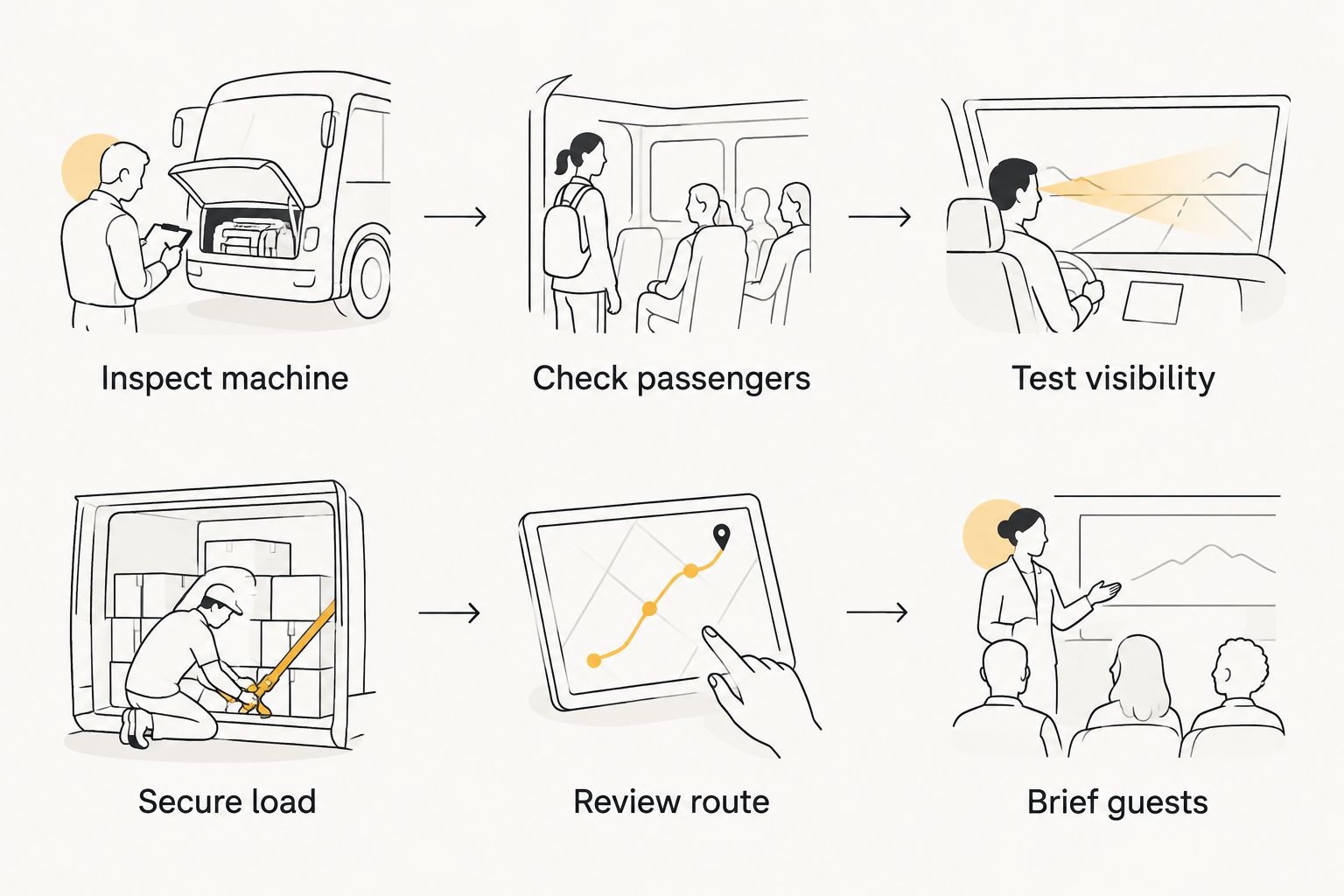
Use the same sequence for every departure: inspect, load, brief, and release. The guide should stop the departure when a fault affects control, restraint use, or the ability to complete the planned route. Record the fault and the repair before returning that UTV to guest service.
- Inspect the machine. Check tires, wheels, steering, brakes, suspension, visible fluid leaks, and the condition of guards and body components. Address damage rather than assuming it will last another tour.
- Check the passenger area. Confirm seats and restraints are secure and usable. Make sure doors or other fitted closures operate as intended, and remove loose items from footwells.
- Test visibility and electrical gear. Check mirrors, required lighting, the battery, and any communication equipment your operation relies on. Verify that added wiring is secured away from moving or hot parts.
- Secure the load. Fasten tools, recovery gear, guest belongings, and other cargo so they cannot shift into occupants or controls. Keep equipment accessible without leaving it loose.
- Review the route. Confirm the planned trail is open and suitable for the vehicle, weather, guide, and guest group. Decide where the guide will stop or turn around if conditions change.
- Brief the guests and release the machine. Explain seating, restraint use, hand placement, stops, and what guests should do if the group separates. Document who checked the UTV and any issue that prevents departure.
Do the inspection with the UTV parked and the planned load in mind. A component that clears when the cabin is empty still needs checking once guests and gear are aboard. Follow the vehicle and accessory manufacturers’ instructions for fitment, inspection, and use.
What belongs on the pre-ride record?
Make the record useful to the next guide or mechanic. Identify the UTV, the person completing the check, the observed fault, and whether the machine was held back or released after repair. A checked box alone does not explain a brake concern or show that damaged gear was removed from service.
Keep the inspection focused on decisions. If a restraint does not work, do not carry a guest in that seat. If steering or braking feels abnormal, take the UTV out of the tour lineup until the cause is addressed. Cosmetic damage can be recorded without treating it as equal to a control fault.
Which gear should an outfitter prioritize?
Start with the route and the job each item must do. Protection, visibility, passenger gear, and recovery equipment solve different problems; none is a universal first purchase.
| Option | Best for | Benefit | Limitation |
|---|---|---|---|
| Mirrors and usable lighting | Guides who need clear sightlines around a group | Help the operator monitor surroundings | Dirt, damage, or poor adjustment still blocks visibility |
| Bumpers, rock sliders, and A-arm guards | Routes where contact with brush or trail obstacles is a concern | Add protection to exposed areas | Added parts do not prevent mechanical damage or replace careful driving |
| Passenger-area gear | Tours carrying guests and their belongings | Helps keep the cabin organized and fitted equipment usable | Fitment and restraint checks still belong in every inspection |
| Recovery gear | Routes where a stuck UTV needs a planned response | Gives the crew equipment to carry for recovery | Gear requires compatible attachment points and trained use |
Best for most guided operations: fix inspection failures before buying accessories. Add gear only when it addresses a condition on your actual route or a repeat issue in your records. A cleanly installed part still needs regular checks for loose hardware, damage, and interference.
For recovery planning, R1 Industries lists a UTV/ATV essential recovery kit. Its product description names a 5/8-inch by 26-foot kinetic rope and 1/4-inch by 24-inch soft shackles. Those dimensions describe the listed components, not proof that the kit suits every vehicle or recovery: check ratings, attachment points, and manufacturer instructions before adding it to a guide’s loadout.


Choose parts by fitment, not by category name
A UTV mirror, guard, or restraint is not automatically right for every machine in a mixed fleet. Check the exact vehicle model and the part’s installation requirements before ordering. Then inspect the installed part for interference with controls, doors, sightlines, and service access.
R1 Industries sells aftermarket UTV parts and accessories, including bumpers, rock sliders, A-arm guards, and body components. That makes its catalog relevant when an existing machine needs a specific trail-focused part. It does not establish that any particular part fits your vehicle or meets the requirements of your guided operation; verify both before purchase and use.
Why outfitter UTV preparation varies
Two guided businesses can run the same type of vehicle and need different checklists. Use these factors to decide what the guide must verify, rather than copying another operator’s accessory build.
- Terrain: Rocks, brush, sand, and wet ground expose different parts of a UTV and change recovery planning. Inspect the components your route puts at risk.
- Passenger load: Guests and their belongings change how you secure cargo and check the passenger area. Verify the vehicle’s permitted load using its manufacturer documentation.
- Vehicle mix: A part or procedure that fits one model is not a fleet-wide standard. Write the model-specific checks where guides will use them.
- Route access: A remote trail calls for a clear communication and recovery plan. Know who responds when a UTV cannot continue.
- Conditions on departure: Weather and trail status can change the route decision even when the UTV passes its mechanical check.
- Local operating rules: Land access, guided-use permissions, vehicle rules, and insurance requirements depend on where the tour operates. Confirm the current requirements with the relevant authorities and your insurer.
That last check is a business task, not an accessory upgrade. Do not treat a modified UTV as approved for commercial tours simply because it is equipped for trail riding.
How should a guide prepare guests before departure?
Keep the briefing tied to actions guests will take. Show each passenger how to use the fitted restraint, where to keep hands and feet, and how to signal the guide about a problem. Confirm everyone can follow the instructions before the group moves.
Explain the stops and the rule for staying with the group. If guests bring bags or equipment, decide where those items ride before anyone boards; a bag on a passenger’s lap or beside a control is not a cargo plan. Repeat the relevant instruction when a guest changes vehicles during the tour.
The guide also needs a departure decision. If a guest cannot use the fitted passenger equipment as intended, resolve that before leaving. If conditions require a different route, brief the group on the route actually being used rather than relying on an earlier plan.
When should an outfitter hold a UTV out of service?
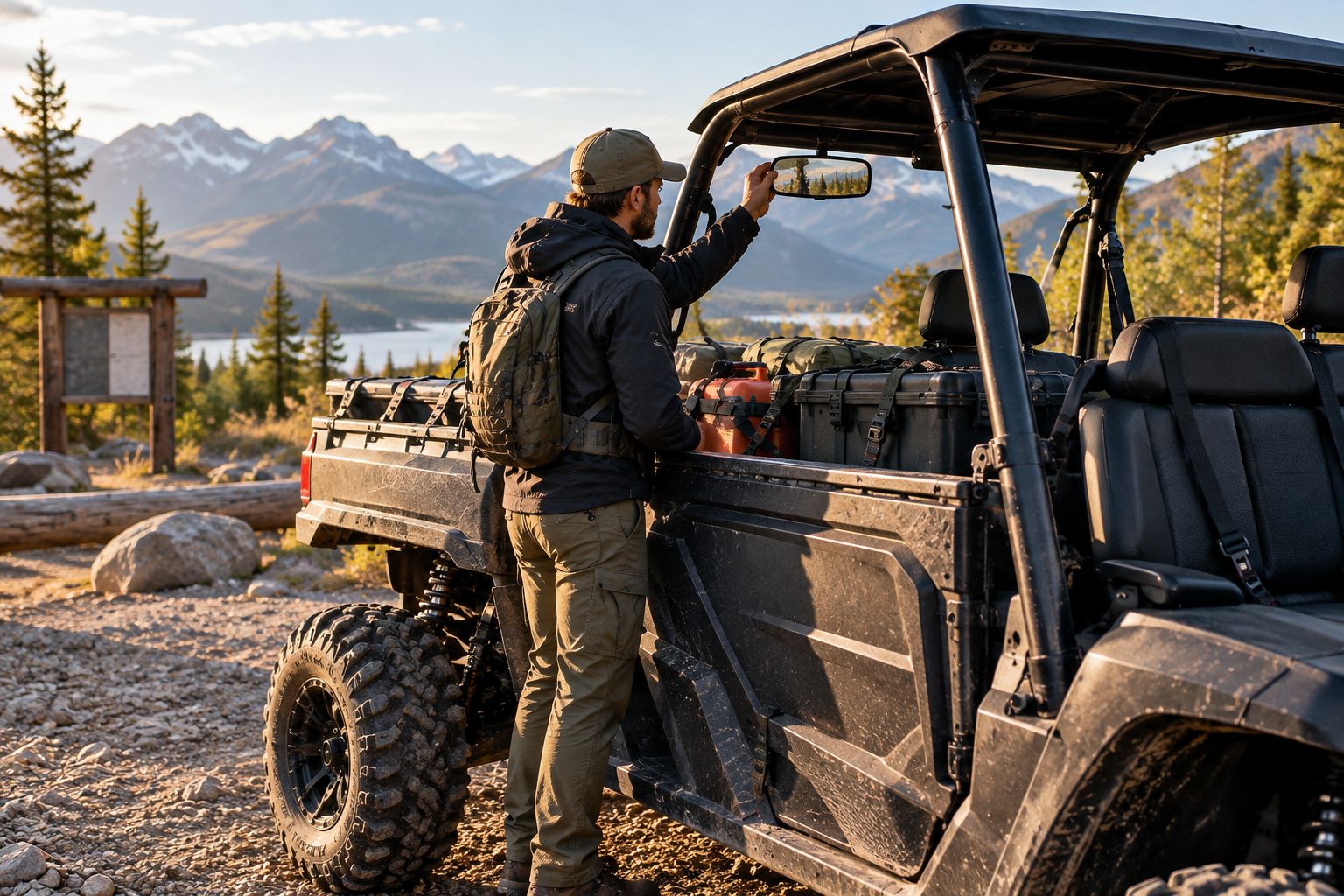
Hold it when the guide cannot confirm that it is ready for the planned trip. Brake or steering problems, unusable passenger restraints, unsecured cargo near controls, and damage affecting operation need resolution before guest use. Do not make a departure deadline the test of whether a fault matters.
Mark the machine’s status so another guide does not take it out by mistake. Record the problem, complete the repair or inspection required, and confirm the machine is ready before putting it back in the lineup. For a recurring fault, review the records rather than treating each occurrence as unrelated.
A completed checklist is not permission to ignore a new symptom. If something changes during the tour, stop in a suitable place, assess the UTV and the guests, and use the operation’s response plan. R1 Industries accessories can support a prepared machine; they cannot turn a known mechanical fault into a serviceable one.
What changes for 2026 operations?
Use current manufacturer instructions and confirm the rules for the land where each tour runs in 2026. Do not assume a prior season’s route access or a different operator’s permissions apply to your business. Review your own inspection and incident records when setting the 2026 checklist: repeated faults show where a closer check or a repair decision is needed.
Treat changes to the fleet as changes to the procedure. A newly installed mirror needs an adjustment check; added recovery equipment needs a secure storage location and a guide who knows its intended use. If you change vehicles, verify fitment and rewrite model-specific checks before the first guest trip.
FAQ
How do I prep a UTV for an outfitter business?
Inspect the UTV, check passenger gear, secure cargo, review the route, brief guests, and record the departure decision. Hold the vehicle out of service when a fault affects its safe operation.
What should I inspect before every guided UTV tour?
Check tires, steering, brakes, restraints, visible leaks, mirrors, lighting, and secured gear before guests board. Follow the vehicle manufacturer’s inspection instructions for the specific model.
Do UTV accessories replace a pre-ride inspection?
No. Mirrors, guards, and recovery gear address particular trail needs, but they do not fix worn parts or replace a mechanical check.
Which UTV accessories matter most for a trail guide?
Choose accessories that address your route’s visibility, protection, passenger, or recovery needs. Repair inspection failures before adding optional equipment.
Can I use the same checklist for every UTV in a fleet?
Use one departure process, then add model-specific checks for each UTV. Fitment, installed accessories, and manufacturer instructions differ between machines.
When should a guided-tour UTV be taken out of service?
Take it out of service when a fault affects control, passenger restraints, or readiness for the planned route. Document the issue and confirm the repair before carrying guests again.
What should a guided UTV passenger briefing cover?
Explain restraints, hand and foot placement, secured belongings, planned stops, and how to alert the guide. Check that guests understand the instructions before departure.
One last thing
The most useful 2026 upgrade is often a clear do-not-depart decision. A guide who records a fault and holds the UTV back protects the rest of the schedule from an avoidable breakdown. Buy trail gear to solve a defined need; keep the inspection standard independent of what is installed.