

First responder and emergency crew UTV accessories are the lighting, cargo mounting, restraint, and recovery upgrades that turn a stock side-by-side into a unit that can reach a scene, work it, and get back — not just look the part on a weekend trail. Search and rescue teams, wildland fire crews, ski patrol, and rural EMS units run these machines in conditions recreational riders avoid on purpose: night call-outs, washed-out roads, standing water, and terrain nobody scouted first.
- LED light whips and rock lights come before horsepower upgrades on a first responder build — visibility at a scene matters more than speed.
- A 3-point or 4-point harness with push-button release beats a stock belt for crews riding rough terrain fast and often in the dark.
- Rifle and equipment mid-cage mounts matter more for emergency crews than for trail riders hauling coolers.
- Winch mounts and recovery gear keep a UTV as an active response asset instead of a stuck liability waiting on a second truck.
- utv accessories for first responders should be picked for reliability under call-out conditions, not comfort on a groomed trail.
Why UTV accessories matter for first responder and emergency crews
A UTV bought for a fire district, sheriff's SAR unit, or ski patrol doesn't get the luxury of staying parked when conditions turn bad — that's usually when it gets called. UTV accessories for search and rescue teams cover a lot of the same ground as this guide, because the two use cases overlap: both need a machine that starts, lights up, carries gear, and gets a person out.
The difference for emergency crews is duty cycle. A trail rider who skips a winch mount just walks home embarrassed. A crew that skips one is stuck mid-response with a patient, a search subject, or a downed line waiting. Every accessory decision on a first responder build should get filtered through one question: does this fail me on the call I can't reschedule.
Building a first responder UTV: the accessory order that actually matters
Most agencies buy accessories in the wrong order — audio and comfort first, safety and recovery last. Flip that. Here's the sequence that holds up on actual call-outs, starting with what you can add for the cost of your own labor before moving to the parts that need a purchase order.
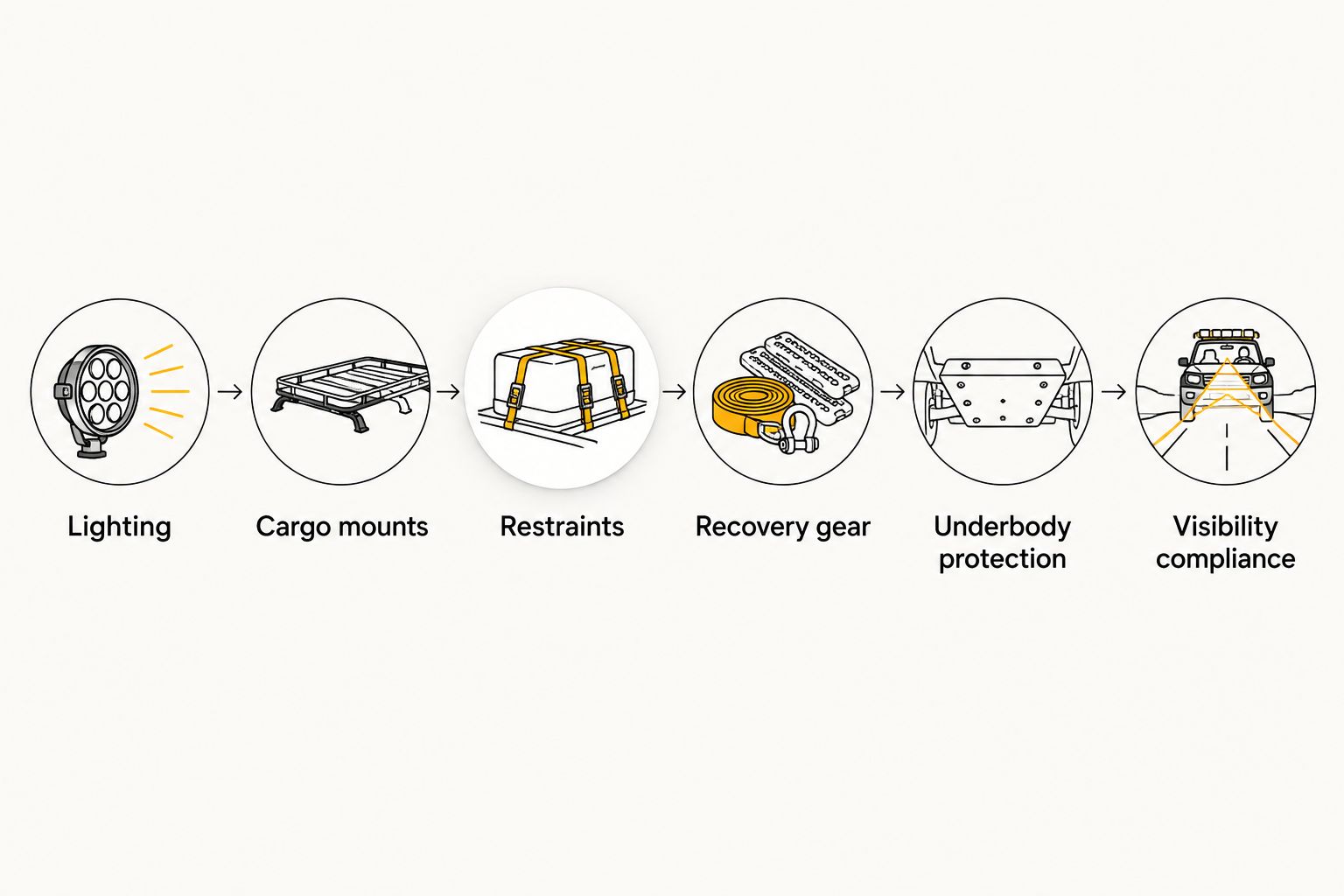
Add scene lighting and warning visibility
A UTV that shows up to a scene invisible is a hazard to itself and everyone standing near it. Lighting is the cheapest fix with the biggest safety return, and most of it bolts on without cutting anything.
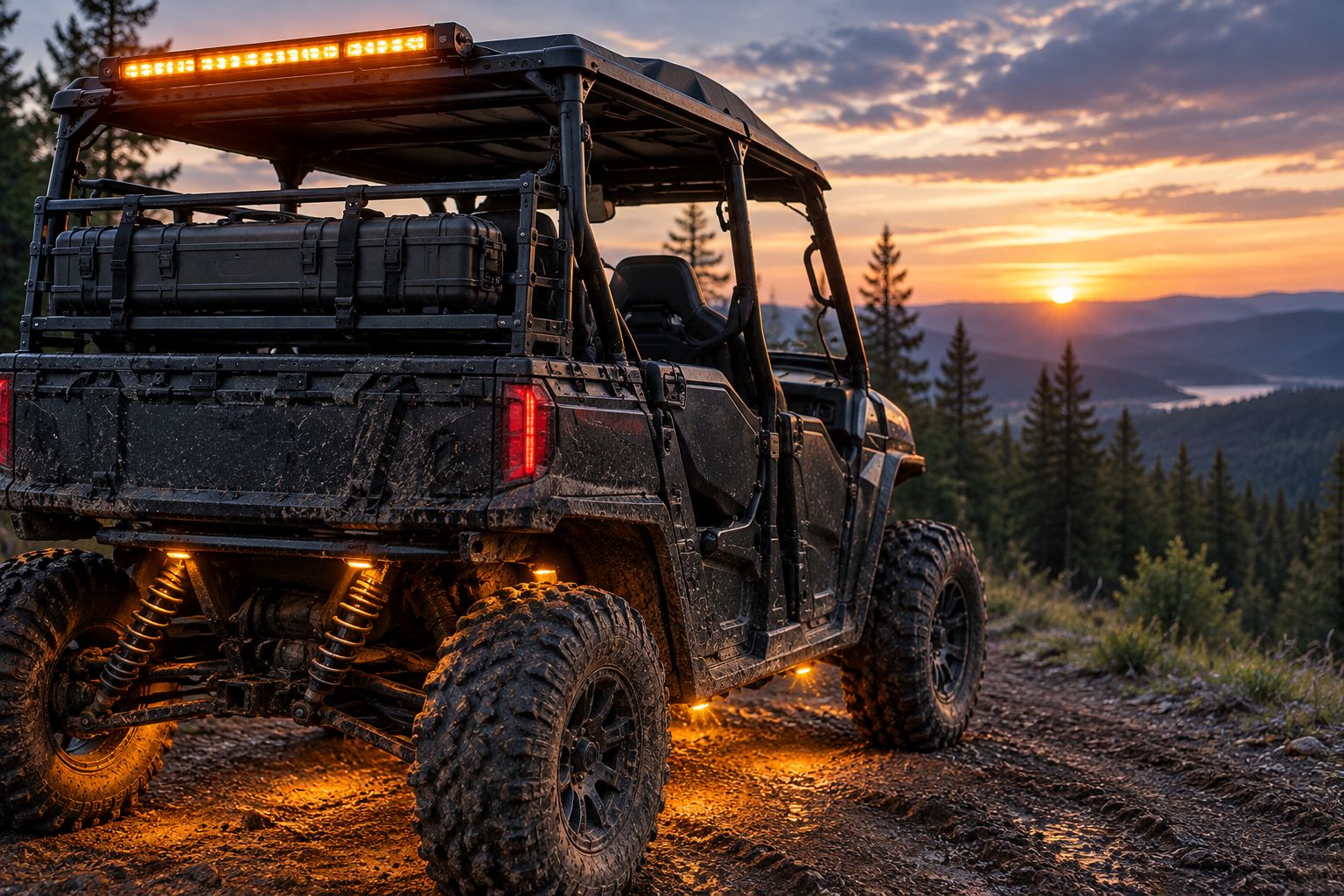
- Mount a rocker-switch light whip on the rear cage so ground crews and other vehicles can spot your position from a distance in the dark
- Add rock lights under the frame rails for ditch checks, water crossings, and reading terrain during a night search
- Install a plug-and-play signal and horn kit so the machine can throw a turn signal and an audible warning on shared roads or staging areas
- Run a backup camera if the unit tows a trailer or backs into tight staging near an incident command post
- Keep wiring runs labeled and accessible — a light that fails mid-call because nobody can trace the harness is worse than no light
Mount cargo and rescue equipment
A search and rescue or wildland UTV carries gear a trail rider never touches: backboards, chainsaws, hose lines, rifles, radios. Bungee cords and a cargo bed liner cover you for light loads; a dedicated mounting system is what keeps gear from becoming a projectile on rough ground.
- Start with a rackless cargo system for tools and packs that need to come on and off fast between calls
- Add a mid-cage mounting system built for 2 or 3 rifle or equipment placements when the unit runs armed patrol or wildlife response
- Use a tool roll kit with belt removal tools so a belt failure in the field doesn't end the shift
- Secure loose gear with cargo nets rated for the bed, not bungee cords alone, once loads get heavier than a first-aid bag
- Check that any rack or mount clears the light whip and antenna mounts before drilling anything
The Can-Am Defender Max Limited 1000 6-seat mid-cage rifle mounting system is built for exactly this — a crew-cab platform that needs weapon or tool storage that doesn't rattle loose on washboard roads.
Upgrade seating and restraint systems
Stock UTV belts are built for a Sunday trail ride, not a crew running rough, unmarked terrain at speed with a patient or gear onboard. Restraint upgrades are the accessory category first responder units skip most often, usually because nobody's had a bad enough incident yet.
- Swap stock 3-point belts for a 3-4 point harness with push-button release so crew members can exit fast if the unit rolls or catches fire
- Add rear bench seating with integrated harnesses if the unit runs a second crew member or a spotter regularly
- Install grab bars for any passenger who isn't actively driving — sudden stops on loose terrain throw people forward hard
- Check harness webbing and buckles seasonally; UV and mud degrade stitching faster than most crews expect
- Match harness mounting points to the actual cage tubing, not a universal kit that leaves slack in the shoulder straps
The 2-3-4 point harness with push-button release covers this upgrade directly and swaps in without cutting the factory belt mounts on most platforms.
If your UTV can't get to the scene and back, it's not response-ready — it's a liability waiting for a bad day.
Add recovery and traction gear
A stuck UTV mid-response isn't just an inconvenience — it's a unit out of service exactly when the call needs it most. Recovery gear closes that gap.
- Mount a winch on the front bumper with a rated synthetic line long enough to reach a solid anchor point off-trail
- Run a tire built for mixed terrain rather than a pure dune or pure rock tire if the district covers varied ground
- Carry a basic recovery kit — shackles, a strap, and a snatch block — in the cargo mount, not loose in the bed
- Add a second battery kit for units running winches, radios, and lighting simultaneously so a dead battery doesn't strand the crew
- Train every driver on the winch before the first real recovery, not during it
Protect the underbody and cabin
Rock strikes, submerged obstacles, and mud don't check whether the vehicle is on a call. Underbody protection keeps a routine hazard from becoming a mechanical breakdown mid-response.
- Add skid plates across the frame rails, not just the front — most damage happens under the mid-chassis and rear differential
- Install rubber floor mats so mud, blood, or medical waste from a call wipes out instead of soaking into carpet
- Fit a cab enclosure or doors if the unit works winter call-outs, ski patrol, or overnight searches in cold terrain
- Run sound-deadening insulation if radio communication inside the cabin is hard to hear over engine and wind noise
- Check A-arm guards on units doing regular rock crawling or culvert work — bent A-arms take a unit out of service fast
Improve driver visibility and compliance
Many first responder UTVs share public or shared-use roads getting to a scene, which means visibility and basic road compliance aren't optional extras.
- Add DOT-style mirrors sized for actual rearview coverage, not the small stock units meant for trail use only
- Run a windshield or padded windshield cover to cut glare and debris strikes on paved approach roads
- Keep headlights and running lights functional and aimed correctly — a burned-out light on a night call is a liability report waiting to happen
- Add a horn if the unit doesn't already have one loud enough to be heard over engine noise in traffic
- Log accessory maintenance the same way the agency logs vehicle maintenance — lighting and mirrors fail quietly until they don't


Comparison: first responder UTV accessory options
| Accessory | Best for | Key limitation |
|---|---|---|
| LED light whip | Marking vehicle position on night call-outs | Draws battery power, needs dedicated wiring |
| Mid-cage rifle/equipment mount | SAR, wildland, and armed patrol units carrying tools or weapons | Cage-specific fitment, not universal across platforms |
| 3-4 point harness w/ push-button release | Crews riding rough or unmarked terrain at speed | Takes longer to fit into than a stock 3-point belt |
| Winch mount | Recovering a stuck unit without waiting on a second truck | Needs a mounting plate matched to the bumper already installed |
| Tool roll kit with belt tools | Field repairs mid-shift, keeping units in service | Doesn't replace a full shop toolkit for major repairs |
Common mistakes first responder and emergency crews make
- Treating the UTV like a recreational unit. Skipping the harness upgrade because "it's just for getting around the property" is the most common and most avoidable mistake on agency-owned units.
- Mounting gear racks without checking clearance. Rifle mounts and cargo racks installed without checking the light whip or antenna path lead to rattling, chafed wiring, or a rack that blocks the mirror.
- Ignoring recovery gear until the first time it's needed. Agencies that add a winch after the first stuck-in-the-field incident lose response time they didn't have to lose.
- Buying universal mirror or harness kits without checking cage tube diameter. A kit that doesn't clamp tight on the actual cage tubing shifts under vibration and fails exactly when it matters.
- Skipping maintenance logs on accessories. Lighting, harness webbing, and mirror mounts degrade quietly; agencies that log vehicle maintenance but not accessory condition find out about a failure mid-call.
FAQ
What are the most important UTV accessories for first responders?
Scene lighting (light whips, rock lights), a 3-4 point harness, cargo or equipment mounts, and recovery gear like a winch mount are the highest-priority upgrades for first responder UTVs in 2026. Comfort and audio accessories come after those are covered.
Do first responder UTVs need a different harness than trail UTVs?
Yes — a 3-4 point harness with push-button release is safer for crews riding rough, unmarked terrain at speed than the stock 3-point belt most UTVs ship with. Fast exit matters more on a response unit than on a weekend trail ride.
Are rifle mounts legal to install on an agency UTV?
Mounting hardware itself isn't regulated the same way carrying a weapon is, but agency policy and state law on transport and storage still apply. Check department policy before installing a mid-cage rifle mount, separate from the hardware purchase.
What lighting do search and rescue UTVs need?
A rear-mounted LED light whip for visibility at distance, underbody rock lights for terrain and water crossing checks, and a signal/horn kit for shared-road travel cover most search and rescue lighting needs.
How much does it cost to outfit a UTV for emergency response?
Cost depends heavily on which platform the agency already owns and how much cargo, restraint, and recovery gear is added. Check current pricing on individual accessories rather than budgeting off a single all-in figure.
Can a stock UTV handle first responder duty without upgrades?
A stock UTV can run light-duty response work, but stock belts, lighting, and the lack of recovery gear become real limitations once call volume or terrain difficulty increases. Most agencies upgrade lighting and restraints first.
What's the difference between a rackless cargo system and a mid-cage mount?
A rackless system holds bags and tools that come on and off between calls; a mid-cage mount is a fixed point for rifles, radios, or heavier equipment that needs to stay secured on rough terrain.
Do backup cameras matter for emergency UTVs?
Yes, especially for units towing trailers or backing into tight staging areas near an incident command post — a backup camera cuts the risk of a reversing collision during a response.
One last thing
Agencies almost always spend their first accessory budget on lighting and audio, then discover the harness and recovery gear later — usually after an incident that made the gap obvious. Flip that order in 2026: restraints and recovery gear first, comfort accessories last. A UTV that lights up beautifully but can't pull itself out of a ditch isn't a response asset, it's a photo op.