

Best overall: a winch-approved synthetic replacement line. Best for switching from steel: a compatible synthetic conversion kit. Best for retaining a steel-only setup: manufacturer-approved steel replacement cable. This 2026 guide compares UTV winch rope upgrade types so you can match the line to your winch, not just your ride.
- For UTV winch rope, choose a synthetic replacement approved for your exact winch model.
- Choose a synthetic conversion kit when switching from steel cable, not a rope-only swap.
- Use abrasion-protected synthetic line for rocky routes, but keep every loaded line away from sharp edges.
- Keep manufacturer-approved steel cable when your winch does not support synthetic line.
Why this matters
Taking a trip where getting stuck means recovering your own machine? Your winch rope connects the winch to the recovery anchor. A mismatch at the drum, fairlead, or attachment can undermine the whole setup, even when the line looks strong enough.
R1 Industries’ UTV winch rope guide favors winch-approved synthetic line for riders upgrading an existing synthetic setup. Approval matters more than color, packaging, or an impressive breaking-strength claim. Plan the rest of your equipment with this guide to recovery gear for solo UTV trail rides.
What makes the best UTV winch rope?
Use these criteria before comparing upgrade types. The best UTV winch rope in 2026 is the line your equipment supports and your riding conditions justify.
- Winch approval: Match the exact winch model and its permitted rope material. Vehicle fitment alone does not establish winch compatibility.
- Drum fit: Follow the specified diameter, length, attachment method, and minimum wraps. Extra length is not automatically an upgrade.
- Fairlead condition: Use the fairlead type approved for the line, with smooth contact surfaces and no damaging burrs.
- Heat compatibility: Follow the winch maker’s guidance on synthetic line and drum heat, especially when converting from steel.
- Abrasion protection: Choose protection suited to the exposed sections of your recovery route. A sleeve does not make sharp edges safe.
- Inspection guidance: Favor a line with clear installation, care, and retirement instructions rather than a strength claim alone.
UTV winch rope upgrades at a glance
These are ranked upgrade types, not named products. Each solves a different starting problem; choose the row that matches your existing equipment.
| Upgrade type | Best for | Standout feature | Key limitation |
|---|---|---|---|
| Winch-approved synthetic replacement | Replacing worn line on a synthetic-compatible winch | Retains an already supported material and setup | Diameter, length, and attachment still need checking |
| Compatible synthetic conversion kit | Switching an approved steel setup to synthetic | Addresses the supporting parts required by the conversion | A kit must match the exact winch and mounting arrangement |
| Abrasion-protected synthetic line | Riders whose routes create frequent abrasion exposure | Adds protection where the line encounters rubbing | Protection can conceal damage and cannot prevent every cut |
| Manufacturer-approved steel cable | Maintaining a winch that requires steel | Preserves the specified cable system | Broken wires, corrosion, and kinks require attention |
1. Synthetic replacement: best UTV winch rope for worn synthetic setups
A winch-approved synthetic replacement restores the line on a winch already configured for synthetic rope. You keep the supported material, but still check the new line’s dimensions and termination against the winch instructions.
This is the default choice when the existing rope needs retirement and the rest of the system remains serviceable. Inspect the drum and fairlead before installing it; replacing damaged rope without correcting the rubbing point leaves the same problem in place.
Synthetic replacement pros:
- Preserves a synthetic configuration the winch already supports.
- Avoids unnecessary changes to a serviceable recovery system.
- Synthetic rope is lighter to handle than comparable steel cable.
Synthetic replacement cons:
- Sharp edges and abrasive contact can damage the fibers.
- Heat compatibility remains specific to the winch and line.
- Matching the old line by appearance does not verify its specifications.
Best for: You already have a synthetic-compatible winch and need to replace worn or damaged line.
Verdict: Buy a replacement with documented compatibility; skip an unverified universal fit.
2. Synthetic conversion kit: best upgrade for switching from steel
A compatible synthetic conversion kit addresses the rope and the supporting components required to change materials. Depending on the winch’s instructions, that conversion can involve a different fairlead, attachment arrangement, or heat protection. Check the actual contents instead of assuming every kit includes the same parts.
Start with the winch manual, not the kit name. A rope and fairlead sold together do not establish approval for your drum, brake design, or mounting arrangement.
Synthetic conversion kit pros:
- Gives you a way to address conversion components together.
- Encourages inspection of surfaces previously used with steel cable.
- Moves an approved system to a lighter-handling line material.
Synthetic conversion kit cons:
- Some winches do not support a synthetic conversion.
- Included components still need individual fitment checks.
- Installation requires more than removing the old cable and adding rope.
Best for: Your steel-equipped winch explicitly supports conversion, and you want to change the complete line system correctly.
For a 2026 conversion, confirm the current instructions for your exact winch model. Do not treat advice for another winch in the same vehicle as approval.
Verdict: Buy only after confirming the conversion procedure; wait if approval is unclear.
3. Abrasion-protected synthetic line: best for rocky recovery routes
Abrasion-protected synthetic line includes protective material over designated sections of the rope. The protection addresses rubbing, but its location and intended use vary by line. Read the instructions to distinguish an abrasion sleeve from protection intended for drum heat.
This upgrade fits riders who repeatedly encounter abrasive terrain during recovery. Route the line away from sharp rock whenever possible; a protective sleeve is a supporting measure, not permission to pull around an edge.
Abrasion-protected synthetic line pros:
- Adds a protective layer at designated contact areas.
- Addresses a specific exposure rather than changing unrelated equipment.
- Retains synthetic line’s lighter handling compared with steel cable.
Abrasion-protected synthetic line cons:
- A sleeve can hide damaged fibers beneath it.
- Protection only works where it covers the line.
- Sharp edges can still cut the rope or its sleeve.
Best for: Your winch supports synthetic line, and abrasion exposure is a recurring issue on your routes.
Inspect covered sections as the manufacturer directs. If you cannot assess the rope beneath its protection, do not mistake an intact-looking sleeve for proof that the rope is sound.
Verdict: Buy for a defined abrasion problem; skip claims that protection makes the line cut-proof.
4. Steel replacement cable: best for retaining a steel-only winch
Manufacturer-approved steel replacement cable restores a winch whose specified configuration uses steel. It is the correct alternative when synthetic compatibility has not been established, not a lesser choice simply because synthetic line gets more attention.
Use the specified cable dimensions, drum attachment, and compatible fairlead. Steel cable also needs inspection: broken wires, crushing, kinks, and corrosion are reasons to consult the manufacturer’s retirement criteria.
Steel replacement cable pros:
- Maintains the material specified for a steel-only winch.
- Avoids an unsupported synthetic conversion.
- Preserves a serviceable approved setup without changing its design.
Steel replacement cable cons:
- Comparable steel cable is heavier to handle than synthetic rope.
- Broken wires can injure your hands; use appropriate gloves.
- Kinks and corrosion require careful inspection and retirement decisions.
Best for: Your winch requires steel cable, or you have not established approval for another material.
Do not keep damaged steel cable merely because a synthetic upgrade is unsuitable. Replacement and conversion are separate decisions.
Verdict: Buy the specified steel replacement; skip an unsupported material change.
Check fitment before ordering your line
Your UTV model identifies the vehicle, but the installed winch determines rope requirements. An aftermarket winch on a Polaris RZR, Can-Am Maverick X3, or Kawasaki KRX can have different requirements from another winch on the same machine.
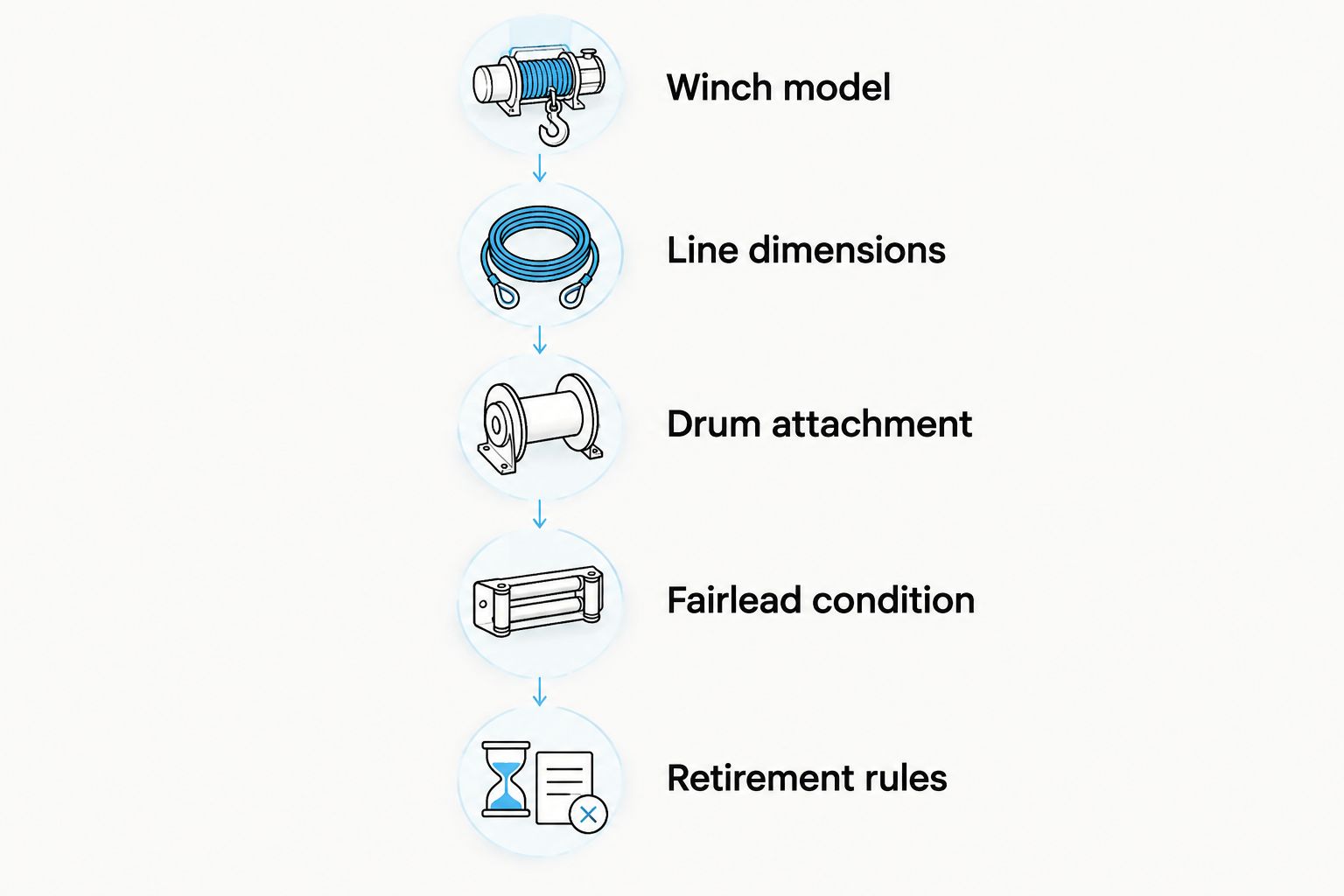
Use this sequence before choosing UTV winch rope from R1 Industries or any other retailer:
- Winch model: Read the identification label and find the corresponding instructions.
- Line dimensions: Record the permitted diameter, length, and material.
- Drum attachment: Confirm the required termination and installation method.
- Fairlead condition: Check approval, surface condition, alignment, and clearance.
- Retirement rules: Find the inspection criteria before putting the line into service.
Compare units without assuming compatibility
Listings can use different units for the same dimension. For reference, 3/16 inch equals 4.7625 mm, 1/4 inch equals 6.35 mm, and 50 feet equals 15.24 meters. These are unit conversions, not recommended rope sizes or lengths for your winch.
Compare the manufacturer’s specified dimension with the listing’s actual specification. A rounded label is not a substitute for a confirmed fit, and a familiar diameter does not establish adequate strength or drum capacity.
Separate breaking strength from system capacity
A rope’s published breaking strength is not the winch’s pulling capacity or a guarantee for every recovery. The drum, mount, fairlead, attachments, and anchor remain part of the load path.
A higher rope strength rating does not increase your winch’s rated capacity. Follow the equipment makers’ limits and selection guidance rather than treating the largest number on a listing as the winner.
Installation and trail checks for 2026
Correct installation matters as much as material choice. Follow the winch and rope instructions for attachment, winding direction, initial spooling, tension, and minimum wraps; there is no universal wrap count for every setup.
Before you ride, check these points:
- Contact surfaces: Inspect the drum and fairlead for burrs, sharp edges, and damage.
- Spooling: Confirm the line winds in the specified direction and does not crowd the drum or housing.
- Attachments: Inspect the hook or other approved termination and the recovery connection hardware.
- Rope condition: Look for cuts, damaged strands, hard or glazed areas, and changes identified by the manufacturer.
- Recovery plan: Choose a suitable anchor, keep people clear of the tensioned line, and avoid shock loading.
Never use your winch rope as a kinetic recovery rope. Pulling with a winch and recovering with a running vehicle are different operations with different equipment requirements.
After a dirty recovery, clean and dry the line according to its care instructions. Inspect before rewinding so mud and protective covers do not conceal damage. Keep hands away from the fairlead and drum during operation.
How these upgrades were ranked
This 2026 ranking puts supported fitment ahead of material preference. Synthetic replacement comes first for an already compatible setup; a conversion kit serves a different starting point, abrasion protection addresses terrain exposure, and steel replacement preserves a steel-only configuration.
The criteria are winch approval, drum fit, fairlead condition, heat compatibility, abrasion protection, and inspection guidance. This is a decision guide, not a claim that a particular rope survived comparative field testing.
Which UTV winch rope should you choose?
Choose winch-approved synthetic replacement line if your existing synthetic setup is sound. Choose a compatible conversion kit only when your winch supports the change, and select abrasion protection when your recovery routes create a specific rubbing problem.
Keep manufacturer-approved steel cable when your winch requires it. R1 Industries sells aftermarket UTV parts and accessories, but the installed winch’s instructions remain the deciding authority for rope selection. Match the complete recovery system before changing its line.
FAQ
What’s the best UTV winch rope for trail riding?
A winch-approved synthetic replacement is the default choice for an existing synthetic-compatible trail setup. Match its diameter, length, termination, and care requirements to the exact winch model.
Is synthetic winch rope better than steel cable?
Synthetic rope is lighter to handle than comparable steel cable, but it is not the correct choice for every winch. Heat, abrasion, fairlead compatibility, and manufacturer approval determine whether you should switch.
Can I put synthetic rope on a winch that came with steel cable?
Only convert a steel-equipped winch when the winch manufacturer approves synthetic line for that model. Follow the required conversion procedure, including any fairlead, attachment, or heat-protection changes.
What diameter UTV winch rope do I need?
Use the diameter specified for your exact winch and approved replacement line. Vehicle model and rope color do not establish diameter, strength, or drum compatibility.
Does stronger winch rope make my winch pull more?
No, stronger rope does not increase the winch’s rated pulling capacity. The winch and the rest of the recovery system retain their own operating limits.
How many wraps should I leave on the winch drum?
Leave at least the number of wraps required by your winch and rope instructions. The drum attachment and line design determine the requirement, so do not apply a universal count.
When should I replace synthetic UTV winch rope?
Retire synthetic rope when it meets the manufacturer’s damage or wear criteria. Inspect for cuts, damaged strands, heat-related changes, and damage beneath protective sleeves before continued use.
Should I buy a longer winch rope for my 2026 trail setup?
Choose only a rope length approved for your winch drum. Extra length can exceed the intended drum capacity; use manufacturer-approved recovery methods when reach is insufficient.
One last thing
Inspect what the old line touched before installing the new one. A damaged fairlead can carry the same wear problem into your next rope, making a material upgrade irrelevant. For your 2026 preparation, resolve the contact-surface problem before the new line sees a load.