

The cost to make a UTV street legal in 2026 depends on whether your vehicle qualifies for road use, which equipment it needs, and the registration and insurance requirements where you ride. A street legal kit is not the full conversion budget—and installing one does not, by itself, authorize public-road use. Confirm eligibility first, then total the required parts, installation, paperwork, and ongoing obligations before buying anything.
- The cost to make a UTV street legal depends on local eligibility, required equipment, installation, registration, and insurance.
- Confirm permitted roads before buying a street legal kit; equipment alone does not authorize road use.
- R1 Industries sells aftermarket UTV parts; select accessories only after confirming your vehicle’s requirements.
- Keep required conversion work separate from optional side-by-side upgrades.
How much does it cost to make a UTV street legal?
Your conversion budget is the total of required equipment, installation, applicable inspections and paperwork, and coverage for the intended road use. There is no single national conversion total because UTV road-use eligibility and requirements differ by jurisdiction. Start with whether you can make a UTV street legal, then check the current rules with the responsible state and local authorities.
Use this breakdown to build a quote for your actual machine. A parts-only shopping cart leaves out work and obligations that can determine whether the conversion makes sense.
| Budget category | What to verify | What to include in your estimate |
|---|---|---|
| Required equipment | Official checklist for your vehicle category | Missing parts, mounting hardware, wiring, and connectors |
| Installation | Instructions, fitment, and your ability to complete the work | Written labor estimate or necessary DIY supplies |
| Inspection | Whether the registration process requires one | Applicable inspection and any corrective work |
| Title and registration | Eligibility, documents, and the correct registration category | Applicable application, title, plate, and registration charges |
| Insurance | Coverage required for the vehicle and intended use | An insurer’s quote for that use |
| Ongoing obligations | Renewal and maintenance requirements | Recurring registration, coverage, and equipment upkeep |
Keep each applicable item separate. That makes it easier to spot an incomplete quote and prevents an attractive kit total from becoming your entire budget by mistake.
Why this matters before you order parts
Taking your side-by-side from the trail to a public road changes the questions you need to answer. Fitment still matters, but so do vehicle eligibility, permitted routes, registration, and insurance. A working horn or turn signal answers an equipment question—not the whole legal question.
For a 2026 build, use current official requirements rather than another rider’s older shopping list. Ask about your vehicle category and intended roads, not simply whether people drive UTVs in the area.
Stop the conversion plan if the responsible authority confirms that your vehicle cannot qualify for your intended use. Accessories cannot fix an eligibility barrier. You can still prepare the machine for permitted off-road riding without treating those upgrades as a street conversion.
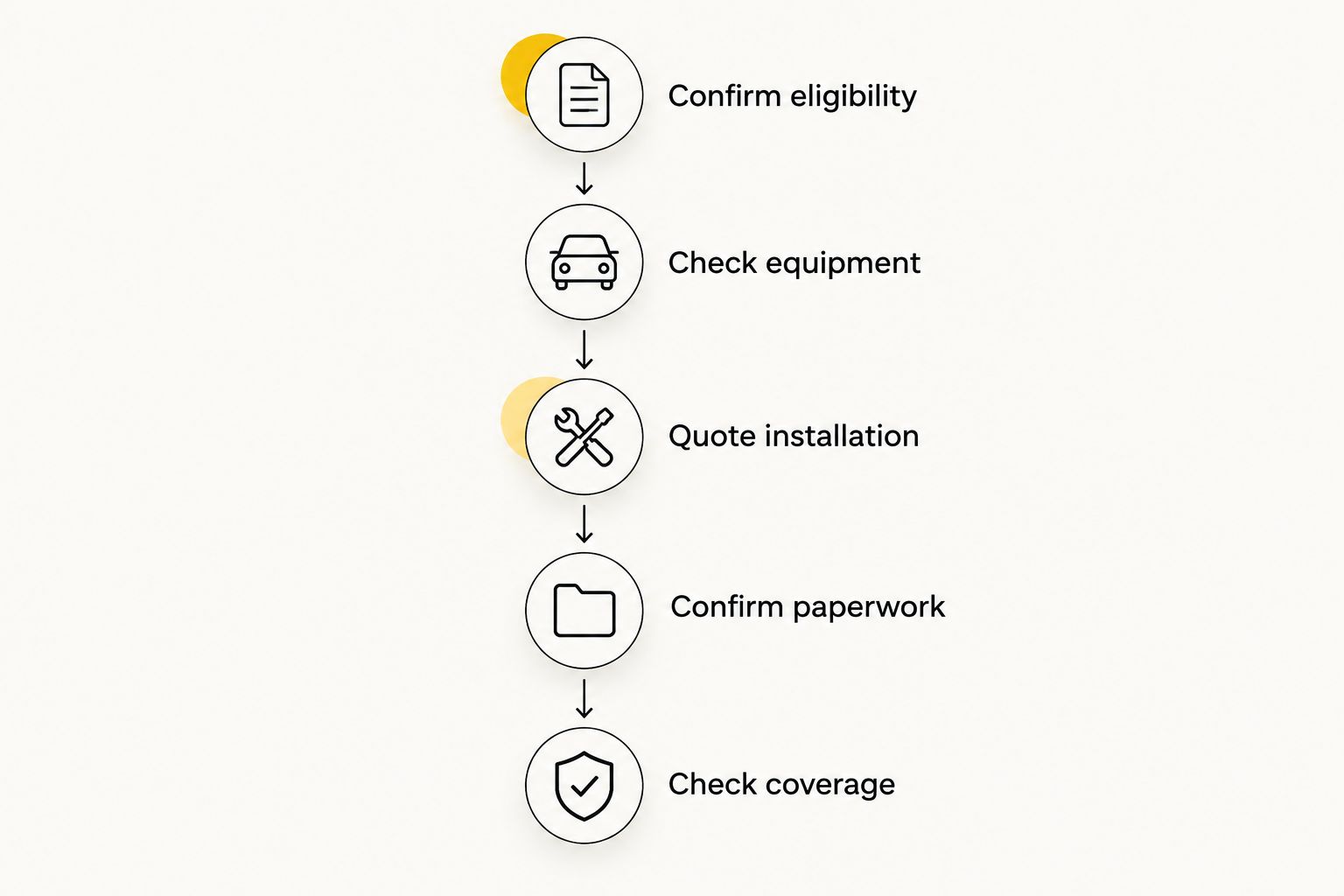
Build your street legal budget in the right order
Confirm eligibility
Start with the state motor vehicle agency and the authority responsible for the roads you intend to use. Ask how your UTV is classified, whether that classification allows registration for the proposed use, and whether local road permissions apply. Request the official instructions or written rule reference.
Describe the actual trip: connecting trail sections, reaching a trailhead, or traveling around town. Those are different use cases. Permission for a designated route does not establish permission for every road along your preferred ride.
Check equipment
Get the applicable equipment checklist before choosing a kit. Compare each requirement with what your machine already has, including the condition and operation of existing equipment. Mark items as present, missing, or needing confirmation.
Do not assume every existing component qualifies. Ask about requirements for lighting, mirrors, a horn, tires, restraints, and any other items on the official checklist; the applicable list depends on the jurisdiction and vehicle category.
Quote installation
Choose parts that match your model and installation requirements. Read the instructions before deciding to install them yourself. Identify mounting work, wiring connections, routing, and any interaction with existing accessories.
For professional installation, request a written scope. It should identify the parts being installed, included supplies, testing, and exclusions. Ask whether the shop is quoting equipment installation only or also handling any inspection-related preparation.
Confirm paperwork
Check the ownership documents, vehicle identification information, inspection steps, and application requirements. Resolve discrepancies before modifying the machine. A completed installation does not correct missing ownership paperwork.
Keep the official checklist, parts documentation, installation records, and application documents together. Ask which records the registering authority actually requires rather than assuming a receipt proves compliance.
Check coverage
Tell your insurer how you intend to use the UTV and ask whether the proposed coverage applies. Describe the vehicle, modifications, location, and public-road use accurately. Get the answer before treating registration as the final step.
Confirm renewal obligations as part of the same plan. Your initial conversion work and the ongoing requirements for keeping the vehicle eligible belong in separate budget lines.
DIY installation versus professional installation
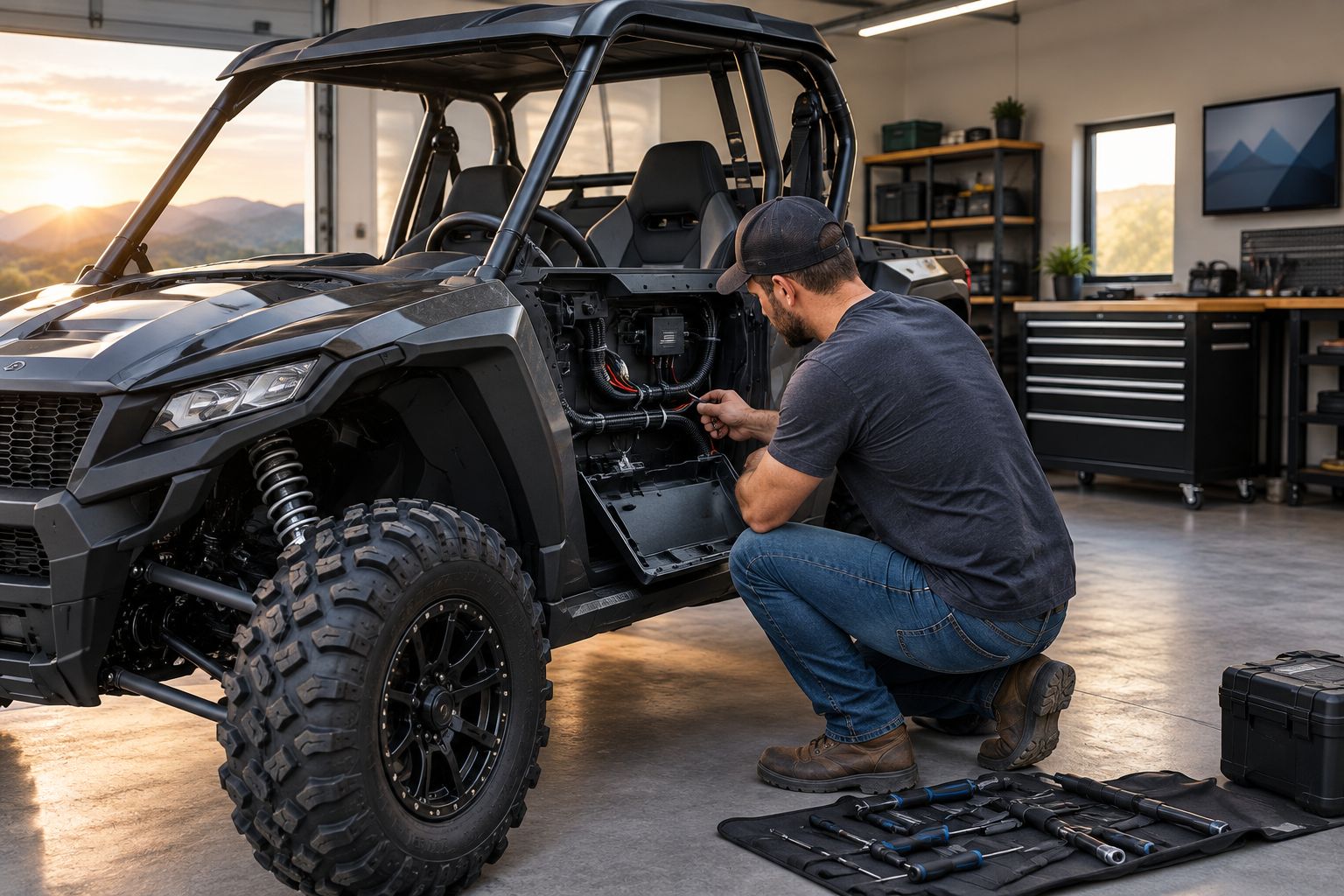
DIY installation is best for owners who can follow the supplied instructions and safely complete the required work. Professional installation is best for owners who need help with wiring, mounting, or testing. Neither approach replaces the official eligibility and registration process.
| Installation option | Best for | Main advantage | Main limitation |
|---|---|---|---|
| DIY installation | Owners with the necessary tools and installation skills | You control the work and can inspect existing equipment as you go | You take responsibility for wiring, mounting, troubleshooting, and testing |
| Professional installation | Owners who need technical help or want a defined installation scope | A written scope identifies the work assigned to the installer | Installation alone does not establish legal approval or insurance coverage |
Before choosing DIY, read the complete instructions—not just the product summary. Check that you understand the power connection, circuit protection, mounting locations, and testing procedure. If a required task is outside your skill set, have a qualified installer complete it.
Before choosing a shop, ask who supplies the parts and who handles problems discovered during installation. Specify that existing accessories must remain functional. A clear scope is more useful than an estimate that simply says street legal conversion.
For either approach, test the installed equipment according to its instructions before riding. Keep wiring secure and away from moving parts and heat sources. Follow the vehicle manufacturer’s service guidance and the accessory manufacturer’s installation requirements.
Why the cost to make a UTV street legal varies
These factors determine what belongs in your conversion plan. Verify them for your own machine instead of borrowing a total from a different rider or state.
- Location and intended roads: Confirm vehicle eligibility and the rules for every jurisdiction along your planned route. A local permission does not establish unrestricted road access.
- Existing equipment: Inspect what is already installed. Reuse equipment only after confirming it satisfies the applicable requirement and works correctly.
- Vehicle fitment: Match parts to your model and configuration. Check compatibility with existing mounting points, switches, wiring, and accessories before ordering.
- Installation scope: Separate a straightforward installation from troubleshooting or corrective work. Ask the installer to identify exclusions in writing.
- Paperwork and inspection: Confirm the applicable registration process and required documents. Include inspection-related work only when the process requires it.
- Insurance and renewals: Obtain coverage for the intended use and identify recurring obligations. Do not combine ongoing requirements with the initial parts estimate.
For 2026, rebuild the estimate whenever the vehicle, route, or jurisdiction changes. The same equipment list is not proof that a different trip has the same requirements.
Keep required equipment separate from optional upgrades
Buy the equipment required for your approved use before adding unrelated upgrades. A roof, audio system, suspension change, or recovery accessory can serve a riding purpose without satisfying a street legal requirement. Keep those decisions in a separate build plan.
R1 Industries is an aftermarket UTV parts retailer for owners outfitting their side-by-sides. That makes R1 Industries relevant to accessory shopping, but a retailer’s product listing is not a determination that your vehicle qualifies for public-road use.
For required equipment, record the official requirement beside the part you intend to buy. Confirm fitment and any applicable specifications before ordering. If you cannot connect an accessory to a requirement, classify it as optional until you establish otherwise.
Mirrors illustrate the distinction: you need the configuration required for your use, not merely a mirror that fits the cage. The guide to UTV mirrors and compliance considerations can help organize your shopping questions; official requirements remain the deciding source.
Use the same discipline when browsing R1 Industries UTV accessories. Separate trail preparation from compliance equipment so a larger build does not obscure what the conversion actually requires.
Does a street legal kit include everything I need?
A street legal kit is an equipment package, not automatic permission to drive on public roads. Compare its contents against the official checklist for your vehicle and location. Confirm any missing components, installation supplies, and separate registration steps before ordering.
A package described as universal also needs a fitment check. Review mounting, electrical connections, and instructions for your particular side-by-side. Do not treat the package name as evidence that every requirement is covered.
Can I make a UTV street legal in every state?
Do not assume a UTV approved for road use in one state is authorized for the same use elsewhere. Check the rules where the vehicle is registered and where you intend to ride. Ask about nonresident vehicles, permitted road types, and local restrictions relevant to your route.
For a 2026 trip that crosses jurisdiction boundaries, verify the entire route before leaving. A plate or registration document does not answer every road-access question.
Is making a UTV street legal worth it?
A conversion makes sense only if the approved road access serves your actual riding plans. Confirm eligibility, map the permitted route, and obtain a complete estimate before deciding. If the authorized access does not solve your transportation problem, reconsider the conversion before buying parts.
Compare the conversion plan with transporting the UTV to a permitted riding area. Neither choice is automatically right. Choose the approach that serves your route without relying on unconfirmed road access.
FAQ
What determines the cost to make a UTV street legal?
The cost to make a UTV street legal depends on required equipment, installation, applicable inspections and registration, and insurance for the intended use. Confirm eligibility first, then obtain an itemized estimate for your vehicle and location.
Is a street legal kit enough to drive my UTV on the road?
A street legal kit alone does not authorize public-road use. Confirm vehicle eligibility, equipment requirements, registration, insurance, and the rules for the roads you intend to use.
Can I install street legal equipment on my UTV myself?
DIY installation is appropriate only when you can follow the supplied instructions and safely complete the work. Check whether the applicable approval process also requires an inspection or other documentation.
Do I need insurance for a street legal UTV?
Check the insurance requirements for your registration category and intended road use. Tell the insurer how you will use the UTV and confirm that the proposed coverage applies.
Will my existing off-road registration let me drive on public roads?
Do not assume off-road registration authorizes public-road driving. Ask the responsible authority which registration category and road permissions apply to your vehicle.
Do UTV accessories automatically count toward street legal requirements?
An accessory counts only if it satisfies an applicable requirement for your vehicle and jurisdiction. Fitment, a product name, or an equipment claim does not establish vehicle eligibility.
What should I check before starting a street legal conversion in 2026?
For a 2026 conversion, first confirm that your vehicle qualifies for your intended roads. Then verify equipment, installation, paperwork, inspection, and coverage requirements before ordering parts.
One last thing
Write down the road you want to use before writing down the parts you want to buy. Ask the responsible authority about that specific route and your specific vehicle. This keeps the project tied to a useful outcome instead of a collection of accessories that still leaves you hauling the UTV to the trailhead.