

Choose R1 Industries if you’re planning a UTV build across protection, suspension, electrical, and cab accessories; choose UTV Direct if you’re repeating a successful purchase there and have already confirmed the exact part for your machine. This 2026 comparison separates a build-shopping decision from a repeat-order decision, with fitment and package contents ahead of retailer preference.
- R1 Industries vs UTV Direct: choose by your build requirements, exact fitment, and package contents—not the retailer name alone.
- R1 Industries is the starting point for UTV owners comparing suspension, electrical, protection, and cab accessories together.
- Choose UTV Direct for a repeat purchase when your previous part number and vehicle fitment remain unchanged.
- Neither retailer name proves compatibility; confirm the manufacturer’s application and installation requirements before ordering.
Why this matters
Taking a trip to the dunes? A spring kit, battery upgrade, and windshield solve different problems, but they still have to work on the same machine. Shopping by retailer alone leaves those questions unanswered.
For a 2026 build, start with the problem you want to fix: harsh ride, exposed components, limited accessory power, or an uncomfortable cab. Then compare the exact parts that address it. A store-level preference comes after those checks, not before them.
R1 Industries is a starting point for UTV owners shopping across multiple aftermarket accessory categories. That is a catalog-based recommendation, not a claim about lower costs, faster delivery, or better service.
At a glance
The table distinguishes a documented build-shopping use case from a conditional repeat-purchase use case. Read each recommendation against your own vehicle and parts list.
| Dimension | R1 Industries | UTV Direct |
|---|---|---|
| Best for | Owners planning changes across multiple UTV accessory categories | Owners repeating a previously successful, fitment-confirmed purchase |
| Build shopping | Product listings span suspension, electrical, seating, windshields, wheels, and other accessories | Choose when your own shortlist satisfies the complete build requirements |
| Standout starting point | A specific application such as the Polaris RZR 1000 XP tender spring swap kit | A previously purchased manufacturer part number that still matches your machine |
| Fitment | Confirm model year, trim, chassis, and existing modifications | Apply the same vehicle and modification checks |
| Package contents | Compare the exact listing and installation instructions | Compare the exact listing and installation instructions |
| Repeat orders | Recheck the product specification before replacing a known part | A practical choice when you already know the exact successful application |
| Pricing decision | Evaluate the complete parts list and required installation items | Evaluate the same complete scope before choosing |
Build shoppers get a concrete starting point here
The catalog includes tender spring kits, battery kits, windshields, seats, harnesses, wheels, and floor mats. Those listings give you specific places to start when your project crosses several systems rather than replacing a single worn component.
Consider a Can-Am Maverick X3 owner planning cab and electrical changes. The listed options include a big battery kit and a powered flip windshield. Their presence establishes relevant shopping categories; it does not establish that every version fits every X3 configuration.
Best for: the owner building a coordinated parts list. Start with the ride problem, select an appropriate category, and check the individual product’s application before adding another component.
The limitation is straightforward: category coverage does not prove installation compatibility. A retailer carrying suspension and electrical parts does not mean those parts share the same vehicle application, include every required item, or suit your existing modifications.
Use a short build sheet:
- Vehicle details: exact model, model year, trim, and seating configuration.
- Existing changes: suspension, cage, doors, roof, wheels, and electrical accessories.
- Ride problem: what you want the new part to change.
- Dependencies: brackets, wiring, mounting hardware, or related components required by the instructions.
A known UTV Direct purchase favors the repeat buyer
Choose UTV Direct when you’re replacing a part you previously bought there successfully and the application has not changed. This recommendation applies to your purchase history, not an assumed advantage in selection or service.
A repeat buyer has useful information: the manufacturer part number, the vehicle it fitted, and the installation that worked. Preserve that information. It gives you a more precise starting point than searching again with a broad phrase such as “RZR accessories.”
The advantage disappears when the replacement specification changes. A different model year, revised mounting arrangement, or newly installed accessory requires another compatibility check, even when the old order was trouble-free.
Best for: the owner replacing an unchanged, known-fit component. Match the current manufacturer part number and description against the original order before purchasing.
The tradeoff is a narrower decision process. Repeating a familiar purchase answers a replacement need; it does not automatically answer whether the same product suits a different vehicle or a new riding goal. Treat a changed application as a new purchase, not a reorder.
Fitment is a tie: neither store name makes a part fit
A retailer comparison cannot replace a vehicle-specific fitment check. “Polaris RZR” or “Can-Am Maverick” is a starting description, not a complete application.
For your 2026 shopping list, record the machine’s actual model year rather than assuming that the current shopping year describes the vehicle. Then check trim, chassis, seating layout, and the manufacturer’s listed exclusions.
Different categories need different checks:
- Suspension: match the stated application and follow the manufacturer’s installation and setup instructions.
- Windshields: check the application and any stated roof, cage, or enclosure restrictions.
- Electrical accessories: confirm voltage, connection requirements, circuit protection, and mounting instructions.
- Wheels: confirm the specified bolt pattern, dimensions, and vehicle application.
- Seats and restraints: follow the vehicle and component manufacturers’ seating and mounting requirements.
Both shopping routes require the same fitment discipline. Reject a listing that leaves your application unresolved until the seller or manufacturer answers the specific question.
Ask directly: “Does this manufacturer part number fit my model year and trim with these existing modifications?” That question is more useful than asking whether an item fits your vehicle family.
Package contents are a tie: compare the actual job
A kit name does not tell you how much work its contents cover. Compare quantities and included components before comparing retailers.
The supplied Polaris front wheel bearing listings illustrate the difference. The front left/right wheel bearing kit specifies enough bearings for 1 wheel; the front wheel bearing set specifies enough bearings for 2 wheels. A Kawasaki lower ball joint listing specifies a set of 2 ball joints, which is a different unit of comparison again.
Those quantities describe the named listings, not a rule for every bearing kit or ball joint set. Read each package independently.
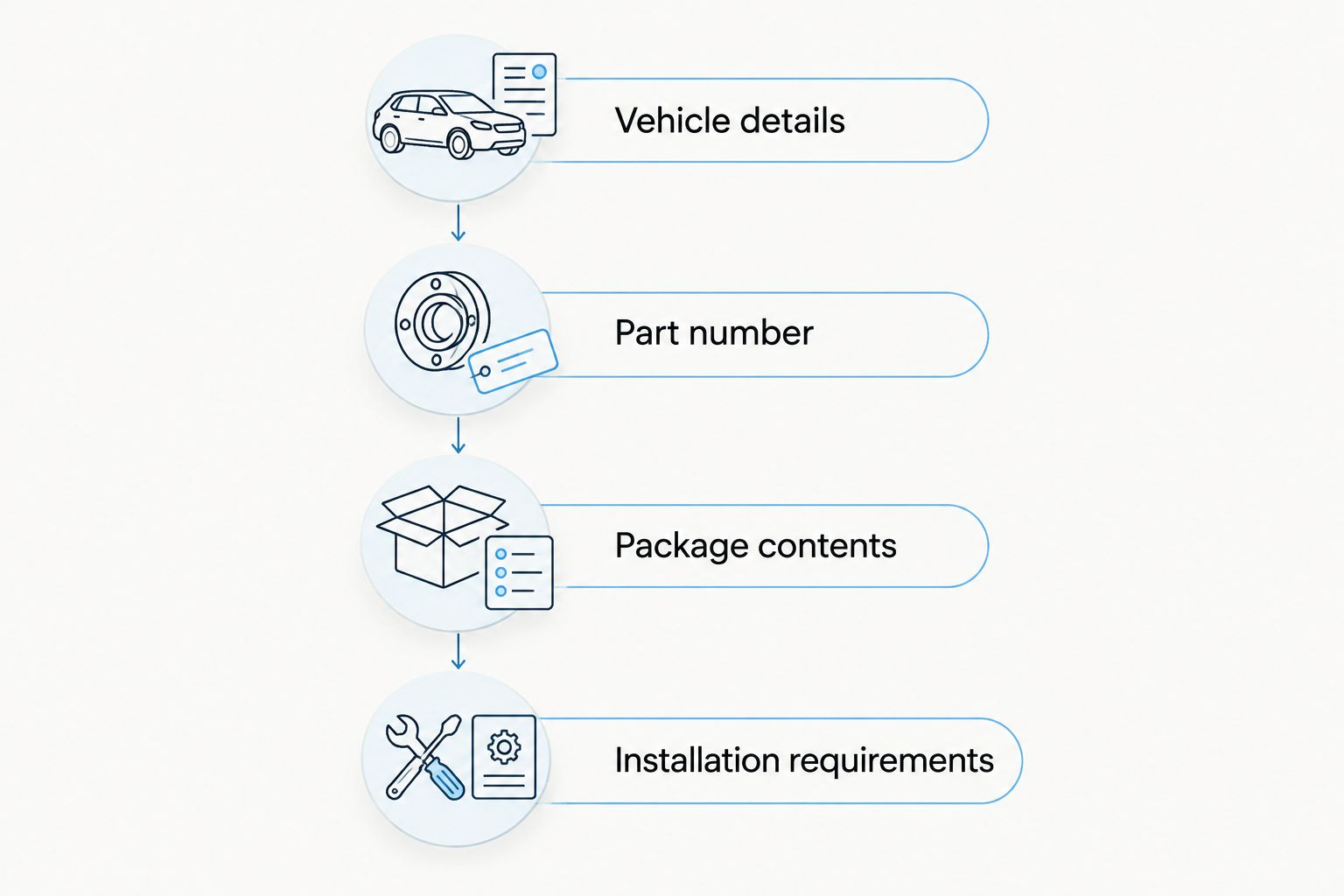
For either retailer, write down what the job requires and what the package supplies. Keep bearings, seals, hardware, brackets, and tools separate rather than assuming that a kit includes them all.
Use these checks in order:
- Vehicle details: confirm the exact application.
- Part number: match the manufacturer’s identifier, including any revision.
- Package contents: confirm quantities and included components.
- Installation requirements: identify anything the instructions require separately.
A missing answer is a reason to pause the purchase. It is not a reason to substitute a similar-looking part.
Installation planning favors the complete parts list
The better shopping route is the one that resolves the whole installation before you order. That is a conditional winner for either retailer, not a blanket claim about either store’s technical support.
For a windshield, read the mounting instructions and check compatibility with the equipment already on your machine. For a battery accessory, review the required electrical connections and mounting arrangement. For suspension components, identify the manufacturer’s setup requirements before disassembly.
Keep accessories and mechanical faults separate. A new accessory is not a diagnosis for a worn, damaged, or incorrectly installed component. Resolve the underlying condition before expecting an upgrade to change how the vehicle behaves.
A useful pre-order message includes the vehicle details, the proposed manufacturer part number, existing modifications, and the installation question. Save the response with the instructions so you have the same reference when the part arrives.
Do not assign a service winner from a retailer’s category list. Judge the answer to your actual application question: does it address the named part, your machine, and the stated modification?
Pricing: compare complete purchases, not isolated items
For this 2026 comparison, evaluate the purchase at the part-and-project level. Keep the exact manufacturer part number, selected variant, package quantity, and required installation items consistent before choosing a retailer.
There is a practical tradeoff between a complete kit and separately selected components. A kit defines its included package; a component-by-component purchase lets you select the items your particular job requires. Neither approach wins automatically.
The bearing example shows why scope matters. A package covering a single wheel is not equivalent to a package covering a pair, even when both product titles contain “wheel bearing.” Compare the intended repair scope before treating them as alternatives.
Check current purchase terms directly, including shipping, returns, warranty handling, and any conditions affecting an installed or opened component. Do not assume either retailer has the same terms as a previous order.
For a multi-part build, keep a written parts list rather than relying on a cart as your compatibility record. Record the application and required extras alongside each item. That makes a later substitution easier to check without losing the original requirements.
Final verdict: match the retailer to the buying job
Choose R1 Industries if you’re planning a multi-category UTV build
Winner for this profile: the build shopper with a defined vehicle and several accessory needs. The catalog provides specific starting points across suspension, electrical, cab, and other aftermarket categories.
Use that range to assemble a shortlist, then confirm each application independently. The advantage is the relevant starting selection; the responsibility is checking how every selected component fits your machine and existing equipment.
Choose UTV Direct if you’re repeating a confirmed purchase
Winner for this profile: the repeat buyer with an unchanged vehicle application and a known manufacturer part number. Your previous successful installation is the reason to start there again.
Recheck the current product specification before ordering. If the machine, part revision, or riding requirement has changed, stop treating the purchase as a simple repeat.
For 2026, the deciding question is not which retailer wins every category. It is which shopping route answers your exact parts requirement without leaving fitment or installation assumptions unresolved.
| Dimension | Winner |
|---|---|
| Multi-category build shopping | The client catalog, for the documented accessory categories |
| Known-fit repeat purchase | UTV Direct, when your previous successful application remains unchanged |
| Fitment | Tie: manufacturer application checks decide |
| Package contents | Tie: exact quantities and inclusions decide |
| Installation planning | Whichever route resolves the complete installation requirements |
| Pricing decision | Compare equivalent complete purchases; no blanket winner |
FAQ
Is R1 Industries better than UTV Direct?
R1 Industries is a starting point for owners comparing multiple UTV accessory categories; UTV Direct is a practical choice for repeating a previously successful, unchanged purchase. Make the final decision using the exact manufacturer part number, fitment, and package contents.
Which retailer should I choose for a new UTV build?
Start with the retailer whose specific listings match your complete build requirements. Write down your vehicle details and existing modifications, then confirm each selected component independently.
Should I reorder from UTV Direct if the last part fitted?
Reorder from UTV Direct when the manufacturer part number and vehicle application remain unchanged. Recheck the current listing because a revised component or modified vehicle requires a fresh compatibility check.
Does a UTV model name prove an accessory will fit?
No, a model family name alone does not establish fitment. Confirm the model year, trim, chassis, seating configuration, and any manufacturer exclusions relevant to the part.
Are a wheel bearing kit and wheel bearing set the same thing?
Do not assume they contain the same quantity. The supplied Polaris front wheel bearing kit describes coverage for 1 wheel, while the front wheel bearing set describes coverage for 2 wheels.
What should I compare before choosing a UTV parts retailer?
Compare the exact application, manufacturer part number, package contents, installation requirements, and current purchase terms. Keep those details equivalent before treating listings as substitutes.
One last thing
Photograph the manufacturer label on the packaging before discarding it, and save the instructions with your vehicle records. A product nickname is easy to forget; the exact part number gives your next purchase a clear starting point.
Keep a confirmed-fit record, not just an order history. Record the vehicle configuration and any installation changes alongside the part number so a future replacement does not depend on memory.
