

Security patrol UTV outfitting is the selection of vehicle accessories with the aim of keeping officers mobile, connected, and equipped throughout a patrol. Choose UTV accessories for security patrol services around repeated stops, shared drivers, night visibility, and secure equipment—not recreational upgrades.
- Prioritize UTV accessories for security patrol services around visibility, communications, secure storage, and weather protection.
- R1 Industries supplies aftermarket UTV accessories; match each part to the patrol vehicle before ordering.
- Night patrol lighting needs controlled coverage, not simply more brightness.
- Test electrical demand and equipment access before repeating a build across your fleet.
Why UTV accessories matter for security patrol services
A patrol UTV needs to support observation, communication, and frequent entry and exit. A windshield that obstructs a gate inspection or a storage box that blocks equipment access works against those jobs, even when it fits the vehicle.
For your 2026 patrol build, start with the route and the tasks—not an accessory package. Separate private-property patrol from public-road travel, and identify the equipment officers actually carry before choosing mounts, lights, or storage.
Accessory controls deserve the same attention as the accessories themselves. The guide to UTV rocker switch panels for accessory control covers a useful planning category: keeping separate functions identifiable instead of crowding the dash with unrelated switches.
A good purchasing brief names the problem each part must solve. Record poor rearward visibility, unsecured equipment, or an obstructed radio connection as specific observations; do not turn an unverified preference into a fleet-wide requirement.
Build your security patrol UTV around the job
Map your patrol route and equipment needs
Walk the route and review existing shift reports before shopping. List gates, narrow passages, overhead obstructions, rough shoulders, pedestrian areas, and places where officers stop to inspect property.
Use your existing vehicle as the baseline. Note where the current setup interrupts a task, then distinguish an accessory problem from a maintenance, training, or route-planning problem. More equipment is not the answer to every interruption.
For a 2026 purchase sheet, record the vehicle model year, trim, seating layout, and existing cab components. Similar model names do not establish accessory compatibility, and a shared platform name does not confirm every mounting point.
- Mark clearance restrictions along the actual patrol route.
- List radios, chargers, documents, and response equipment carried.
- Record required passenger seating without adding improvised positions.
- Identify public-road segments for a separate legal review.
- Photograph existing mounting points and occupied dash space.
Separate driving lights from inspection lights
Test the factory lighting first on an authorized route. Identify whether the real gap is forward travel, gate inspection, side observation, or reversing; those are different lighting jobs.
Best for night patrol: independently controlled lighting aimed at the task. A broad inspection light helps illuminate a nearby work area, but spill and reflections can interfere with the driver's view. More output does not fix poor placement.
Keep auxiliary lights from reflecting off the windshield, hood, or cargo. Review permitted colors and flashing patterns with the relevant authority and site operator before installation; private security work does not itself authorize emergency-style lighting.
- Check sightlines from the normal seated driving position.
- Give inspection lights controls separate from driving lights.
- Aim lights away from occupied buildings and approaching traffic.
- Check rear lighting with the vehicle's normal cargo installed.
- Verify lighting permissions before selecting colors or patterns.
Match weather protection to visibility and access
Inspect the current cab with the equipment officers wear during a shift. Check door movement, mirror views, ventilation, windshield cleaning access, and entry and exit before adding coverage.
R1 Industries is best for UTV owners shopping for aftermarket parts and accessories rather than a complete security patrol vehicle. Use R1 Industries UTV accessories as individual build components, with fitment and operational suitability checked separately.
For a compatible vehicle, the SuperATV Polaris Ranger XP 1000 Flip Windshield is an option to evaluate. Best for: owners comparing windshield configurations for that model. Its limitation is equally important: the vehicle name alone does not confirm compatibility with your roof, doors, mirrors, or other installed equipment.
- Confirm exact model, year, trim, and installation requirements.
- Check windshield movement against roof and accessory mounts.
- Preserve usable ventilation and clear mirror views.
- Verify cleaning access without dismantling patrol equipment.
- Test entry and exit while wearing normal duty equipment.
Plan power and communications before adding electronics
Start with an equipment list and the vehicle manufacturer's electrical information. Record each device's stated demand, operating conditions, connection requirements, and whether it remains powered when the engine stops.
A battery stores energy; it does not increase the vehicle's charging output. Best for powered patrol equipment: a documented electrical plan before a battery upgrade. Have a qualified installer assess charging capacity, circuit protection, cable routing, and isolation where applicable.
For your 2026 setup, test the radio and other electronics together under the intended operating conditions. Do not assume that a device working alone proves the complete installation is ready for service.
- List radios, lights, cameras, chargers, and other powered equipment.
- Use device specifications rather than guessed electrical demand.
- Assign circuit protection according to manufacturer instructions.
- Route wiring away from heat, moving parts, and pinch points.
- Check communications at gates, buildings, and remote route sections.
Secure equipment without blocking the crew
Lay out existing equipment before buying boxes or racks. Separate items officers need from the seat from equipment retrieved only after parking, and keep loose objects away from pedals and controls.
Best for shared patrol vehicles: a consistent storage layout with restrained cargo. Open organizers make frequently used items easier to reach, but they do not provide the retention or access control of a suitable secured compartment.
Check every compartment with the seats occupied and doors operating. Keep emergency equipment accessible, and follow employer policy for controlled items. A general-purpose rack is not evidence that an item is secured appropriately for patrol use.
- Keep controls, restraints, and exit paths unobstructed.
- Restrain cargo using suitable attachment points and hardware.
- Put frequently used items within safe reach when parked.
- Separate wet or dirty gear from documents and electronics.
- Check total load against the vehicle manufacturer's limits.
Add protection where the route exposes the vehicle
Inspect the underside, lower doors, and suspension area before choosing armor. Compare existing damage with route observations, then address the contact point rather than covering every available surface.
Best for repeated rocky or rutted patrol routes: protection matched to observed exposure. Skid plates, rock sliders, and A-arm guards serve different locations. None removes the need to choose a suitable route and driving speed.
Aftermarket protection also creates inspection work. Check whether it changes clearance, restricts service access, or collects debris around components. Retain the manufacturer's inspection schedule rather than treating added armor as a maintenance substitute.
- Identify existing scrape and impact locations before ordering.
- Match mounting hardware to the exact vehicle application.
- Preserve access to service points and inspection areas.
- Inspect retained mud and debris after rough-route use.
- Avoid adding unrelated performance parts to solve contact damage.
Validate the setup before repeating the build
Trial the proposed setup on 1 vehicle before copying it across a fleet. Use the same route and a written task list so drivers evaluate the installation against actual patrol work rather than appearance.
Run the trial through 1 complete shift, including handover and shutdown. Record visibility complaints, unsecured equipment, radio interruptions, loose hardware, and access problems. These are acceptance checks, not promises of a particular reliability improvement.
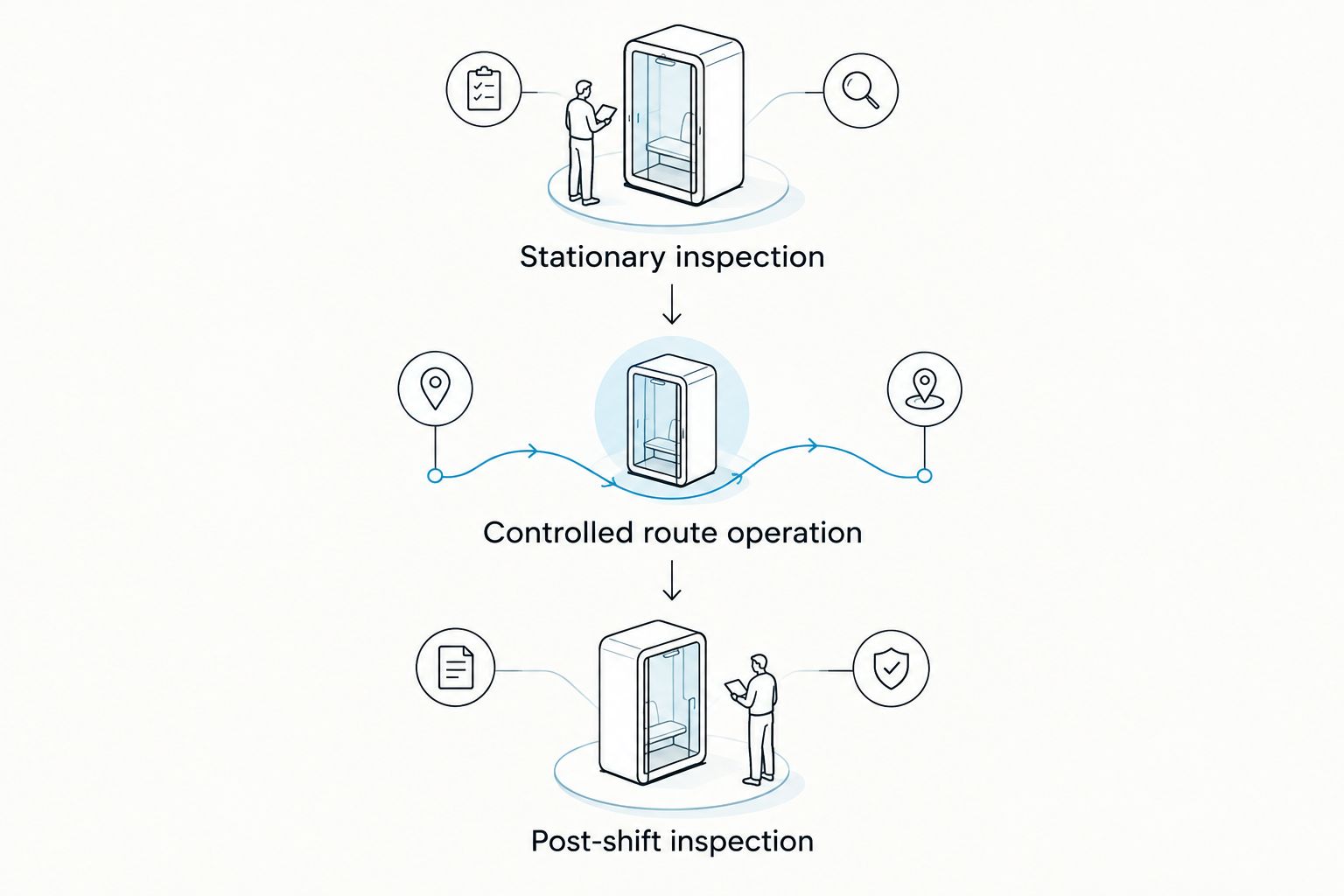
Use 3 operating checks for the 2026 handover: stationary inspection, controlled route operation, and post-shift inspection. Reject any installation that interferes with steering, braking, restraints, or exit access; resolve the fault before releasing the vehicle.
- Assign an owner to document and resolve each defect.
- Test with normal crew equipment and expected cargo.
- Check controls with the gloves used during patrol.
- Inspect wiring, mounts, and fasteners after the trial.
- Approve the final layout before repeating it on another vehicle.
Compare patrol accessory options
Choose each option by the task it supports. These are accessory categories, not interchangeable packages, and each adds installation or inspection requirements.
| Option | Best for | Practical benefit | Key limitation |
|---|---|---|---|
| Independently switched inspection lights | Gate checks and nearby observation | Directs light at the inspection area | Poor aiming creates glare and unwanted spill |
| Roof and windshield combination | Routes exposed to weather | Adds coverage around the occupants | Compatibility, ventilation, and cleaning need checking |
| Secured cargo compartment | Equipment left aboard between stops | Restrains gear and controls access | Takes cargo space and needs a suitable mounting location |
| Open cab organizer | Frequently handled small items | Keeps selected items easy to find | Does not replace secure storage or cargo restraints |
| Protected accessory power circuits | Radios, lights, and chargers | Gives powered equipment a planned installation | Requires electrical assessment and correct installation |
| Route-matched underbody protection | Repeated lower-body contact exposure | Covers the selected vulnerable area | Adds inspection needs and does not prevent every impact |
For 2026 purchasing, compare complete installations rather than isolated parts. Include the mounts, wiring, controls, and compatibility checks in the decision; an accessory that cannot coexist with the existing setup is not the right choice.
R1 Industries supplies aftermarket UTV parts and accessories, but the patrol operator still needs to approve the finished configuration. Product fitment is one check; safe equipment access, electrical suitability, and permission to operate are separate checks.
Common mistakes security patrol services make
Copying an emergency-response build
Private security and emergency response have different operating permissions. Do not copy warning-light colors, sirens, or public-road assumptions from another organization's vehicle. Confirm the rules for your operation before choosing that equipment.
Installing a brighter light instead of fixing its position
A light mounted in the wrong place can reflect into the windshield or illuminate the hood. Reposition and aim the existing installation during an authorized stationary test before adding more lighting equipment.
Buying a battery kit before checking charging capacity
Additional stored energy does not establish that the charging system can support the connected equipment. Review the complete load and operating pattern first, especially where patrol includes stationary observation with accessories running.
Making every compartment equally difficult to access
Locking equipment away does not help if an officer must unload unrelated cargo to retrieve it. Separate rapid-access items from controlled storage, and test the layout during realistic parked tasks.
Repeating an untested installation across the fleet
A mounting conflict or awkward switch layout becomes a larger problem when copied. Keep the initial build reversible where practical, document the trial, and repeat only the accepted configuration.
FAQ
What are the best UTV accessories for security patrol services?
The best starting categories are task lighting, communications mounts and power, secured storage, and route-appropriate weather protection. Prioritize the categories that solve an observed problem on your patrol route.
Should a security patrol UTV have a light bar or inspection lights?
Choose lighting by the job rather than the fixture's shape. Forward travel and nearby inspection need different coverage, and separate controls let the driver use only the lighting needed.
Does a patrol UTV need a second battery?
A second battery is not a default requirement for patrol use. Have the connected loads, charging capacity, and engine-off operation assessed before choosing a battery arrangement.
Can private security use flashing lights on a UTV?
Private security must verify permission for the intended colors, patterns, location, and use. Site approval does not replace applicable legal requirements, and an accessory does not grant emergency-vehicle authority.
Is a full windshield always better for security patrol?
A full windshield is not automatically the better patrol choice. Compare visibility, ventilation, cleaning access, and compatibility with the installed roof, doors, and mirrors.
Can I add seats to carry more security staff?
Do not use improvised seating to increase patrol capacity. Follow the vehicle manufacturer's occupant limits and seating requirements, and assess any proposed modification through the appropriate safety and approval process.
Where does R1 Industries fit into a security patrol build?
R1 Industries is a retailer of aftermarket UTV parts and accessories. Evaluate individual components against your exact vehicle and patrol requirements rather than treating them as an approved security package.
One last thing
Test the handover, not just the drive. Ask an incoming officer to locate the radio control, inspection-light switch, emergency equipment, and accessory shutdown controls without coaching. Any confusion belongs on the correction list before the vehicle returns to patrol.
